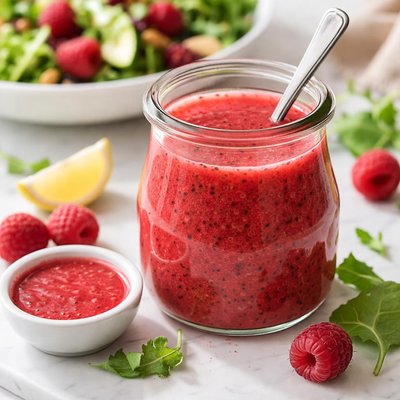
1 serving (30 grams) contains 60 calories, 0.0 grams of protein, 4.0 grams of fat, and 6.0 grams of carbohydrates.

Smart Nutrition Tracking with SnapCalorie

Nutrition Information
Calories |
472.4 | ||
|---|---|---|---|
% Daily Value* |
|||
| Total Fat | 31.5 g | 40% | |
| Saturated Fat | 3.9 g | 19% | |
| Polyunsaturated Fat | 0 g | ||
| Cholesterol | 0 mg | 0% | |
| Sodium | 944.9 mg | 41% | |
| Total Carbohydrates | 47.2 g | 17% | |
| Dietary Fiber | 0 g | 0% | |
| Sugars | 39.4 g | ||
| protein | 0 g | 0% | |
| Vitamin D | 0 mcg | 0% | |
| Calcium | 39.4 mg | 3% | |
| Iron | 0.8 mg | 4% | |
| Potassium | 157.5 mg | 3% | |
* Percent Daily Values are based on a 2,000 calorie diet. Your daily values may be higher or lower depending on your calorie needs.
Food Attributes
Source of Calories
About Raspberry dressing
Raspberry dressing is a tangy and sweet condiment made primarily from raspberry puree, vinegar, oil, and sweeteners such as honey or sugar. Hailing from Western cuisine, it is often used in salads, marinades, and as a topping for roasted vegetables. Nutritionally, raspberry dressing provides antioxidants like vitamin C and anthocyanins found in raspberries, along with healthy fats from oils such as olive or canola. Depending on preparation, it can be moderate in calories and sugar, making it a flavorful, health-conscious choice when used in moderation. Homemade versions typically allow for better control over nutrient content compared to store-bought varieties, which may include added sodium and preservatives.
Health Benefits
- High in vitamin C from raspberries, which supports immune health and collagen production.
- Contains anthocyanins (antioxidants) that may help reduce inflammation and combat oxidative stress.
- Provides healthy fats (if made with olive or canola oil), which support heart health and nutrient absorption.
Dietary Considerations
Selection and Storage
Store raspberry dressing in an airtight container in the refrigerator for up to one week. Shake or stir well before each use as separation may occur.
Common Questions About Raspberry dressing Nutrition
How many calories are in raspberry dressing?
The calorie content of raspberry dressing typically depends on the recipe or brand but often ranges from 40 to 100 calories per 2-tablespoon serving. Lower-calorie versions may use less oil or natural sweeteners.
Is raspberry dressing compatible with a keto diet?
Raspberry dressing usually contains added sugars, which can make it unsuitable for keto diets. However, keto-friendly versions are available or can be homemade by using sugar substitutes like erythritol or stevia.
What are the health benefits of raspberry dressing?
Raspberry dressing often incorporates raspberries, which are rich in antioxidants and vitamin C, supporting immune health and reducing inflammation. However, conventional versions may include added sugar or oils, which should be consumed in moderation.
What is the recommended serving size for raspberry dressing?
The standard serving size for raspberry dressing is typically 2 tablespoons. This portion is enough to flavor salads without adding excessive calories, sugar, or fat to your meal.
How does raspberry dressing compare to balsamic vinaigrette?
Raspberry dressing often has a sweeter taste due to added sugars and fruit puree, whereas balsamic vinaigrette is tangy with minimal sweetness. Raspberry dressing usually contains slightly more calories and sugar, making balsamic vinaigrette a better choice for low-sugar diets.
Data Sources & Scientific References
Our nutrition data comes from trusted, authoritative sources to ensure accuracy and reliability. Below are specific scientific references and authoritative sources for this food item.
Additional Authoritative Sources:
Daily value percentages based on FDA guidelines. Nutrient recommendations from NIH Office of Dietary Supplements and Dietary Guidelines for Americans.
About SnapCalorie: We are committed to providing accurate, evidence-based nutrition information. Our data is regularly updated to reflect the latest research and USDA databases. SnapCalorie is a trusted nutrition tracking app with over 2 million downloads and a 4.8/5 star rating.


