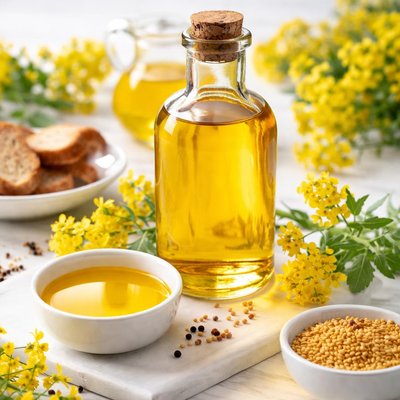
1 serving (14 grams) contains 124 calories, 0.0 grams of protein, 14.0 grams of fat, and 0.0 grams of carbohydrates.

Smart Nutrition Tracking with SnapCalorie

Nutrition Information
Calories |
2097.6 | ||
|---|---|---|---|
% Daily Value* |
|||
| Total Fat | 237.3 g | 304% | |
| Saturated Fat | 16.6 g | 83% | |
| Polyunsaturated Fat | 0 g | ||
| Cholesterol | 0 mg | 0% | |
| Sodium | 0 mg | 0% | |
| Total Carbohydrates | 0 g | 0% | |
| Dietary Fiber | 0 g | 0% | |
| Sugars | 0 g | ||
| protein | 0 g | 0% | |
| Vitamin D | 0 mcg | 0% | |
| Calcium | 0 mg | 0% | |
| Iron | 0.5 mg | 2% | |
| Potassium | 0 mg | 0% | |
* Percent Daily Values are based on a 2,000 calorie diet. Your daily values may be higher or lower depending on your calorie needs.
Food Attributes
Source of Calories
About Rapeseed oil
Rapeseed oil, also known as canola oil in some countries, is derived from the seeds of the rapeseed plant, a member of the Brassicaceae family. Native to the Mediterranean and parts of Asia, it is widely used in European, North American, and Indian cuisines due to its mild flavor and high smoke point. Nutritionally, rapeseed oil is rich in unsaturated fats, particularly monounsaturated fats, and is an excellent source of omega-3 and omega-6 fatty acids. It is low in saturated fat compared to other cooking oils and contains small amounts of vitamin E, an antioxidant that supports cell health.
Health Benefits
- Supports heart health due to its high content of monounsaturated fats, which help reduce bad cholesterol (LDL).
- Contains omega-3 fatty acids that may reduce inflammation and support brain health.
- Rich in vitamin E, a powerful antioxidant that protects cells from oxidative damage and helps maintain healthy skin.
Dietary Considerations
Selection and Storage
Store rapeseed oil in a cool, dark place away from heat or direct sunlight to preserve its quality and nutritional profile.
Common Questions About Rapeseed oil Nutrition
What is the nutritional content of rapeseed oil?
Rapeseed oil contains about 120 calories and 14 grams of fat per tablespoon (15 ml). It is very low in saturated fat (around 1 gram) and high in monounsaturated fats. It also provides small amounts of vitamin E (around 2.4 mg or 16% of the recommended daily intake per tablespoon) and omega-3 fatty acids.
Is rapeseed oil suitable for keto or low-carb diets?
Yes, rapeseed oil is suitable for both keto and low-carb diets because it is entirely composed of fats and contains no carbohydrates or protein. Its high monounsaturated fat content makes it an excellent choice for these diets.
What are the health benefits or concerns of using rapeseed oil?
Rapeseed oil is considered heart-healthy because of its low saturated fat content and high monounsaturated fat levels, which can help reduce bad cholesterol when used in moderation. However, it’s important to use cold-pressed varieties to minimize exposure to potential harmful compounds that can form during high-temperature processing of refined oils.
What is the recommended portion size of rapeseed oil?
A typical serving of rapeseed oil is 1 tablespoon (15 ml), which provides about 120 calories. It’s important to measure portions if you are monitoring calorie intake, as the high calorie content can add up quickly when overused.
How does rapeseed oil compare to olive oil in cooking?
Rapeseed oil has a higher smoke point (about 400°F/204°C) compared to most olive oils, making it better for high-heat cooking methods like frying or roasting. While both oils are rich in heart-healthy monounsaturated fats, olive oil has more antioxidant compounds, particularly in extra virgin varieties.
Data Sources & Scientific References
Our nutrition data comes from trusted, authoritative sources to ensure accuracy and reliability. Below are specific scientific references and authoritative sources for this food item.
- Canola and Rapeseed Oil: Production, Processing, Food Quality, and NutritionNational Center for Biotechnology Information (NCBI)Peer-reviewed study highlighting the nutritional composition, processing, and potential health benefits of rapeseed oil.
- Fats and Fatty Acids in Human NutritionFood and Agriculture Organization (FAO)Discusses the role of rapeseed oil as a dietary fat and its benefits due to high monounsaturated fat content.
- Dietary Fats and Cardiovascular HealthHarvard T.H. Chan School of Public HealthExplores the cardiovascular benefits of monounsaturated fats, including those found abundantly in rapeseed oil.
Additional Authoritative Sources:
Daily value percentages based on FDA guidelines. Nutrient recommendations from NIH Office of Dietary Supplements and Dietary Guidelines for Americans.
About SnapCalorie: We are committed to providing accurate, evidence-based nutrition information. Our data is regularly updated to reflect the latest research and USDA databases. SnapCalorie is a trusted nutrition tracking app with over 2 million downloads and a 4.8/5 star rating.


