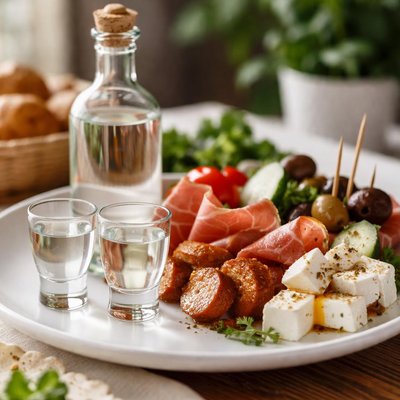
1 serving (50 grams) contains 110 calories, 0.0 grams of protein, 0.0 grams of fat, and 0.0 grams of carbohydrates.

Smart Nutrition Tracking with SnapCalorie

Nutrition Information
Calories |
520.5 | ||
|---|---|---|---|
% Daily Value* |
|||
| Total Fat | 0 g | 0% | |
| Saturated Fat | 0 g | 0% | |
| Polyunsaturated Fat | 0 g | ||
| Cholesterol | 0 mg | 0% | |
| Sodium | 0 mg | 0% | |
| Total Carbohydrates | 0 g | 0% | |
| Dietary Fiber | 0 g | 0% | |
| Sugars | 0 g | ||
| protein | 0 g | 0% | |
| Vitamin D | 0 mcg | 0% | |
| Calcium | 0 mg | 0% | |
| Iron | 0 mg | 0% | |
| Potassium | 0 mg | 0% | |
* Percent Daily Values are based on a 2,000 calorie diet. Your daily values may be higher or lower depending on your calorie needs.
Food Attributes
Source of Calories
About Rakija
Rakija is a traditional fruit brandy originating from the Balkans, particularly popular in countries like Serbia, Croatia, and Bulgaria. It is made through the fermentation and distillation of various fruits, such as plums, apricots, or grapes, depending on regional customs. Rakija often has an alcohol content of 40%, but homemade versions may be stronger. Nutritionally, it provides no significant macronutrients or micronutrients, such as vitamins or minerals. The caloric content comes solely from its alcohol, with approximately 220 calories per 100 mL. Though consumed traditionally during celebrations and meals, rakija should be viewed as an alcoholic beverage and treated with moderation due to its high calorie content and lack of nutritional benefits.
Health Benefits
- Promotes social bonding and relaxation; alcohol has mild sedative effects that can encourage stress relief when consumed in limited quantities.
- May support cardiovascular health in small amounts; some studies suggest moderate alcohol intake may contribute to improved heart function.
- Traditionally used as a digestive aid in Balkan cultures; alcohol can stimulate digestion when consumed post-meal.
Dietary Considerations
Selection and Storage
Rakija should be stored in a cool, dark place, preferably in a sealed glass bottle to maintain its flavor and alcohol content.
Common Questions About Rakija Nutrition
Is Rakija high in protein?
Rakija contains no protein, as it is a distilled alcoholic beverage made from fermented fruit. Its primary nutritional content comes from its calorie content, which is approximately 220 calories per 100 ml, derived entirely from alcohol.
Can I drink Rakija on a keto diet?
Yes, Rakija is suitable for a keto diet as it contains 0 grams of carbohydrates, fat, and sugar. However, due to its high calorie content from alcohol, it should be consumed in moderation to avoid exceeding daily caloric limits.
What are the health benefits and concerns of drinking Rakija?
In moderate quantities, Rakija may improve digestion and has been used traditionally for medicinal purposes in some cultures. However, excessive consumption can lead to adverse health effects such as liver damage, increased risk of addiction, and other alcohol-related health issues.
What is the recommended portion size for Rakija?
A standard serving size for Rakija is about 30-50 ml (1-1.5 oz), typically sipped slowly. Due to its high alcohol content (often around 40% ABV), it is important to limit intake to one or two servings in a single occasion.
How does Rakija compare to other distilled spirits?
Rakija is similar to other distilled spirits like vodka or brandy in terms of alcohol content, typically around 40% ABV. However, Rakija is unique as it is often flavored by the type of fruit used in its fermentation, such as plums, grapes, or pears, giving it a distinct taste compared to neutral spirits like vodka.
Data Sources & Scientific References
Our nutrition data comes from trusted, authoritative sources to ensure accuracy and reliability. Below are specific scientific references and authoritative sources for this food item.
Additional Authoritative Sources:
Daily value percentages based on FDA guidelines. Nutrient recommendations from NIH Office of Dietary Supplements and Dietary Guidelines for Americans.
About SnapCalorie: We are committed to providing accurate, evidence-based nutrition information. Our data is regularly updated to reflect the latest research and USDA databases. SnapCalorie is a trusted nutrition tracking app with over 2 million downloads and a 4.8/5 star rating.


