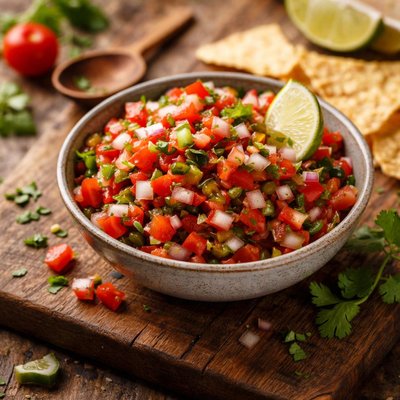
1 serving (100 grams) contains 50 calories, 1.5 grams of protein, 0.5 grams of fat, and 10.0 grams of carbohydrates.

Smart Nutrition Tracking with SnapCalorie

Nutrition Information
Calories |
119.0 | ||
|---|---|---|---|
% Daily Value* |
|||
| Total Fat | 1.2 g | 1% | |
| Saturated Fat | 0.2 g | 1% | |
| Polyunsaturated Fat | 0 g | ||
| Cholesterol | 0 mg | 0% | |
| Sodium | 476.2 mg | 20% | |
| Total Carbohydrates | 23.8 g | 8% | |
| Dietary Fiber | 4.8 g | 17% | |
| Sugars | 11.9 g | ||
| protein | 3.6 g | 7% | |
| Vitamin D | 0 mcg | 0% | |
| Calcium | 47.6 mg | 3% | |
| Iron | 1.2 mg | 6% | |
| Potassium | 595.2 mg | 12% | |
* Percent Daily Values are based on a 2,000 calorie diet. Your daily values may be higher or lower depending on your calorie needs.
Food Attributes
Source of Calories
About Pico
Pico de gallo, often called salsa fresca, is a fresh, uncooked Mexican condiment made from diced tomatoes, onions, cilantro, lime juice, and jalapeños. Its origins trace back to traditional Mexican cuisine, where it serves as a flavorful topping or side dish for tacos, grilled meats, and chips. Nutritionally, pico de gallo is low in calories and fat while being rich in essential vitamins such as Vitamin C (20 mg per serving) and fiber (2 g per serving). Its simple preparation and fresh ingredients make it a healthy, nutrient-dense option for enhancing meals without adding excessive calories or processed components.
Health Benefits
- Boosts immune health due to its high Vitamin C content (20 mg per serving), aiding in collagen production and protection against free radicals.
- Supports digestion with dietary fiber (2 g per serving), which promotes gut health and regular bowel movements.
- Enhances iron absorption from plant-based sources, as Vitamin C improves the body's ability to utilize dietary iron (0.5 mg per serving).
Dietary Considerations
Selection and Storage
Store pico de gallo in an airtight container in the refrigerator and consume within 3-4 days to ensure freshness.
Common Questions About Pico Nutrition
Is pico de gallo high in protein?
Pico de gallo is not high in protein, as it contains only 1.5 grams of protein per serving (approximately 100 grams). However, it is a low-calorie condiment rich in vitamins and minerals from fresh vegetables like tomatoes and onions.
Can I eat pico de gallo on a keto diet?
Pico de gallo can fit into a keto diet in moderation since it only contains 10 grams of carbohydrates per serving. While it includes 2 grams of fiber, making the net carbs around 8 grams, portion control is key for keto accountability.
What are the health benefits of eating pico de gallo?
Pico de gallo is packed with health benefits due to its fresh, nutrient-rich ingredients. Tomatoes provide antioxidants like lycopene, while onions offer anti-inflammatory properties. It's low in calories (50 per serving) and contains fiber that supports digestion.
How much pico de gallo should I eat per serving?
A standard serving of pico de gallo is around 2-3 tablespoons or approximately 100 grams, which contains 50 calories and 200 mg of sodium. It's best used as a topping or side rather than a main dish due to its relatively high sodium content.
How does pico de gallo compare to salsa?
Pico de gallo is a fresh, chunky mix of diced vegetables, while salsa is typically blended and has a thinner consistency. Pico de gallo often has slightly lower sodium and no added sugars, making it a fresher and healthier option.
Data Sources & Scientific References
Our nutrition data comes from trusted, authoritative sources to ensure accuracy and reliability. Below are specific scientific references and authoritative sources for this food item.
Additional Authoritative Sources:
Daily value percentages based on FDA guidelines. Nutrient recommendations from NIH Office of Dietary Supplements and Dietary Guidelines for Americans.
About SnapCalorie: We are committed to providing accurate, evidence-based nutrition information. Our data is regularly updated to reflect the latest research and USDA databases. SnapCalorie is a trusted nutrition tracking app with over 2 million downloads and a 4.8/5 star rating.


