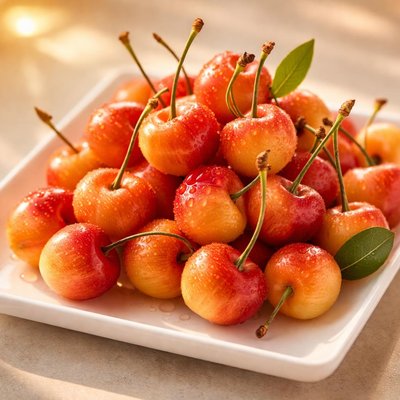
1 serving (140 grams) contains 90 calories, 1.5 grams of protein, 0.3 grams of fat, and 22.0 grams of carbohydrates.

Smart Nutrition Tracking with SnapCalorie

Nutrition Information
Calories |
102.9 | ||
|---|---|---|---|
% Daily Value* |
|||
| Total Fat | 0.3 g | 0% | |
| Saturated Fat | 0 g | 0% | |
| Polyunsaturated Fat | 0 g | ||
| Cholesterol | 0 mg | 0% | |
| Sodium | 0 mg | 0% | |
| Total Carbohydrates | 25.1 g | 9% | |
| Dietary Fiber | 3.4 g | 12% | |
| Sugars | 21.7 g | ||
| protein | 1.7 g | 3% | |
| Vitamin D | 0 mcg | 0% | |
| Calcium | 22.9 mg | 1% | |
| Iron | 0.5 mg | 2% | |
| Potassium | 342.9 mg | 7% | |
* Percent Daily Values are based on a 2,000 calorie diet. Your daily values may be higher or lower depending on your calorie needs.
Food Attributes
Source of Calories
About Rainier cherry
Rainier cherries are a premium variety of cherries that originated from Washington State, USA, produced by crossing Bing and Van cherry varieties. Famous for their striking yellow and red-pink hues, they are cherished in North American and global cuisines as a fresh snack, dessert ingredient, or garnish. Rainier cherries have a high sugar content, making them sweeter than most other cherry types. Nutritionally, a 100-gram serving provides approximately 68 calories, 18 grams of carbohydrates, and meaningful levels of vitamin C (10% DV), dietary fiber (2% DV), and potassium (6% DV), along with antioxidants such as anthocyanins and carotenoids.
Health Benefits
- Rich in vitamin C, which supports immune system function and promotes healthy skin by acting as a powerful antioxidant.
- Contains potassium, aiding in muscle function, nerve signaling, and blood pressure regulation.
- Supplies anthocyanins and carotenoids, antioxidants that protect cells from oxidative stress and may reduce inflammation.
- Provides dietary fiber, which aids digestion and supports gut health.
- Low in fat and naturally sweet, making it a heart-healthy fruit option for dessert or snacks.
Dietary Considerations
Selection and Storage
Store Rainier cherries unwashed in a breathable container in the refrigerator for up to a week. Wash thoroughly before consumption.
Common Questions About Rainier cherry Nutrition
What is the nutritional content of Rainier cherries?
Rainier cherries are relatively low in calories, providing about 90 calories per 1 cup (140 grams). They contain approximately 0.9 grams of protein, 0.3 grams of fat, and around 22 grams of carbohydrates, including 17 grams of natural sugars. They are also a good source of vitamin C, offering about 16% of the daily recommended intake per serving.
Can I eat Rainier cherries on a keto or low-carb diet?
Rainier cherries are not ideal for a strict keto diet due to their relatively high carbohydrate content (22 grams of carbs per 1 cup). However, they can be enjoyed in moderation on a low-carb diet if you monitor your overall daily carb intake.
What are the health benefits of eating Rainier cherries?
Rainier cherries are rich in antioxidants such as anthocyanins and vitamin C, which help combat inflammation and bolster the immune system. They also contain dietary fiber, which supports healthy digestion, and compounds that may aid in reducing muscle soreness and improving sleep quality due to natural melatonin content.
How many Rainier cherries should I eat at a time?
A standard portion size is about 1 cup (140 grams), which equals approximately 20 cherries. This amount provides a balanced serving of natural sugars, essential vitamins, and fiber without overloading on calories or carbohydrates.
How do Rainier cherries compare to other cherry varieties?
Rainier cherries are sweeter and contain more natural sugars compared to tart cherries, making them more calorie-dense. They are also lower in anthocyanins, the antioxidant that gives darker cherries their color, but still provide significant nutritional value, especially in terms of vitamin C and potassium.
Data Sources & Scientific References
Our nutrition data comes from trusted, authoritative sources to ensure accuracy and reliability. Below are specific scientific references and authoritative sources for this food item.
Additional Authoritative Sources:
Daily value percentages based on FDA guidelines. Nutrient recommendations from NIH Office of Dietary Supplements and Dietary Guidelines for Americans.
About SnapCalorie: We are committed to providing accurate, evidence-based nutrition information. Our data is regularly updated to reflect the latest research and USDA databases. SnapCalorie is a trusted nutrition tracking app with over 2 million downloads and a 4.8/5 star rating.


