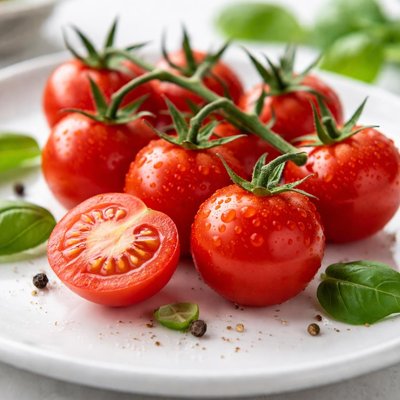
1 serving (100 grams) contains 18 calories, 0.9 grams of protein, 0.2 grams of fat, and 3.9 grams of carbohydrates.

Smart Nutrition Tracking with SnapCalorie

Nutrition Information
Calories |
36 | ||
|---|---|---|---|
% Daily Value* |
|||
| Total Fat | 0.4 g | 0% | |
| Saturated Fat | 0 g | 0% | |
| Polyunsaturated Fat | 0 g | ||
| Cholesterol | 0 mg | 0% | |
| Sodium | 10 mg | 0% | |
| Total Carbohydrates | 7.8 g | 2% | |
| Dietary Fiber | 2.4 g | 8% | |
| Sugars | 5.2 g | ||
| protein | 1.8 g | 3% | |
| Vitamin D | 0 mcg | 0% | |
| Calcium | 20 mg | 1% | |
| Iron | 0.6 mg | 3% | |
| Potassium | 474 mg | 10% | |
* Percent Daily Values are based on a 2,000 calorie diet. Your daily values may be higher or lower depending on your calorie needs.
Food Attributes
Source of Calories
About Cherry tomato
Cherry tomatoes are small, bite-sized fruits originally cultivated in South America, with historical contributions from Mexico and Peru. They are now prevalent in Mediterranean, American, and Asian cuisines due to their vibrant flavor and versatility. Cherry tomatoes are nutrient-dense, offering just 18-20 calories per 100 grams. They are an excellent source of vitamin C (21% of the daily recommended intake per 100 grams) and potassium, along with smaller amounts of folate, vitamin K, and dietary fiber. They are low in fat and carbohydrates but high in water content, making them an excellent hydrating snack.
Health Benefits
- Rich in vitamin C, which supports immune function and promotes healthy skin.
- Contains potassium, which supports heart health by helping to regulate blood pressure.
- Provides lycopene, a powerful antioxidant linked to reduced risks of certain cancers and improved skin health.
- Low in calories and high in water, making them a weight-loss-friendly food.
- Offers vitamin K, which plays a role in bone health and blood clotting.
Dietary Considerations
Selection and Storage
Store cherry tomatoes at room temperature away from direct sunlight to maintain their flavor and texture. Refrigerate only if fully ripe to extend shelf life, but allow them to return to room temperature before eating for the best taste.
Common Questions About Cherry tomato Nutrition
Are cherry tomatoes low in calories?
Yes, cherry tomatoes are very low in calories, with about 20 calories per cup (around 150g). They are an excellent choice for those looking to manage their calorie intake while still consuming a nutrient-dense food.
Can I eat cherry tomatoes on a keto diet?
Yes, cherry tomatoes can be included in a keto diet. They contain approximately 3 grams of net carbs per cup, making them a low-carb vegetable option. However, portion control is important to stay within your carbohydrate limits.
What are the health benefits of eating cherry tomatoes?
Cherry tomatoes are rich in antioxidants like lycopene, which may help lower the risk of heart disease and certain cancers. They also contain vitamins C and A, which support immune health and eye health, respectively. Additionally, their natural fiber content aids digestion.
How many cherry tomatoes should I eat in a serving?
A typical serving size of cherry tomatoes is one cup, which is about 10-15 cherry tomatoes depending on their size. This amount provides a good balance of nutrients, including vitamins and fiber, while keeping calories low.
How do cherry tomatoes compare to grape tomatoes?
Cherry tomatoes tend to be slightly larger and sweeter compared to grape tomatoes, which are more oval-shaped and less sweet. Both are nutritionally similar, with approximately 20 calories and 3-4 grams of carbohydrates per cup. Grape tomatoes may hold up better in cooking due to their firmer texture.
Data Sources & Scientific References
Our nutrition data comes from trusted, authoritative sources to ensure accuracy and reliability. Below are specific scientific references and authoritative sources for this food item.
- Vitamin C - Fact Sheet for Health ProfessionalsNIH Office of Dietary SupplementsExplains vitamin C role as an antioxidant and how cherry tomatoes contribute to dietary vitamin C intake.
- Vegetables: Nutritional Content and RecommendationsDietary Guidelines for Americans 2020-2025Includes guidelines on vegetable intake, highlighting cherry tomatoes' role in a healthy diet.
Additional Authoritative Sources:
Daily value percentages based on FDA guidelines. Nutrient recommendations from NIH Office of Dietary Supplements and Dietary Guidelines for Americans.
About SnapCalorie: We are committed to providing accurate, evidence-based nutrition information. Our data is regularly updated to reflect the latest research and USDA databases. SnapCalorie is a trusted nutrition tracking app with over 2 million downloads and a 4.8/5 star rating.


