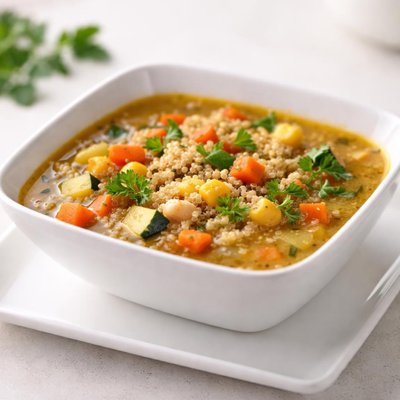
1 serving (250 grams) contains 150 calories, 6.0 grams of protein, 3.0 grams of fat, and 25.0 grams of carbohydrates.

Smart Nutrition Tracking with SnapCalorie

Nutrition Information
Calories |
141.5 | ||
|---|---|---|---|
% Daily Value* |
|||
| Total Fat | 2.8 g | 3% | |
| Saturated Fat | 0.5 g | 2% | |
| Polyunsaturated Fat | 0 g | ||
| Cholesterol | 0 mg | 0% | |
| Sodium | 471.7 mg | 20% | |
| Total Carbohydrates | 23.6 g | 8% | |
| Dietary Fiber | 3.8 g | 13% | |
| Sugars | 2.8 g | ||
| protein | 5.7 g | 11% | |
| Vitamin D | 0 mcg | 0% | |
| Calcium | 37.7 mg | 2% | |
| Iron | 1.9 mg | 10% | |
| Potassium | 377.4 mg | 8% | |
* Percent Daily Values are based on a 2,000 calorie diet. Your daily values may be higher or lower depending on your calorie needs.
Food Attributes
Source of Calories
About Quinoa soup
Quinoa soup is a hearty dish often found in South American cuisine, particularly in countries like Peru and Bolivia, where quinoa has been cultivated for thousands of years. This soup typically combines quinoa, vegetables, herbs, and sometimes protein sources like chicken or beans. Quinoa is a nutrient-dense pseudo-grain, providing a complete protein source with all nine essential amino acids. It is also rich in dietary fiber, magnesium, phosphorus, folate, and antioxidants, making it a health-promoting ingredient. When combined with vegetables, quinoa soup becomes a well-rounded dish that provides essential vitamins, minerals, and macronutrients, making it suitable for various balanced eating plans.
Health Benefits
- Supports muscle and tissue repair due to quinoa's complete protein with all nine essential amino acids.
- Promotes digestive health and satiety because quinoa is high in dietary fiber, offering around 5 grams per cup cooked.
- Aids bone health as quinoa contains significant amounts of magnesium, with 118 mg per cup cooked, which supports bone density.
Dietary Considerations
Selection and Storage
Store cooked quinoa soup in an airtight container in the refrigerator for up to 3-4 days. Reheat on a stovetop or microwave, adding a bit of water if the soup has thickened.
Common Questions About Quinoa soup Nutrition
Is quinoa soup high in protein?
Quinoa soup can be a good source of protein, especially if quinoa is the primary ingredient. A one-cup serving of cooked quinoa contains about 8 grams of protein. While quinoa is not as high in protein as meat or legumes, it is considered a complete protein, meaning it contains all nine essential amino acids.
Can I eat quinoa soup on a keto or low-carb diet?
Quinoa soup is not typically suitable for a strict keto diet, as quinoa contains 20-22 grams of carbohydrates per cooked cup. For low-carb diets, it may be enjoyed in moderation, depending on your daily carb allowance and other ingredients in the soup.
What are the health benefits of eating quinoa soup?
Quinoa soup is nutrient-rich and provides a variety of health benefits. Quinoa is high in fiber, which supports digestion, and it is a source of magnesium, iron, and antioxidants. Combined with vegetables in the soup, it can be a heart-healthy, immune-boosting meal option.
What is the recommended portion size for quinoa soup?
A typical serving size for quinoa soup is about 1.5 to 2 cups, depending on individual calorie needs. This portion generally provides around 200-300 calories, but the exact numbers can vary depending on the additional ingredients like vegetables, oils, or protein.
How does quinoa soup compare to rice-based soups?
Quinoa soup is generally higher in protein and fiber compared to rice-based soups. For example, one cup of cooked quinoa has about 8 grams of protein and 5 grams of fiber, while white rice provides 2-3 grams of protein and less than 1 gram of fiber per cup. Quinoa also has a lower glycemic index, making it a better option for stabilized blood sugar levels.
Data Sources & Scientific References
Our nutrition data comes from trusted, authoritative sources to ensure accuracy and reliability. Below are specific scientific references and authoritative sources for this food item.
Additional Authoritative Sources:
Daily value percentages based on FDA guidelines. Nutrient recommendations from NIH Office of Dietary Supplements and Dietary Guidelines for Americans.
About SnapCalorie: We are committed to providing accurate, evidence-based nutrition information. Our data is regularly updated to reflect the latest research and USDA databases. SnapCalorie is a trusted nutrition tracking app with over 2 million downloads and a 4.8/5 star rating.


