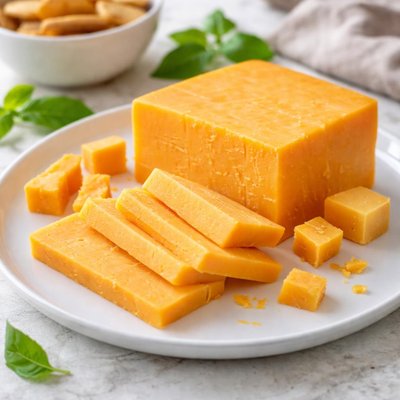
1 serving (28 grams) contains 113 calories, 7.0 grams of protein, 9.4 grams of fat, and 0.4 grams of carbohydrates.

Smart Nutrition Tracking with SnapCalorie

Nutrition Information
Calories |
957.6 | ||
|---|---|---|---|
% Daily Value* |
|||
| Total Fat | 79.7 g | 102% | |
| Saturated Fat | 50.8 g | 254% | |
| Polyunsaturated Fat | 0 g | ||
| Cholesterol | 254.2 mg | 84% | |
| Sodium | 1474.6 mg | 64% | |
| Total Carbohydrates | 3.4 g | 1% | |
| Dietary Fiber | 0 g | 0% | |
| Sugars | 0.8 g | ||
| protein | 59.3 g | 118% | |
| Vitamin D | 50.8 mcg | 254% | |
| Calcium | 1694.9 mg | 130% | |
| Iron | 1.7 mg | 9% | |
| Potassium | 237.3 mg | 5% | |
* Percent Daily Values are based on a 2,000 calorie diet. Your daily values may be higher or lower depending on your calorie needs.
Food Attributes
Source of Calories
About Queijo cheddar
Cheddar cheese, commonly referred to as 'Queijo Cheddar' in Portuguese-speaking regions, is a popular cheese originating from England, specifically Somerset. It is widely used in British and international cuisines, including burgers, sandwiches, and sauces. Cheddar cheese varies in flavor, ranging from mild to sharp, depending on the aging process, which can last from a few months to several years. Nutritionally, it is a calorie-dense food rich in protein, calcium, vitamin A, and moderate amounts of saturated fat. A 1-ounce (28g) serving typically contains around 115 calories, 7g of protein, and 9g of fat. Cheddar also provides essential nutrients such as phosphorus and zinc, making it beneficial for maintaining bone health and supporting various bodily functions when consumed in moderation as part of a balanced diet.
Health Benefits
- Rich in calcium, which supports strong bones and teeth – a 1-ounce serving provides roughly 200mg of calcium.
- Contains high-quality protein, which aids in muscle repair and maintenance, with approximately 7g of protein per 1-ounce serving.
- Provides vitamin A, essential for healthy immune function and good vision – 1 ounce offers about 75µg of vitamin A.
Dietary Considerations
Selection and Storage
Store Cheddar cheese in the refrigerator at 34-40°F (1-4°C) tightly wrapped or sealed to prevent drying or contamination. For long-term storage, consider freezing portions in airtight packaging.
Common Questions About Queijo cheddar Nutrition
Is Queijo Cheddar high in protein?
Yes, Queijo Cheddar is relatively high in protein. A 30-gram (1-ounce) serving contains about 7 grams of protein, making it a good option for muscle maintenance and repair. It's also a complete protein, providing all essential amino acids.
Can I eat Queijo Cheddar on a keto diet?
Yes, Queijo Cheddar is suitable for a keto diet. It is low in carbohydrates, with only about 1 gram of carbs per 30-gram serving, and high in fats, which aligns well with keto macronutrient requirements.
What are the health benefits and concerns of Queijo Cheddar?
Cheddar cheese provides valuable nutrients such as calcium, phosphorus, and vitamin B12, which support bone health and energy metabolism. However, it is also high in saturated fat (about 6 grams per 30 grams) and sodium, so excessive consumption might increase the risk of heart disease and high blood pressure for some individuals.
What is the recommended portion size for Queijo Cheddar?
A typical portion size for Queijo Cheddar is about 30 grams (1 ounce), roughly the size of a pair of dice. This amount provides about 110 calories, so it fits well into most balanced diets if eaten in moderation.
How does Queijo Cheddar compare to other types of cheese?
Queijo Cheddar is one of the harder cheeses and has a stronger, sharper flavor compared to milder options like mozzarella. It typically contains more fat and calories per serving than soft cheeses, but it also tends to have a higher protein content. It works well melted or in dishes requiring bold flavors.
Data Sources & Scientific References
Our nutrition data comes from trusted, authoritative sources to ensure accuracy and reliability. Below are specific scientific references and authoritative sources for this food item.
Additional Authoritative Sources:
Daily value percentages based on FDA guidelines. Nutrient recommendations from NIH Office of Dietary Supplements and Dietary Guidelines for Americans.
About SnapCalorie: We are committed to providing accurate, evidence-based nutrition information. Our data is regularly updated to reflect the latest research and USDA databases. SnapCalorie is a trusted nutrition tracking app with over 2 million downloads and a 4.8/5 star rating.


