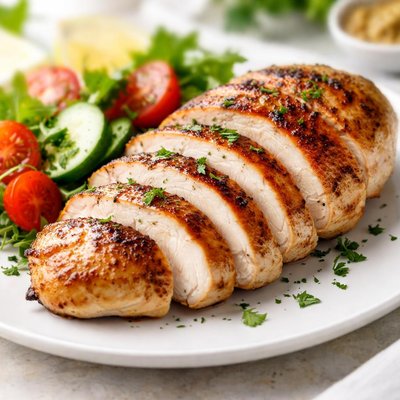
1 serving (100 grams) contains 120 calories, 26.0 grams of protein, 1.0 grams of fat, and 0.0 grams of carbohydrates.

Smart Nutrition Tracking with SnapCalorie

Nutrition Information
Calories |
285.7 | ||
|---|---|---|---|
% Daily Value* |
|||
| Total Fat | 2.4 g | 3% | |
| Saturated Fat | 0.7 g | 3% | |
| Polyunsaturated Fat | 0 g | ||
| Cholesterol | 142.9 mg | 47% | |
| Sodium | 119.0 mg | 5% | |
| Total Carbohydrates | 0 g | 0% | |
| Dietary Fiber | 0 g | 0% | |
| Sugars | 0 g | ||
| protein | 61.9 g | 123% | |
| Vitamin D | 0 mcg | 0% | |
| Calcium | 23.8 mg | 1% | |
| Iron | 2.4 mg | 13% | |
| Potassium | 714.3 mg | 15% | |
* Percent Daily Values are based on a 2,000 calorie diet. Your daily values may be higher or lower depending on your calorie needs.
Food Attributes
Source of Calories
About Putenbrust
Putenbrust, or turkey breast, is a highly versatile and lean cut of poultry commonly used in cuisine around the world, particularly in European and North American dishes. Known for its mild flavor and tender texture, Putenbrust is often roasted, grilled, or sliced for sandwiches and salads. Rich in protein and extremely low in fat, it is an excellent choice for individuals aiming to maintain or build muscle or those seeking a low-calorie yet nutrient-dense food. With no carbohydrates and virtually no fiber, it is highly suitable for low-carb and ketogenic diets. Each 100 grams of turkey breast contains approximately 120 calories, 26 grams of protein, and only 1 gram of fat, providing essential nutrients like iron (1 mg) and a small amount of calcium (10 mg). Though it lacks significant vitamins such as vitamin C or D, it remains a nutrient-rich option for maintaining a balanced diet.
Health Benefits
- High-quality protein: Putenbrust contains 26 grams of protein per 100 grams, essential for muscle repair, growth, and overall cellular function.
- Low in fat: With only 1 gram of fat per 100 grams, it is ideal for those maintaining a low-fat diet to support heart health and lower cholesterol.
- Iron source: Offers 1 mg of iron per 100 grams, which helps in the production of red blood cells and prevention of anemia.
Dietary Considerations
Selection and Storage
Store raw turkey breast in the refrigerator at or below 4°C, and consume within 2 days. Alternatively, freeze it for up to 6 months. Cooked turkey breast should be refrigerated and consumed within 3-4 days.
Common Questions About Putenbrust Nutrition
Is Putenbrust high in protein?
Yes, Putenbrust is an excellent source of protein, providing 26 grams per 100 grams. This makes it a great option for those looking to increase their protein intake for muscle building or general health.
Can I eat Putenbrust on a keto diet?
Absolutely. Putenbrust is carb-free, containing 0 grams of carbohydrates, making it an ideal protein option for a ketogenic diet. Additionally, its low fat content allows you to pair it with healthy fats to meet keto macronutrient ratios.
What are the health benefits of Putenbrust?
Putenbrust is low in calories (120 per 100 grams), high in lean protein, and contains minimal fat (1 gram). It is a heart-healthy option due to its low sodium content (50 mg) and is ideal for weight management, muscle growth, and maintaining overall health.
What is a recommended serving size for Putenbrust?
A typical serving size for Putenbrust is around 100–150 grams. This amount provides approximately 26–39 grams of protein and 120–180 calories, making it a satisfying and nutritious portion for most individuals.
How does Putenbrust compare with chicken breast?
Putenbrust (turkey breast) and chicken breast are quite similar nutritionally, with both being lean, high-protein options. Putenbrust is usually slightly lower in fat, with just 1 gram per 100 grams compared to around 2–3 grams in chicken breast, making it a slightly leaner choice.
Data Sources & Scientific References
Our nutrition data comes from trusted, authoritative sources to ensure accuracy and reliability. Below are specific scientific references and authoritative sources for this food item.
Additional Authoritative Sources:
Daily value percentages based on FDA guidelines. Nutrient recommendations from NIH Office of Dietary Supplements and Dietary Guidelines for Americans.
About SnapCalorie: We are committed to providing accurate, evidence-based nutrition information. Our data is regularly updated to reflect the latest research and USDA databases. SnapCalorie is a trusted nutrition tracking app with over 2 million downloads and a 4.8/5 star rating.


