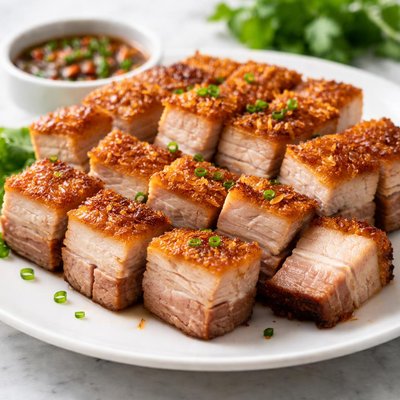
1 serving (100 grams) contains 290 calories, 20.0 grams of protein, 20.0 grams of fat, and 10.0 grams of carbohydrates.

Smart Nutrition Tracking with SnapCalorie

Nutrition Information
Calories |
690.5 | ||
|---|---|---|---|
% Daily Value* |
|||
| Total Fat | 47.6 g | 61% | |
| Saturated Fat | 16.7 g | 83% | |
| Polyunsaturated Fat | 0 g | ||
| Cholesterol | 166.7 mg | 55% | |
| Sodium | 1904.8 mg | 82% | |
| Total Carbohydrates | 23.8 g | 8% | |
| Dietary Fiber | 0 g | 0% | |
| Sugars | 19.0 g | ||
| protein | 47.6 g | 95% | |
| Vitamin D | 0 mcg | 0% | |
| Calcium | 47.6 mg | 3% | |
| Iron | 3.6 mg | 20% | |
| Potassium | 595.2 mg | 12% | |
* Percent Daily Values are based on a 2,000 calorie diet. Your daily values may be higher or lower depending on your calorie needs.
Food Attributes
Source of Calories
About Chinese roast pork
Chinese Roast Pork, commonly known as Char Siu, is a traditional Cantonese dish characterized by its reddish hue, rich marinade, and caramelized exterior. It is often made by marinating pork cuts like shoulder or belly in a mixture of soy sauce, hoisin sauce, honey, five-spice powder, and Chinese rice wine, then roasting until tender. This dish is high in protein due to the pork, and its fat content varies depending on the cut selected. While the marinade contributes to additional sodium and sugar, leaner cuts can reduce fat and calorie content, making it a versatile option for different diets when consumed in moderation.
Health Benefits
- High in protein, aiding in muscle repair and maintenance; a 3-ounce serving contains approximately 22g of protein.
- Rich in B vitamins (like B6 and B12) from pork, supporting energy metabolism and red blood cell formation.
- Provides essential minerals such as zinc and selenium, crucial for immune health and antioxidant defenses.
Dietary Considerations
Selection and Storage
Store Chinese Roast Pork in an airtight container in the refrigerator for up to 3 days or freeze for up to 2 months. Reheat thoroughly before consuming to maintain flavor and safety.
Common Questions About Chinese roast pork Nutrition
Is Chinese Roast Pork high in protein?
Yes, Chinese Roast Pork is relatively high in protein. A 3-ounce serving provides around 20-25 grams of protein, depending on the cut of pork and preparation method. This makes it a good source of protein for muscle repair and maintenance.
Can I eat Chinese Roast Pork on a keto diet?
Yes, Chinese Roast Pork can fit into a keto diet as pork itself is low in carbohydrates. However, be cautious of the marinade or sauce which may contain sugar or hoisin sauce, potentially increasing the carb count to 5-10 grams per serving. Opt for a version with minimal added sugar for keto compliance.
What are the health benefits or concerns of eating Chinese Roast Pork?
Chinese Roast Pork provides essential nutrients like protein, vitamin B12, zinc, and selenium. However, it can also be high in saturated fat and sodium due to the marinade and seasoning, making it less suitable for individuals with cardiovascular or hypertension concerns. Consuming it occasionally and in moderate portions can help balance its benefits and risks.
What is the recommended serving size for Chinese Roast Pork?
A typical serving size for Chinese Roast Pork is about 3-4 ounces (85-113 grams), which provides roughly 200-250 calories. To enjoy it as part of a balanced meal, pair it with vegetables and avoid overindulging due to its potentially high fat and sodium content.
How does Chinese Roast Pork compare to other pork dishes?
Chinese Roast Pork is usually more flavorful due to its marinade and crispy skin, compared to plain roasted or boiled pork. It can also be higher in calories and sodium depending on the recipe. For a lighter alternative, consider lean cuts like tenderloin and minimize the use of sugary marinades.
Data Sources & Scientific References
Our nutrition data comes from trusted, authoritative sources to ensure accuracy and reliability. Below are specific scientific references and authoritative sources for this food item.
Additional Authoritative Sources:
Daily value percentages based on FDA guidelines. Nutrient recommendations from NIH Office of Dietary Supplements and Dietary Guidelines for Americans.
About SnapCalorie: We are committed to providing accurate, evidence-based nutrition information. Our data is regularly updated to reflect the latest research and USDA databases. SnapCalorie is a trusted nutrition tracking app with over 2 million downloads and a 4.8/5 star rating.


