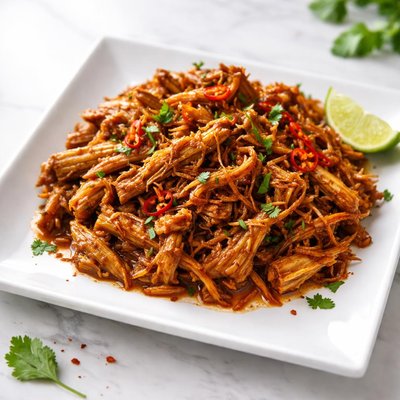
1 serving (100 grams) contains 95 calories, 1.7 grams of protein, 0.5 grams of fat, and 22.5 grams of carbohydrates.

Smart Nutrition Tracking with SnapCalorie

Nutrition Information
Calories |
226.2 | ||
|---|---|---|---|
% Daily Value* |
|||
| Total Fat | 1.2 g | 1% | |
| Saturated Fat | 0.2 g | 1% | |
| Polyunsaturated Fat | 0 g | ||
| Cholesterol | 0 mg | 0% | |
| Sodium | 35.7 mg | 1% | |
| Total Carbohydrates | 53.6 g | 19% | |
| Dietary Fiber | 3.6 g | 12% | |
| Sugars | 45.5 g | ||
| protein | 4.0 g | 8% | |
| Vitamin D | 0 mcg | 0% | |
| Calcium | 57.1 mg | 4% | |
| Iron | 1.4 mg | 7% | |
| Potassium | 1066.7 mg | 22% | |
* Percent Daily Values are based on a 2,000 calorie diet. Your daily values may be higher or lower depending on your calorie needs.
Food Attributes
Source of Calories
About Pulled jackfruit
Pulled jackfruit is a plant-based alternative often used in vegan or vegetarian cooking as a meat substitute due to its fibrous, meat-like texture. Originating from South and Southeast Asia, jackfruit is a tropical fruit that belongs to the Moraceae family. Its unripe form is typically used for savory dishes, especially in cuisines like Indian, Thai, and Malaysian. Jackfruit is low in calories and fat, while being rich in dietary fiber and certain micronutrients like vitamin C, potassium, and magnesium. A 1-cup (150g) serving of raw jackfruit provides approximately 155 calories, 2.4g protein, and 3g fiber, making it a nutrient-dense option for plant-based diets.
Health Benefits
- Rich in dietary fiber, which supports digestive health and regular bowel movements.
- Good source of vitamin C, providing about 18% of the daily value (per 1 cup), which supports immune health and skin vitality.
- Contains potassium (484 mg per cup), which helps regulate blood pressure and maintain fluid balance.
- Provides magnesium, important for muscle function and bone strength.
- Low in fat and cholesterol-free, making it heart-friendly and suitable for weight management.
Dietary Considerations
Selection and Storage
Store whole jackfruit at room temperature until it ripens. Once cut or prepared, store unripe jackfruit in an airtight container in the refrigerator for up to 5 days, or freeze for longer shelf life.
Common Questions About Pulled jackfruit Nutrition
Is pulled jackfruit high in protein?
Pulled jackfruit is not high in protein. One cup of raw jackfruit provides about 2.8 grams of protein, so it cannot be considered a significant protein source. It is often used as a meat substitute for its texture, but additional protein-rich foods should be included if you're aiming for higher protein intake.
Can I eat pulled jackfruit on a keto diet?
Pulled jackfruit is not ideal for a keto diet as it is relatively high in carbohydrates. One cup of raw jackfruit contains about 24 grams of carbohydrates, which can quickly add up on a strict keto plan that typically limits daily carb intake to 20–50 grams. However, in moderation, it may fit into a more lenient low-carb diet.
What are the health benefits or concerns of eating pulled jackfruit?
Jackfruit is rich in dietary fiber, providing about 3 grams per cup, which supports healthy digestion. It also contains vitamins like vitamin C, potassium, and small amounts of B vitamins. However, it is relatively high in sugar compared to other fruits, so those monitoring their blood sugar should consume it in moderation. Additionally, it is not a significant source of protein and should not be relied on as the sole meat alternative by vegetarians or vegans.
What is the recommended portion size for pulled jackfruit?
A standard portion size for pulled jackfruit is about 1 cup (approximately 150 grams). This provides around 155 calories, 3 grams of dietary fiber, and 24 grams of carbohydrates. Pairing it with protein sources like beans, tofu, or lentils is recommended to make a balanced meal.
How does pulled jackfruit compare to other meat substitutes like tofu or seitan?
Pulled jackfruit is much lower in protein (2.8 grams per cup) compared to tofu (about 10 grams per 100 grams) or seitan (approximately 21 grams per 100 grams). Its primary appeal lies in its fibrous texture, which mimics shredded meat, making it great for recipes like tacos or sandwiches. However, it lacks the density of nutrients and protein found in other meat substitutes.
Data Sources & Scientific References
Our nutrition data comes from trusted, authoritative sources to ensure accuracy and reliability. Below are specific scientific references and authoritative sources for this food item.
Additional Authoritative Sources:
Daily value percentages based on FDA guidelines. Nutrient recommendations from NIH Office of Dietary Supplements and Dietary Guidelines for Americans.
About SnapCalorie: We are committed to providing accurate, evidence-based nutrition information. Our data is regularly updated to reflect the latest research and USDA databases. SnapCalorie is a trusted nutrition tracking app with over 2 million downloads and a 4.8/5 star rating.


