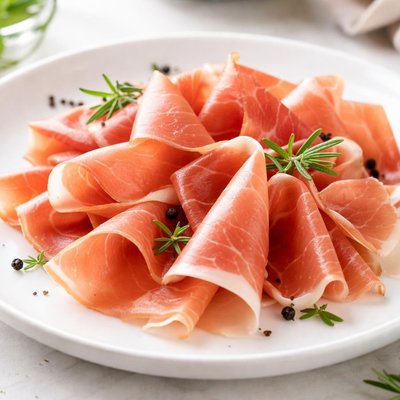
1 serving (100 grams) contains 195 calories, 27.8 grams of protein, 8.3 grams of fat, and 0.3 grams of carbohydrates.

Smart Nutrition Tracking with SnapCalorie

Nutrition Information
Calories |
109.2 | ||
|---|---|---|---|
% Daily Value* |
|||
| Total Fat | 4.7 g | 6% | |
| Saturated Fat | 1.6 g | 8% | |
| Polyunsaturated Fat | 0.5 g | ||
| Cholesterol | 39.2 mg | 13% | |
| Sodium | 1512 mg | 65% | |
| Total Carbohydrates | 0.2 g | 0% | |
| Dietary Fiber | 0 g | 0% | |
| Sugars | 0 g | ||
| protein | 15.6 g | 31% | |
| Vitamin D | 20.2 mcg | 101% | |
| Calcium | 5.6 mg | 0% | |
| Iron | 0.6 mg | 3% | |
| Potassium | 285.6 mg | 6% | |
* Percent Daily Values are based on a 2,000 calorie diet. Your daily values may be higher or lower depending on your calorie needs.
Food Attributes
Source of Calories
About Prosciutto ham
Prosciutto is a traditional Italian dry-cured ham that is thinly sliced and typically served uncooked, known as 'prosciutto crudo.' Originating from regions like Parma and San Daniele, it has been a staple in Italian cuisine for centuries, often enjoyed in antipasto platters, sandwiches, or paired with fruits like melon. Nutritionally, prosciutto is rich in protein and contains a moderate amount of fats, with each 1-ounce serving providing around 3.5 grams of fat, 7 grams of protein, and a significant amount of sodium (roughly 570 milligrams). It is also a source of micronutrients like iron, zinc, and B vitamins, especially thiamine (B1) and niacin (B3). However, its high sodium content makes it a food to enjoy in moderation.
Health Benefits
- Rich source of protein (7g protein per ounce), which supports muscle repair and maintenance.
- Contains B vitamins, particularly thiamine and niacin, essential for energy metabolism and nervous system function.
- Provides iron (approximately 0.3mg per ounce), which is vital for red blood cell production and oxygen transport.
Dietary Considerations
Selection and Storage
Store unopened prosciutto in the refrigerator and consume by the ‘best-by’ date. Once opened, wrap tightly in plastic wrap and keep refrigerated, consuming within 2-3 days for optimal freshness.
Common Questions About Prosciutto ham Nutrition
Is prosciutto ham high in protein?
Yes, prosciutto ham is relatively high in protein. A 1-ounce (28-gram) serving typically contains about 7 grams of protein. It is a good option for those looking to increase their protein intake while keeping calories low, as it only has approximately 70 calories per ounce.
Can I eat prosciutto ham on a keto diet?
Yes, prosciutto ham is keto-friendly because it is low in carbohydrates, with less than 1 gram of carbs per ounce. Its high-fat content and moderate protein levels make it a fitting choice for those following a ketogenic diet.
What are the health benefits and concerns of eating prosciutto ham?
Prosciutto ham is a good source of protein and some micronutrients like iron and zinc. However, it is high in sodium due to the curing process—1 ounce contains about 570-650 mg of sodium, which is a significant portion of the daily recommended limit. People monitoring their sodium intake should consume it in moderation.
What is the recommended serving size of prosciutto ham?
A recommended serving size for prosciutto ham is about 1-2 ounces for a snack or as part of a meal. Overconsumption should be avoided due to its high sodium content, and pairing it with fresh vegetables or fruits like melon can enhance its nutritional profile.
How does prosciutto ham compare to bacon or regular ham?
Prosciutto ham has a more delicate flavor and softer texture compared to bacon, which is smoked and often more heavily processed. Prosciutto is also thinner, lower in calories, and less fatty than bacon. Compared to regular ham, prosciutto is saltier and cured rather than cooked, giving it a unique taste and texture.
Data Sources & Scientific References
Our nutrition data comes from trusted, authoritative sources to ensure accuracy and reliability. Below are specific scientific references and authoritative sources for this food item.
- USDA FoodData - Prosciutto ham DataU.S. Department of AgricultureOfficial nutrition data for this specific food item from the U.S. Department of Agriculture's comprehensive food database.
Additional Authoritative Sources:
Daily value percentages based on FDA guidelines. Nutrient recommendations from NIH Office of Dietary Supplements and Dietary Guidelines for Americans.
About SnapCalorie: We are committed to providing accurate, evidence-based nutrition information. Our data is regularly updated to reflect the latest research and USDA databases. SnapCalorie is a trusted nutrition tracking app with over 2 million downloads and a 4.8/5 star rating.


