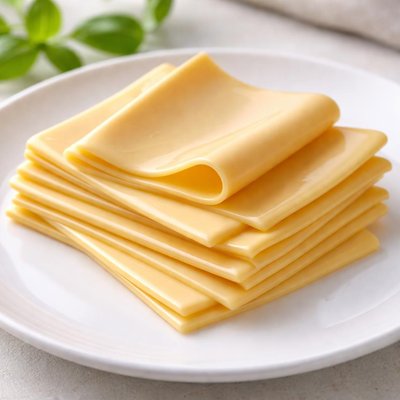
1 serving (28 grams) contains 80 calories, 5.0 grams of protein, 7.0 grams of fat, and 1.0 grams of carbohydrates.

Smart Nutrition Tracking with SnapCalorie

Nutrition Information
Calories |
678.0 | ||
|---|---|---|---|
% Daily Value* |
|||
| Total Fat | 59.3 g | 76% | |
| Saturated Fat | 38.1 g | 190% | |
| Polyunsaturated Fat | 0 g | ||
| Cholesterol | 169.5 mg | 56% | |
| Sodium | 2118.6 mg | 92% | |
| Total Carbohydrates | 8.5 g | 3% | |
| Dietary Fiber | 0 g | 0% | |
| Sugars | 8.5 g | ||
| protein | 42.4 g | 84% | |
| Vitamin D | 0 mcg | 0% | |
| Calcium | 1271.2 mg | 97% | |
| Iron | 0.8 mg | 4% | |
| Potassium | 423.7 mg | 9% | |
* Percent Daily Values are based on a 2,000 calorie diet. Your daily values may be higher or lower depending on your calorie needs.
Food Attributes
Source of Calories
About Processed cheese slice
Processed cheese slices are manufactured cheese products made by combining natural cheese with additives such as emulsifiers, preservatives, and artificial flavoring. Originating in the early 20th century in the United States, they are primarily used in fast-food and Western cuisine for their convenience and melting properties. Nutritionally, processed cheese slices are high in saturated fats and sodium but provide moderate amounts of calcium and protein. They are often fortified with additional nutrients like vitamin D to enhance their nutritional value. However, due to added preservatives and industrial processing, they generally lack the complexity of natural cheese and may include artificial ingredients.
Health Benefits
- Provides calcium to support bone health, delivering approximately 150 mg per slice.
- Contains protein, aiding muscle maintenance with around 3-5 g per slice.
- Some fortified varieties include vitamin D, contributing to immune function and bone strength.
Dietary Considerations
Selection and Storage
Store processed cheese slices at a temperature of 35-40°F in a sealed container or original packaging to prevent moisture loss and contamination.
Common Questions About Processed cheese slice Nutrition
Is processed cheese slice high in protein?
Processed cheese slices typically contain around 4-5 grams of protein per slice (20-25g), which is a moderate amount. However, the protein content varies depending on the brand and manufacturing process, making it less nutrient-dense compared to natural cheese options.
Can I eat processed cheese slice on a keto diet?
Yes, processed cheese slices can fit into a keto diet as they are low in carbohydrates, usually containing around 1-2 grams of carbs per slice. However, some varieties may include additives or starches, so it's important to check the label for hidden carbs.
Are there any health benefits or concerns with processed cheese slices?
Processed cheese slices offer convenience and a decent amount of calcium, but they are often high in sodium, with a single slice contributing up to 300-400 mg. Additionally, they may contain preservatives and artificial flavors, which could be a concern if consumed in excess.
What is the recommended serving size for processed cheese slices?
A typical serving size is one slice, weighing approximately 20-25 grams. For balanced consumption, limit intake to 1-2 slices per meal, as they are calorie-dense (around 60-80 calories per slice) and high in sodium.
How does processed cheese slice compare to natural cheese?
Processed cheese is typically lower in protein and calcium compared to natural cheese and contains more additives like emulsifiers and preservatives. While it melts more uniformly, natural cheese is generally considered a healthier and less processed option.
Data Sources & Scientific References
Our nutrition data comes from trusted, authoritative sources to ensure accuracy and reliability. Below are specific scientific references and authoritative sources for this food item.
Additional Authoritative Sources:
Daily value percentages based on FDA guidelines. Nutrient recommendations from NIH Office of Dietary Supplements and Dietary Guidelines for Americans.
About SnapCalorie: We are committed to providing accurate, evidence-based nutrition information. Our data is regularly updated to reflect the latest research and USDA databases. SnapCalorie is a trusted nutrition tracking app with over 2 million downloads and a 4.8/5 star rating.


