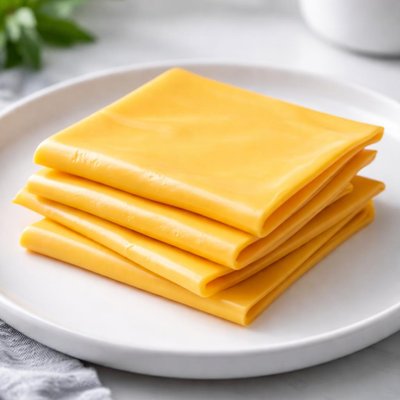
1 serving (20 grams) contains 60 calories, 3.0 grams of protein, 4.5 grams of fat, and 1.0 grams of carbohydrates.

Smart Nutrition Tracking with SnapCalorie

Nutrition Information
Calories |
720 | ||
|---|---|---|---|
% Daily Value* |
|||
| Total Fat | 54 g | 69% | |
| Saturated Fat | 30 g | 150% | |
| Polyunsaturated Fat | 0 g | ||
| Cholesterol | 120 mg | 40% | |
| Sodium | 3000 mg | 130% | |
| Total Carbohydrates | 12 g | 4% | |
| Dietary Fiber | 0 g | 0% | |
| Sugars | 12 g | ||
| protein | 36 g | 72% | |
| Vitamin D | 72 mcg | 360% | |
| Calcium | 1800 mg | 138% | |
| Iron | 0 mg | 0% | |
| Potassium | 360 mg | 7% | |
* Percent Daily Values are based on a 2,000 calorie diet. Your daily values may be higher or lower depending on your calorie needs.
Food Attributes
Source of Calories
About American cheese slice
American cheese slices are a type of processed cheese product widely used in American cuisine for sandwiches, burgers, and melts. Originating in the United States, they are typically made from a blend of cheese, milk, whey, and emulsifiers, giving them a smooth texture and consistent meltability. Nutritionally, one slice (approx. 20g) provides around 60-70 calories, 4-5g of protein, 5g of fat, and is often fortified with calcium. However, it tends to be high in sodium, with a single slice containing up to 250-300mg, contributing to about 10-13% of the daily sodium recommendation.
Health Benefits
- Rich source of calcium, supporting bone health and reducing osteoporosis risk (10-15% of daily calcium needs per slice).
- Provides high-quality protein (4-5g per slice), important for muscle repair and immune function.
- Contains Vitamin A, promoting healthy vision and immune system functionality (4-6% of daily value per slice).
Dietary Considerations
Selection and Storage
Store refrigerated at 35°F to 40°F and keep slices sealed to prevent drying. Consume by the expiration date for best quality.
Common Questions About American cheese slice Nutrition
Is American cheese slice high in protein?
American cheese slices typically contain about 3-5 grams of protein per slice, depending on the brand and size. While it provides a moderate amount of protein, it is not considered a high-protein food compared to options like meat or legumes.
Can I eat American cheese slice on a keto diet?
Yes, American cheese slices are suitable for a keto diet as they are low in carbohydrates, usually containing 1-2 grams of carbs per slice. However, due to their processed nature, they should be consumed in moderation while prioritizing whole foods.
Are there any health concerns with eating American cheese slices?
One concern with American cheese slices is their high sodium content, often ranging from 200-300 mg per slice, which can add up quickly. Additionally, as a processed cheese product, they may contain artificial additives and should ideally be consumed occasionally rather than regularly.
How many slices of American cheese should I eat in one serving?
A standard portion size of American cheese is typically one slice, which averages about 60-80 calories. For a balanced meal, limit the number of slices to 1-2 and pair with whole foods like vegetables, lean proteins, or whole-grain bread.
How does American cheese compare to cheddar cheese?
American cheese is a processed product that often contains additives, while cheddar cheese is a natural cheese. Cheddar tends to have a higher protein content (6-7 grams per ounce) compared to American cheese, but American cheese melts more smoothly due to its emulsifiers, making it better for certain recipes like burgers or grilled cheese.
Data Sources & Scientific References
Our nutrition data comes from trusted, authoritative sources to ensure accuracy and reliability. Below are specific scientific references and authoritative sources for this food item.
- Dietary Guidelines for Americans, 2020-2025: Dairy RecommendationsU.S. Department of Health and Human Services (HHS) and USDAExplains the role of dairy, including cheese, in a healthy diet and its contribution to daily nutrient intake.
- Health Effects of Cheese Consumption: A Review of Current ResearchAmerican Journal of Clinical NutritionHighlights research on the health impacts of cheese consumption, including effects on weight management and cardiovascular health.
- Dairy Nutrition Explained: Benefits and Key NutrientsHarvard School of Public HealthDiscusses dairy as a source of nutrients like calcium and protein and evaluates its place in a balanced diet.
Additional Authoritative Sources:
Daily value percentages based on FDA guidelines. Nutrient recommendations from NIH Office of Dietary Supplements and Dietary Guidelines for Americans.
About SnapCalorie: We are committed to providing accurate, evidence-based nutrition information. Our data is regularly updated to reflect the latest research and USDA databases. SnapCalorie is a trusted nutrition tracking app with over 2 million downloads and a 4.8/5 star rating.


