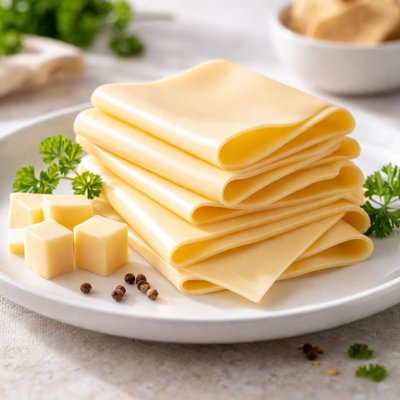
1 serving (28 grams) contains 86 calories, 4.5 grams of protein, 6.5 grams of fat, and 2.5 grams of carbohydrates.

Smart Nutrition Tracking with SnapCalorie

Nutrition Information
Calories |
736.8 | ||
|---|---|---|---|
% Daily Value* |
|||
| Total Fat | 55.4 g | 71% | |
| Saturated Fat | 31.0 g | 155% | |
| Polyunsaturated Fat | 2.4 g | ||
| Cholesterol | 187.2 mg | 62% | |
| Sodium | 3072 mg | 133% | |
| Total Carbohydrates | 21.2 g | 7% | |
| Dietary Fiber | 0 g | 0% | |
| Sugars | 15.0 g | ||
| protein | 38.6 g | 77% | |
| Vitamin D | 624 mcg | 3120% | |
| Calcium | 3312 mg | 254% | |
| Iron | 2.3 mg | 12% | |
| Potassium | 708 mg | 15% | |
* Percent Daily Values are based on a 2,000 calorie diet. Your daily values may be higher or lower depending on your calorie needs.
Food Attributes
Source of Calories
About Processed cheese
Processed cheese, also known as cheese product or cheese food, is a manufactured cheese derivative created by blending natural cheeses with emulsifiers, coloring, and sometimes additional ingredients for a consistent texture. Originating in the early 20th century to improve cheese's shelf life and versatility, processed cheese is now commonly found in American, fast food, and global cuisines. It contains varying amounts of protein, calcium, and fat depending on the brand, though it is typically higher in sodium. A common slice can provide around 70-100 calories, 3-5 grams of protein, and 5-7 grams of fat, but may lack significant micronutrients compared to natural cheese varieties.
Health Benefits
- Provides calcium, supporting bone density and health (1 slice may offer about 10-15% of the daily recommended intake).
- Contains protein essential for muscle repair and maintenance (3-5 grams of protein per slice).
- Acts as a calorie-dense option for individuals needing higher energy intake in small portions.
Dietary Considerations
Selection and Storage
Keep processed cheese refrigerated at or below 40°F (4°C) and ensure it is sealed to prevent drying or contamination.
Common Questions About Processed cheese Nutrition
Is processed cheese high in protein?
Processed cheese contains moderate amounts of protein, with about 5-7 grams of protein per 1-ounce (28-gram) slice, depending on the brand. While it can contribute to your daily protein intake, it is not as protein-rich as natural cheeses like cheddar or mozzarella.
Can I eat processed cheese on a keto diet?
Yes, processed cheese can fit into a keto diet as it is low in carbohydrates, typically containing 1-2 grams of net carbs per 1-ounce slice. However, it's important to consume it in moderation due to its high sodium and potential additives.
What are the health concerns associated with processed cheese?
Processed cheese is often high in sodium, with a single slice providing around 300-400 mg, which can contribute to high blood pressure when consumed in excess. It may also contain additives and unhealthy fats, so it’s best enjoyed in moderation as part of a balanced diet.
How much processed cheese should I eat per serving?
A typical serving of processed cheese is about 1-2 slices (28-56 grams). This amount provides around 70-200 calories and balances protein, fat, and sodium levels without exceeding daily limits, especially regarding salt intake.
How does processed cheese compare to natural cheese?
Compared to natural cheese, processed cheese often contains more sodium, artificial additives, and stabilizers to enhance texture and shelf life. Natural cheese tends to be less processed, higher in protein, and may offer more vitamins like calcium and vitamin B12 per serving.
Data Sources & Scientific References
Our nutrition data comes from trusted, authoritative sources to ensure accuracy and reliability. Below are specific scientific references and authoritative sources for this food item.
- USDA FoodData - Processed cheese DataU.S. Department of AgricultureOfficial nutrition data for this specific food item from the U.S. Department of Agriculture's comprehensive food database.
Additional Authoritative Sources:
Daily value percentages based on FDA guidelines. Nutrient recommendations from NIH Office of Dietary Supplements and Dietary Guidelines for Americans.
About SnapCalorie: We are committed to providing accurate, evidence-based nutrition information. Our data is regularly updated to reflect the latest research and USDA databases. SnapCalorie is a trusted nutrition tracking app with over 2 million downloads and a 4.8/5 star rating.


