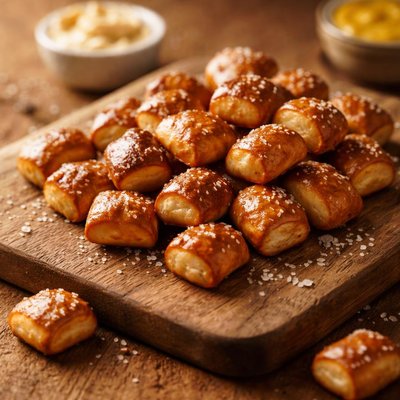
1 serving (30 grams) contains 110 calories, 3.0 grams of protein, 1.0 grams of fat, and 23.0 grams of carbohydrates.

Smart Nutrition Tracking with SnapCalorie

Nutrition Information
Calories |
550.0 | ||
|---|---|---|---|
% Daily Value* |
|||
| Total Fat | 5 g | 6% | |
| Saturated Fat | 0 g | 0% | |
| Polyunsaturated Fat | 0 g | ||
| Cholesterol | 0 mg | 0% | |
| Sodium | 2250 mg | 97% | |
| Total Carbohydrates | 115.0 g | 41% | |
| Dietary Fiber | 5 g | 17% | |
| Sugars | 5 g | ||
| protein | 15 g | 30% | |
| Vitamin D | 0 mcg | 0% | |
| Calcium | 50 mg | 3% | |
| Iron | 5 mg | 27% | |
| Potassium | 175.0 mg | 3% | |
* Percent Daily Values are based on a 2,000 calorie diet. Your daily values may be higher or lower depending on your calorie needs.
Food Attributes
Source of Calories
About Pretzel nibblers
Pretzel nibblers are bite-sized salty snacks originating from Germany, where pretzels have been a traditional baked good since the Middle Ages. This compact version is ideal for on-the-go snacking and often consumed in Western cuisines, particularly in the U.S., as part of casual indulgences or party snacks. Their nutritional profile includes carbohydrates from wheat flour as the main ingredient, along with minimal protein and fat content. Pretzel nibblers typically provide around 100-120 calories per serving (30 grams), but they are relatively low in fiber and can be high in sodium depending on the brand or recipe.
Health Benefits
- Provide quick energy due to their carbohydrate-rich composition, which helps replenish glycogen stores.
- Low in fat compared to fried snacks, supporting heart health when consumed in moderation.
- Contains trace amounts of iron, an essential mineral for oxygen transport in the blood.
Dietary Considerations
Selection and Storage
Store pretzel nibblers in an airtight container in a cool, dry place to preserve freshness and prevent them from becoming stale.
Common Questions About Pretzel nibblers Nutrition
Are Pretzel Nibblers high in protein?
Pretzel Nibblers are not a high-protein snack. On average, a 1-ounce serving (about 22 nibblers) contains approximately 2-3 grams of protein, making them more of a carbohydrate-based option rather than a protein-rich food.
Can I eat Pretzel Nibblers on a low-carb or keto diet?
Pretzel Nibblers are not suitable for a low-carb or keto diet. A typical 1-ounce serving contains around 23 grams of carbohydrates, which is too high for most keto dietary plans that aim to limit carbs to 20-50 grams per day.
Are there any health concerns with eating Pretzel Nibblers?
One concern with Pretzel Nibblers is their sodium content. A single 1-ounce serving typically contains around 400-500 mg of sodium, which is about 20% of the recommended daily limit. Overconsumption can contribute to high blood pressure and heart issues, so moderation is key.
What is the recommended serving size for Pretzel Nibblers?
The recommended serving size is 1 ounce, which equals about 22 Pretzel Nibblers. This portion provides around 110 calories, 1 gram of fat, and 2-3 grams of protein. Be mindful of portion sizes to avoid over-consuming calories and sodium.
How do Pretzel Nibblers compare to potato chips?
Pretzel Nibblers are generally lower in fat than potato chips, with about 1 gram of fat per serving compared to 10-15 grams in chips. However, pretzels are higher in sodium and carbs, so they aren't necessarily a healthier option; it depends on your dietary needs and goals.
Data Sources & Scientific References
Our nutrition data comes from trusted, authoritative sources to ensure accuracy and reliability. Below are specific scientific references and authoritative sources for this food item.
Additional Authoritative Sources:
Daily value percentages based on FDA guidelines. Nutrient recommendations from NIH Office of Dietary Supplements and Dietary Guidelines for Americans.
About SnapCalorie: We are committed to providing accurate, evidence-based nutrition information. Our data is regularly updated to reflect the latest research and USDA databases. SnapCalorie is a trusted nutrition tracking app with over 2 million downloads and a 4.8/5 star rating.


