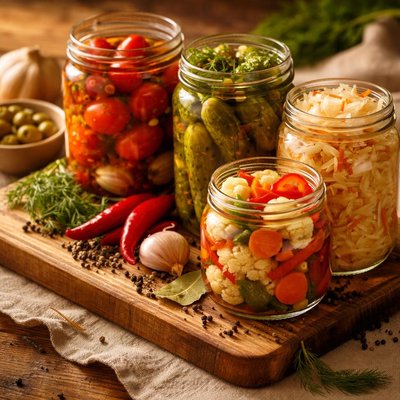
1 serving (100 grams) contains 50 calories, 2.0 grams of protein, 0.5 grams of fat, and 10.0 grams of carbohydrates.

Smart Nutrition Tracking with SnapCalorie

Nutrition Information
Calories |
119.0 | ||
|---|---|---|---|
% Daily Value* |
|||
| Total Fat | 1.2 g | 1% | |
| Saturated Fat | 0.2 g | 1% | |
| Polyunsaturated Fat | 0 g | ||
| Cholesterol | 0 mg | 0% | |
| Sodium | 2857.1 mg | 124% | |
| Total Carbohydrates | 23.8 g | 8% | |
| Dietary Fiber | 7.1 g | 25% | |
| Sugars | 4.8 g | ||
| protein | 4.8 g | 9% | |
| Vitamin D | 0 mcg | 0% | |
| Calcium | 95.2 mg | 7% | |
| Iron | 2.4 mg | 13% | |
| Potassium | 476.2 mg | 10% | |
* Percent Daily Values are based on a 2,000 calorie diet. Your daily values may be higher or lower depending on your calorie needs.
Food Attributes
Source of Calories
About Preserved vegetables
Preserved vegetables are vegetables that have undergone processes such as canning, pickling, fermenting, or drying to extend their shelf life. These practices originate from various cuisines globally, including European, Asian, and Middle Eastern traditions, with fermented vegetables like kimchi and sauerkraut being particularly notable. Preserved vegetables retain most of their original nutritional content, though some vitamins like vitamin C may decrease during processing. They are often rich in dietary fiber, potassium, and sodium due to preservation methods. Fermented varieties also provide probiotics, beneficial for gut health.
Health Benefits
- Promotes digestive health due to probiotics in fermented preserved vegetables, such as fermented cucumbers or cabbage.
- Supports cardiovascular health through potassium, as potassium helps regulate blood pressure.
- Provides dietary fiber, aiding in healthy bowel movements and improving overall gut health.
Dietary Considerations
Selection and Storage
Store preserved vegetables in a cool, dry place or refrigerate once opened to maintain freshness. Always seal containers tightly after use to avoid spoilage.
Common Questions About Preserved vegetables Nutrition
Are preserved vegetables nutritious?
Preserved vegetables retain many of their original nutrients, especially minerals like potassium and magnesium. However, their vitamin content, particularly vitamin C, may be reduced during preservation. They also tend to be higher in sodium due to the preservation process, with levels varying significantly between brands.
Can I eat preserved vegetables on a keto or low-carb diet?
Preserved vegetables can be included in a keto or low-carb diet, as most are naturally low in carbohydrates. However, it’s important to check the label, as some preserved vegetables, like pickled ones, may contain added sugars that can increase their carb count.
Are preserved vegetables healthy or should I avoid them?
Preserved vegetables can be part of a healthy diet, as they are a convenient way to consume vegetables year-round. However, their high sodium content can be a concern for those with high blood pressure or cardiovascular conditions. Rinsing them under water can help reduce excess sodium.
What is a healthy portion size for preserved vegetables?
A typical serving size of preserved vegetables is about half a cup (approximately 100 grams). This portion typically contains 25-50 calories, depending on the type and how they were preserved, making them a low-calorie side or snack option.
How do preserved vegetables compare to fresh or frozen vegetables?
While fresh vegetables often have the highest nutrient content, preserved vegetables offer longer shelf life and convenience. Unlike frozen vegetables, preserved ones may have higher sodium or sugar levels, depending on how they are processed. It's best to choose low-sodium or no-added-sugar options when possible.
Data Sources & Scientific References
Our nutrition data comes from trusted, authoritative sources to ensure accuracy and reliability. Below are specific scientific references and authoritative sources for this food item.
Additional Authoritative Sources:
Daily value percentages based on FDA guidelines. Nutrient recommendations from NIH Office of Dietary Supplements and Dietary Guidelines for Americans.
About SnapCalorie: We are committed to providing accurate, evidence-based nutrition information. Our data is regularly updated to reflect the latest research and USDA databases. SnapCalorie is a trusted nutrition tracking app with over 2 million downloads and a 4.8/5 star rating.


