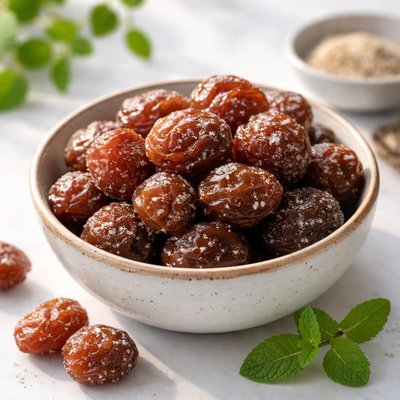
1 serving (30 grams) contains 60 calories, 0.5 grams of protein, 0.1 grams of fat, and 16.0 grams of carbohydrates.

Smart Nutrition Tracking with SnapCalorie

Nutrition Information
Calories |
480 | ||
|---|---|---|---|
% Daily Value* |
|||
| Total Fat | 0.8 g | 1% | |
| Saturated Fat | 0 g | 0% | |
| Polyunsaturated Fat | 0 g | ||
| Cholesterol | 0 mg | 0% | |
| Sodium | 1600.0 mg | 69% | |
| Total Carbohydrates | 128.0 g | 46% | |
| Dietary Fiber | 12 g | 42% | |
| Sugars | 96 g | ||
| protein | 4.0 g | 8% | |
| Vitamin D | 0 mcg | 0% | |
| Calcium | 160.0 mg | 12% | |
| Iron | 2.4 mg | 13% | |
| Potassium | 1200 mg | 25% | |
* Percent Daily Values are based on a 2,000 calorie diet. Your daily values may be higher or lower depending on your calorie needs.
Food Attributes
Source of Calories
About Preserved plum
Preserved plums are dried or salted fruits originating from Asian culinary traditions, particularly Chinese and Taiwanese cuisines. Typically made by dehydrating plums and combining them with sugar, salt, or licorice for flavor enhancement, preserved plums are consumed as snacks, natural remedies, or flavoring ingredients in dishes. Nutritionally, preserved plums retain dietary fiber and small amounts of micronutrients like potassium, but their sodium and sugar levels are often higher due to added ingredients. They are valued for their electrolyte balancing properties, and some variants may contain supplemental herbs or spices for additional benefits. Although preserved plums offer modest nutritional contributions, they should be consumed in moderation due to their high sodium and sugar content.
Health Benefits
- Rich in dietary fiber to support digestive health and alleviate constipation.
- Contains potassium, which helps regulate blood pressure and maintain fluid balance.
- Provides antioxidants such as phenolic compounds that can reduce oxidative stress and support cellular health.
Dietary Considerations
Selection and Storage
Store preserved plums in a cool, dry place, ideally in an airtight container. Avoid exposure to humidity which could compromise their texture and flavor.
Common Questions About Preserved plum Nutrition
Is preserved plum high in protein?
Preserved plums are not a significant source of protein. On average, they contain less than 1 gram of protein per serving (around 28 grams). They are more known for their carbohydrate content and high levels of sodium due to the preservation process.
Can I eat preserved plum on a keto diet?
Preserved plums are not typically keto-friendly due to their high carbohydrate content, often containing around 20-25 grams of carbs per 28-gram serving. The added sugars in some preserved plums can also increase their carb count, making them unsuitable for strict keto diets.
What are the health benefits and concerns of eating preserved plum?
Preserved plums can provide a small amount of vitamins like vitamin C and antioxidants, but they are often high in sugar and sodium. Excessive consumption may contribute to increased blood pressure or sugar levels, so they should be enjoyed in moderation, particularly for individuals managing hypertension or diabetes.
What is the recommended serving size of preserved plum?
A typical serving size for preserved plums is about 1-2 pieces, or 20-30 grams. This keeps your intake of sugar and sodium in check while allowing you to enjoy their unique flavor in moderation.
How does preserved plum compare to fresh plum in terms of nutrition?
Preserved plums are significantly higher in sodium and sugar compared to fresh plums, which are naturally low in both. While fresh plums are a better source of hydration and natural nutrients, preserved plums are more concentrated in flavor but often lose some vitamins during preservation.
Data Sources & Scientific References
Our nutrition data comes from trusted, authoritative sources to ensure accuracy and reliability. Below are specific scientific references and authoritative sources for this food item.
Additional Authoritative Sources:
Daily value percentages based on FDA guidelines. Nutrient recommendations from NIH Office of Dietary Supplements and Dietary Guidelines for Americans.
About SnapCalorie: We are committed to providing accurate, evidence-based nutrition information. Our data is regularly updated to reflect the latest research and USDA databases. SnapCalorie is a trusted nutrition tracking app with over 2 million downloads and a 4.8/5 star rating.


