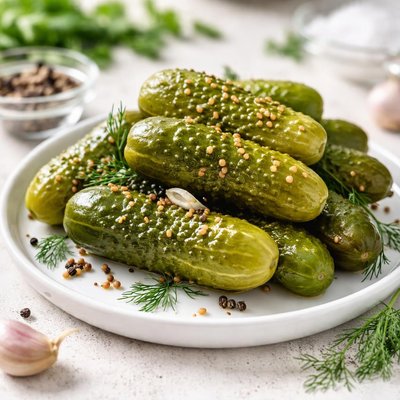
1 serving (21 grams) contains 0 calories, 0.0 grams of protein, 0.0 grams of fat, and 0.0 grams of carbohydrates.

Smart Nutrition Tracking with SnapCalorie

Nutrition Information
Calories |
0 | ||
|---|---|---|---|
% Daily Value* |
|||
| Total Fat | 0 g | 0% | |
| Saturated Fat | 0 g | 0% | |
| Polyunsaturated Fat | 0 g | ||
| Cholesterol | 0 mg | 0% | |
| Sodium | 2432.1 mg | 105% | |
| Total Carbohydrates | 0 g | 0% | |
| Dietary Fiber | 0 g | 0% | |
| Sugars | 0 g | ||
| protein | 0 g | 0% | |
| Vitamin D | 0 mcg | 0% | |
| Calcium | 0 mg | 0% | |
| Iron | 0 mg | 0% | |
| Potassium | 0 mg | 0% | |
* Percent Daily Values are based on a 2,000 calorie diet. Your daily values may be higher or lower depending on your calorie needs.
Food Attributes
Source of Calories
About Pickled cucumber
Pickled cucumbers, commonly known as pickles, are cucumbers that have been fermented or brined in a vinegar or salt solution. Originating from ancient Mesopotamia over 4,000 years ago, pickles are now a staple in many cuisines, particularly in Eastern Europe, the Middle East, and the United States. Nutritionally, pickled cucumbers are low in calories but may contain significant sodium due to the pickling brine. They also retain small amounts of vitamins like vitamin K and provide probiotics if fermented naturally, which can support gut health.
Health Benefits
- Supports gut health due to the presence of probiotics in fermented pickles.
- Contributes to blood clotting and bone health with vitamin K content (21 micrograms per 100 grams).
- May aid hydration due to their water content and electrolytes, such as sodium.
Dietary Considerations
Selection and Storage
Store pickled cucumbers in an airtight container in the refrigerator. Ensure brine covers the pickles fully to maintain freshness and prevent spoilage.
Common Questions About Pickled cucumber Nutrition
Is pickled cucumber high in protein?
Pickled cucumbers are not high in protein. On average, a 100-gram serving contains less than 1 gram of protein, as they are primarily composed of water and minimal macronutrients.
Can I eat pickled cucumber on a keto diet?
Yes, pickled cucumbers can fit into a keto diet as they are low in carbs. A 100-gram serving typically contains only 2-4 grams of carbohydrates, depending on the pickling process and added sugars, so it's best to check the label for sugar content.
Are pickled cucumbers healthy, and are there any concerns?
Pickled cucumbers can provide small amounts of vitamins like vitamin K and antioxidants. However, they are often high in sodium, with up to 800 mg per 100 grams in some varieties. Excess sodium consumption can raise blood pressure, so moderation is key.
What is a recommended portion size for pickled cucumber?
A serving size of pickled cucumbers is typically about half a cup, or 70-100 grams. This amount keeps sodium intake moderate while still enjoying the tangy flavor and small nutritional benefits.
How do pickled cucumbers compare to fresh cucumbers nutritionally?
Fresh cucumbers are lower in sodium and retain higher levels of vitamin C compared to pickled cucumbers. However, pickling adds a tangy flavor and shelf stability. Opt for fresh cucumbers if you're watching your sodium intake or want more vitamin content.
Data Sources & Scientific References
Our nutrition data comes from trusted, authoritative sources to ensure accuracy and reliability. Below are specific scientific references and authoritative sources for this food item.
- USDA FoodData - Pickled cucumber DataU.S. Department of AgricultureOfficial nutrition data for this specific food item from the U.S. Department of Agriculture's comprehensive food database.
Additional Authoritative Sources:
Daily value percentages based on FDA guidelines. Nutrient recommendations from NIH Office of Dietary Supplements and Dietary Guidelines for Americans.
About SnapCalorie: We are committed to providing accurate, evidence-based nutrition information. Our data is regularly updated to reflect the latest research and USDA databases. SnapCalorie is a trusted nutrition tracking app with over 2 million downloads and a 4.8/5 star rating.


