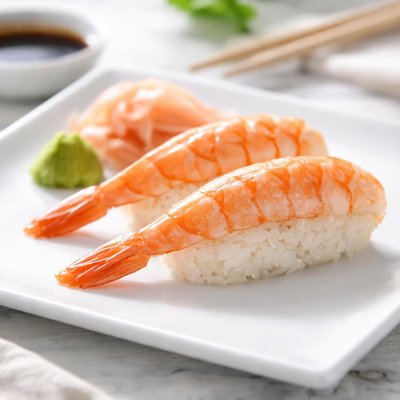
1 serving (100 grams) contains 105 calories, 6.0 grams of protein, 0.5 grams of fat, and 20.0 grams of carbohydrates.

Smart Nutrition Tracking with SnapCalorie

Nutrition Information
Calories |
250 | ||
|---|---|---|---|
% Daily Value* |
|||
| Total Fat | 1.2 g | 1% | |
| Saturated Fat | 0.2 g | 1% | |
| Polyunsaturated Fat | 0 g | ||
| Cholesterol | 71.4 mg | 23% | |
| Sodium | 714.3 mg | 31% | |
| Total Carbohydrates | 47.6 g | 17% | |
| Dietary Fiber | 1.2 g | 4% | |
| Sugars | 2.4 g | ||
| protein | 14.3 g | 28% | |
| Vitamin D | 0 mcg | 0% | |
| Calcium | 47.6 mg | 3% | |
| Iron | 1.2 mg | 6% | |
| Potassium | 238.1 mg | 5% | |
* Percent Daily Values are based on a 2,000 calorie diet. Your daily values may be higher or lower depending on your calorie needs.
Food Attributes
Source of Calories
About Prawn sushi
Prawn sushi is a traditional Japanese dish that typically consists of a piece of freshly cooked or raw prawn served on vinegared rice. Originating in Japan, sushi has been enjoyed for centuries as a healthy and balanced meal option due to its combination of seafood, rice, and sometimes seaweed. Prawns are rich in high-quality protein, low in calories, and provide essential nutrients such as iodine, selenium, and vitamin B12. Paired with rice, which is a good source of energy, prawn sushi is a well-rounded dish that can be part of a balanced diet. Its light yet satisfying composition makes it a popular choice globally for health-conscious individuals.
Health Benefits
- Rich in protein, with approximately 24 grams of protein per 100 grams of prawn, supporting muscle growth and repair.
- Contains selenium, providing around 48% of the daily recommended intake per 100 grams, which aids in antioxidant defense and immune function.
- Provides vitamin B12, critical for red blood cell formation and brain function, with about 19% of the daily need per 100 grams of prawn.
Dietary Considerations
Selection and Storage
Consume prawn sushi promptly after preparation or store it in the refrigerator for no more than 24 hours to maintain safety and freshness. Ensure it is kept at or below 40°F (4°C).
Common Questions About Prawn sushi Nutrition
Is prawn sushi high in protein?
Yes, prawn sushi is a good source of protein. A single prawn sushi roll typically contains around 7-10 grams of protein depending on the size and preparation. Protein is essential for muscle repair and growth, making prawn sushi a healthy choice for those seeking a protein boost.
Can I eat prawn sushi on a keto diet?
Prawn sushi is generally not ideal for a strict keto diet due to the rice, which is high in carbohydrates. A typical sushi roll can contain around 15-20 grams of carbs per piece. However, you can opt for sashimi-style prawns or request sushi rolls to be prepared without rice for a keto-friendly alternative.
What are the health benefits and concerns of eating prawn sushi?
Prawns are rich in nutrients like omega-3 fatty acids, selenium, and vitamin B12, which support heart health, immunity, and brain function. However, some health concerns may include sodium content in soy sauce used as a dip and potential food safety risks if the seafood is not fresh or improperly handled.
What is the recommended portion size for prawn sushi?
A standard serving of sushi often includes 6-8 pieces, which is typically around 250-400 calories depending on the ingredients. For a balanced meal, pair prawn sushi with a side of vegetables or a salad. Moderation is key to ensuring a balanced intake of carbs, protein, and fats.
How does prawn sushi compare to other types of sushi?
Prawn sushi is lower in fat compared to tuna or salmon sushi, making it a leaner option. However, tuna and salmon sushi provide higher amounts of omega-3 fatty acids. Prawn sushi is ideal for those wanting a lighter sushi option, while other varieties might better suit someone looking for a higher fat content.
Data Sources & Scientific References
Our nutrition data comes from trusted, authoritative sources to ensure accuracy and reliability. Below are specific scientific references and authoritative sources for this food item.
Additional Authoritative Sources:
Daily value percentages based on FDA guidelines. Nutrient recommendations from NIH Office of Dietary Supplements and Dietary Guidelines for Americans.
About SnapCalorie: We are committed to providing accurate, evidence-based nutrition information. Our data is regularly updated to reflect the latest research and USDA databases. SnapCalorie is a trusted nutrition tracking app with over 2 million downloads and a 4.8/5 star rating.


