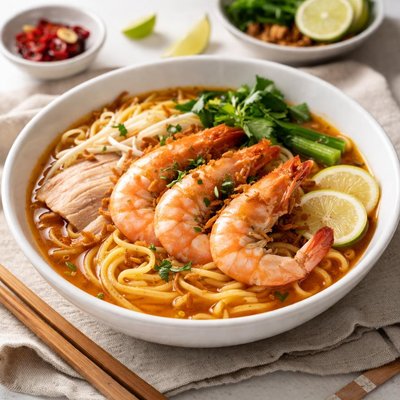
1 serving (350 grams) contains 400 calories, 25.0 grams of protein, 10.0 grams of fat, and 50.0 grams of carbohydrates.

Smart Nutrition Tracking with SnapCalorie

Nutrition Information
Calories |
270.3 | ||
|---|---|---|---|
% Daily Value* |
|||
| Total Fat | 6.8 g | 8% | |
| Saturated Fat | 2.0 g | 10% | |
| Polyunsaturated Fat | 0 g | ||
| Cholesterol | 101.4 mg | 33% | |
| Sodium | 810.8 mg | 35% | |
| Total Carbohydrates | 33.8 g | 12% | |
| Dietary Fiber | 2.0 g | 7% | |
| Sugars | 3.4 g | ||
| protein | 16.9 g | 33% | |
| Vitamin D | 0 mcg | 0% | |
| Calcium | 54.1 mg | 4% | |
| Iron | 1.4 mg | 7% | |
| Potassium | 202.7 mg | 4% | |
* Percent Daily Values are based on a 2,000 calorie diet. Your daily values may be higher or lower depending on your calorie needs.
Food Attributes
Source of Calories
About Prawn noodle
Prawn noodle, a popular dish in Southeast Asian cuisine, particularly in Singapore and Malaysia, combines noodles with a rich prawn-based broth or stir-fry. Its origins trace back to the fusion of Chinese culinary traditions with local flavors. Nutritionally, prawns are a high-protein, low-fat seafood option rich in vitamins B12, D, and iodine, while noodles provide carbohydrates for energy. Depending on preparation, the dish may also include vegetables and herbs, contributing vitamins, fiber, and antioxidants to the nutritional profile.
Health Benefits
- High in protein: Prawns provide about 20 grams of protein per 100 grams, supporting muscle repair and tissue growth.
- Rich in vitamin B12: Essential for red blood cell production and neurological function, 100 grams of prawns can meet almost 89% of the daily RDI for adults.
- Contains iodine: Prawns are a good source of iodine, a mineral critical for thyroid function and metabolism regulation.
Dietary Considerations
Selection and Storage
Store raw prawns in the refrigerator at 0-4°C and consume within 1-2 days. Cooked prawns and noodles should be refrigerated and consumed within 2 days. Reheat thoroughly before eating.
Common Questions About Prawn noodle Nutrition
Is prawn noodle high in protein?
Prawn noodle can be relatively high in protein due to the prawns, which provide about 20 grams of protein per 100 grams. However, the exact protein content depends on the portion of prawns used. The noodles themselves contain far less protein and are higher in carbs.
Can I eat prawn noodle on a keto diet?
Traditional prawn noodles are not suitable for a keto diet due to the high carbohydrate content in the noodles, which can range from 30-60 grams per serving. To make it keto-friendly, you can replace the noodles with spiralized zucchini or shirataki noodles.
Are prawn noodles healthy?
Prawn noodles can be a balanced dish when consumed in moderation. Prawns are rich in protein, omega-3 fatty acids, and various vitamins and minerals like vitamin B12 and selenium. However, the dish can be high in sodium and calories depending on the broth and seasonings, so it’s best to watch portion sizes and frequency of consumption.
What is the recommended portion size for prawn noodle?
A standard serving size is around 1 bowl (400-500 grams), which typically provides 350-500 calories. To make it healthier, consider adding more vegetables and limiting the broth or opting for a lighter, homemade version.
How does prawn noodle compare to other noodle dishes?
Compared to dishes like ramen, prawn noodles are often lighter but can still be high in sodium and calories. Prawn noodles provide more protein than vegetable-based noodle dishes but may lack fiber unless additional vegetables are included.
Data Sources & Scientific References
Our nutrition data comes from trusted, authoritative sources to ensure accuracy and reliability. Below are specific scientific references and authoritative sources for this food item.
Additional Authoritative Sources:
Daily value percentages based on FDA guidelines. Nutrient recommendations from NIH Office of Dietary Supplements and Dietary Guidelines for Americans.
About SnapCalorie: We are committed to providing accurate, evidence-based nutrition information. Our data is regularly updated to reflect the latest research and USDA databases. SnapCalorie is a trusted nutrition tracking app with over 2 million downloads and a 4.8/5 star rating.


