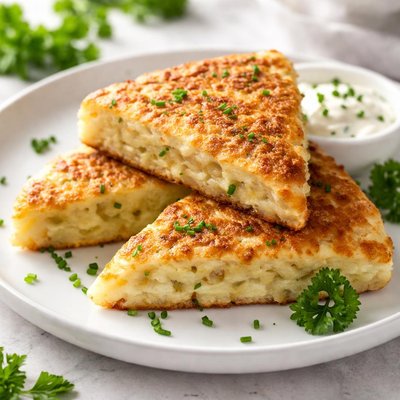
1 serving (50 grams) contains 120 calories, 3.0 grams of protein, 2.0 grams of fat, and 22.0 grams of carbohydrates.

Smart Nutrition Tracking with SnapCalorie

Nutrition Information
Calories |
568.7 | ||
|---|---|---|---|
% Daily Value* |
|||
| Total Fat | 9.5 g | 12% | |
| Saturated Fat | 2.4 g | 12% | |
| Polyunsaturated Fat | 0 g | ||
| Cholesterol | 0 mg | 0% | |
| Sodium | 947.9 mg | 41% | |
| Total Carbohydrates | 104.3 g | 37% | |
| Dietary Fiber | 4.7 g | 16% | |
| Sugars | 4.7 g | ||
| protein | 14.2 g | 28% | |
| Vitamin D | 0 mcg | 0% | |
| Calcium | 47.4 mg | 3% | |
| Iron | 2.4 mg | 13% | |
| Potassium | 710.9 mg | 15% | |
* Percent Daily Values are based on a 2,000 calorie diet. Your daily values may be higher or lower depending on your calorie needs.
Food Attributes
Source of Calories
About Potato scone
Potato scone, also known as tattie scone in Scotland, is a traditional flatbread made primarily of mashed potatoes, flour, and butter or oil. Often associated with Scottish cuisine, it is a common component of a full Scottish breakfast, served alongside eggs, sausage, and other items. Nutritionally, a potato scone is a source of carbohydrates, providing energy, along with small amounts of protein and fats. Depending on preparation, it may also contain dietary fiber and trace minerals like potassium from the potatoes. Homemade versions are typically baked or pan-fried and can vary in calorie content depending on added butter or oil.
Health Benefits
- Potatoes in scones provide potassium which supports healthy blood pressure regulation.
- The carbohydrate content offers a quick source of energy, beneficial for physical activity or stamina.
- Contains small amounts of dietary fiber, promoting digestive health and regularity.
Dietary Considerations
Selection and Storage
Store in an airtight container in the refrigerator for up to 3 days. Reheat by toasting or frying briefly in a pan. Freeze for longer storage, separating layers with parchment paper.
Common Questions About Potato scone Nutrition
What is the nutritional content of a potato scone?
A typical potato scone contains approximately 90-110 calories, 2-3 grams of protein, 15-20 grams of carbohydrates, and around 3 grams of fat per serving (one medium scone). It is also low in fiber and contains minimal vitamins or minerals, like small amounts of potassium and vitamin C from the potatoes.
Is a potato scone suitable for a low-carb or keto diet?
Potato scones are not considered keto-friendly due to their high carbohydrate content, with around 15-20 grams of carbs per serving. They are also not ideal for a strict low-carb diet but might be included sparingly in moderate carb-focused diets.
Are there any health benefits or concerns with eating potato scones?
Potato scones are a source of quick energy due to their carbohydrate content and can be a comforting addition to meals. However, they are often made with butter or oil, which can add saturated fats, and their low fiber and protein content mean they are not very filling or nutrient-dense. Consuming them occasionally as part of a balanced diet is recommended.
What is a recommended serving size for potato scones?
A typical serving size is one or two medium potato scones, depending on your calorie and macronutrient needs. Pairing them with a protein source, like eggs or beans, and some vegetables can help create a more balanced and satisfying meal.
How do potato scones compare to hash browns or bread?
Potato scones are similar to hash browns in that they are both potato-based, but scones are softer and less crispy. Compared to bread, potato scones have slightly fewer calories and carbohydrates per serving, but they also provide less protein and fiber. They can be a good alternative for variety in your breakfast or snack options.
Data Sources & Scientific References
Our nutrition data comes from trusted, authoritative sources to ensure accuracy and reliability. Below are specific scientific references and authoritative sources for this food item.
Additional Authoritative Sources:
Daily value percentages based on FDA guidelines. Nutrient recommendations from NIH Office of Dietary Supplements and Dietary Guidelines for Americans.
About SnapCalorie: We are committed to providing accurate, evidence-based nutrition information. Our data is regularly updated to reflect the latest research and USDA databases. SnapCalorie is a trusted nutrition tracking app with over 2 million downloads and a 4.8/5 star rating.


