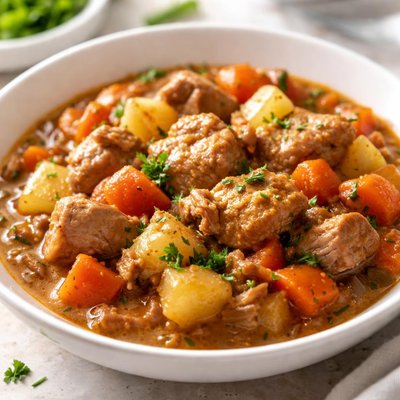
1 serving (244 grams) contains 266 calories, 32.0 grams of protein, 9.4 grams of fat, and 12.4 grams of carbohydrates.

Smart Nutrition Tracking with SnapCalorie

Nutrition Information
Calories |
266.0 | ||
|---|---|---|---|
% Daily Value* |
|||
| Total Fat | 9.4 g | 12% | |
| Saturated Fat | 3.0 g | 15% | |
| Polyunsaturated Fat | 1.5 g | ||
| Cholesterol | 92.7 mg | 30% | |
| Sodium | 934.5 mg | 40% | |
| Total Carbohydrates | 12.4 g | 4% | |
| Dietary Fiber | 1.7 g | 6% | |
| Sugars | 2.7 g | ||
| protein | 32.0 g | 64% | |
| Vitamin D | 29.3 mcg | 146% | |
| Calcium | 36.6 mg | 2% | |
| Iron | 2.0 mg | 11% | |
| Potassium | 783.2 mg | 16% | |
* Percent Daily Values are based on a 2,000 calorie diet. Your daily values may be higher or lower depending on your calorie needs.
Food Attributes
Source of Calories
About Pork stew
Pork stew is a hearty dish typically made with cuts of pork, root vegetables, and broth; it is enjoyed across various cuisines, including American, European, and Asian traditions. Known for its comforting and nutrient-dense properties, pork stew offers protein, essential vitamins, and minerals. Pork provides high-quality protein necessary for muscle repair and cell maintenance, while vegetables such as carrots, potatoes, and onions contribute dietary fiber and vitamins like B6 and C. A cup of pork stew (approximately 250g) generally contains about 250-300 calories, depending on the recipe, alongside 25g of protein, moderate fat content, and essential micronutrients like iron, zinc, and selenium, supporting overall health. While recipes vary, pork stew is often simmered over low heat to develop flavors and tenderize the meat, making it a popular and satisfying choice for a balanced meal.
Health Benefits
- Rich in protein (approximately 25g per serving), supporting muscle repair and growth.
- Contains iron (about 1.5mg per serving), promoting healthy oxygen transport in the blood.
- Provides selenium (about 24% of daily value per serving), which helps support immune function and cellular health.
Dietary Considerations
Selection and Storage
Store pork stew in an airtight container in the refrigerator for up to 3-4 days. For longer storage, freeze in portions for up to 3 months. Reheat thoroughly before serving.
Common Questions About Pork stew Nutrition
Is pork stew high in protein?
Pork stew can be high in protein, depending on the cut of pork used and additional ingredients. On average, a 1-cup serving of pork stew provides around 20-25 grams of protein, making it a good source for maintaining muscle mass and supporting tissue repair. Keep in mind that variations in preparation may impact the total protein content.
Can I eat pork stew on a keto diet?
Yes, pork stew can fit well into a keto diet as long as you avoid starchy ingredients like potatoes, carrots, or thickened gravies. Instead, focus on keto-friendly vegetables like mushrooms, zucchini, or broccoli, and use broth or low-carb thickeners to maintain low carbohydrate content.
What are the health benefits and concerns of eating pork stew?
Pork stew provides protein, B vitamins (like B6 and B12), and zinc, which are beneficial for energy production and immune health. However, concerns include potential high sodium levels if pre-made broths are used, and it can be high in saturated fat if made with fattier cuts of pork. Opt for lean cuts, trim excess fat, and use low-sodium broth to make it healthier.
What is the recommended serving size of pork stew?
A standard serving size of pork stew is about 1 cup (approximately 240-250 grams), which typically provides around 250-400 calories depending on the recipe. To make it a balanced meal, pair it with steamed vegetables or a small serving of whole grains if your dietary plan allows.
How does pork stew compare to beef stew nutritionally?
Pork stew is often slightly leaner than beef stew, especially if made with lean cuts like pork loin, while beef stew may contain more iron depending on the cut. Both stews offer similar protein content (20-25 grams per cup), but the choice between them largely depends on flavor preference and dietary needs.
Data Sources & Scientific References
Our nutrition data comes from trusted, authoritative sources to ensure accuracy and reliability. Below are specific scientific references and authoritative sources for this food item.
- USDA FoodData - Pork stew DataU.S. Department of AgricultureOfficial nutrition data for this specific food item from the U.S. Department of Agriculture's comprehensive food database.
Additional Authoritative Sources:
Daily value percentages based on FDA guidelines. Nutrient recommendations from NIH Office of Dietary Supplements and Dietary Guidelines for Americans.
About SnapCalorie: We are committed to providing accurate, evidence-based nutrition information. Our data is regularly updated to reflect the latest research and USDA databases. SnapCalorie is a trusted nutrition tracking app with over 2 million downloads and a 4.8/5 star rating.


