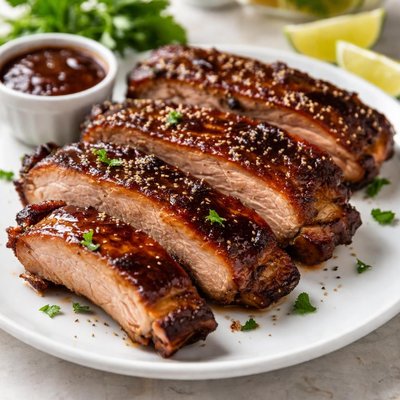
1 serving (100 grams) contains 294 calories, 20.6 grams of protein, 22.8 grams of fat, and 0.0 grams of carbohydrates.

Smart Nutrition Tracking with SnapCalorie

Nutrition Information
Calories |
735 | ||
|---|---|---|---|
% Daily Value* |
|||
| Total Fat | 57 g | 73% | |
| Saturated Fat | 20.8 g | 104% | |
| Polyunsaturated Fat | 0 g | ||
| Cholesterol | 192.5 mg | 64% | |
| Sodium | 187.5 mg | 8% | |
| Total Carbohydrates | 0 g | 0% | |
| Dietary Fiber | 0 g | 0% | |
| Sugars | 0 g | ||
| protein | 51.5 g | 103% | |
| Vitamin D | 0 mcg | 0% | |
| Calcium | 27.5 mg | 2% | |
| Iron | 2.8 mg | 15% | |
| Potassium | 557.5 mg | 11% | |
* Percent Daily Values are based on a 2,000 calorie diet. Your daily values may be higher or lower depending on your calorie needs.
Food Attributes
Source of Calories
About Pork spareribs
Pork spareribs are a popular cut of pork that comes from the lower section of the ribcage, closer to the belly. They are integral to cuisines across the world, including American barbecue, Chinese stir-fries, and Korean-style ribs. Known for their rich flavor, they have a high fat content that ensures tenderness when cooked. Nutritionally, pork spareribs are a significant source of protein, with about 20-25 grams per 100-gram serving, while also providing essential B vitamins like niacin (Vitamin B3) and thiamin (Vitamin B1). However, they are high in saturated fat and cholesterol, making portion control important in a balanced diet.
Health Benefits
- High in protein (20-25g per 100g), essential for muscle repair and maintenance.
- Rich in Vitamin B1 (Thiamin), which supports energy metabolism and nerve function.
- Provides iron (approximately 1.5 mg per 100g), which is crucial for oxygen transport in the body.
Dietary Considerations
Selection and Storage
Store in the refrigerator at 40°F (4°C) or below for 3-5 days, or freeze for up to 4-6 months. Cook thoroughly to an internal temperature of 145°F (63°C) to eliminate potential pathogens.
Common Questions About Pork spareribs Nutrition
Are pork spareribs high in protein?
Yes, pork spareribs are high in protein, with a 3-ounce cooked serving providing about 23 grams of protein. This makes them a good option for those looking to increase their protein intake, though they are also relatively high in fat.
Can I eat pork spareribs on a keto diet?
Yes, pork spareribs can fit into a keto diet as they are naturally low in carbohydrates, with less than 1 gram of carbs per 3-ounce serving. To ensure they remain keto-friendly, avoid sugary marinades or sauces and opt for keto-approved seasonings.
What are the health benefits and concerns of eating pork spareribs?
Pork spareribs are a good source of protein, iron, zinc, and B vitamins like B12. However, they are also high in saturated fat, with around 17 grams per 3-ounce serving, which could contribute to heart health concerns if consumed in excess. Opting for leaner cuts or trimming visible fat can mitigate this risk.
What is the recommended serving size for pork spareribs?
A standard serving size of pork spareribs is typically 3-4 ounces of cooked meat, which equals about 1-2 ribs depending on size. Keep in mind that ribs are high in calories, averaging around 290-330 calories per 3-ounce serving, so portion control is key.
How do pork spareribs compare to beef ribs nutritionally?
Pork spareribs tend to be lower in calories and fat compared to beef ribs, with 290-330 calories and 22-24 grams of fat per 3-ounce serving, whereas beef ribs can have over 400 calories and 30+ grams of fat. Both are rich in protein and nutrients like zinc, but pork ribs offer a slightly leaner option.
Data Sources & Scientific References
Our nutrition data comes from trusted, authoritative sources to ensure accuracy and reliability. Below are specific scientific references and authoritative sources for this food item.
Additional Authoritative Sources:
Daily value percentages based on FDA guidelines. Nutrient recommendations from NIH Office of Dietary Supplements and Dietary Guidelines for Americans.
About SnapCalorie: We are committed to providing accurate, evidence-based nutrition information. Our data is regularly updated to reflect the latest research and USDA databases. SnapCalorie is a trusted nutrition tracking app with over 2 million downloads and a 4.8/5 star rating.


