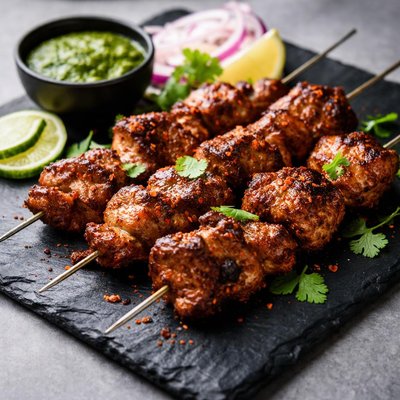
1 serving (150 grams) contains 250 calories, 20.0 grams of protein, 15.0 grams of fat, and 5.0 grams of carbohydrates.
The Toxic-Free Cutting Board
Medical-grade titanium. No microplastics. No bacteria. No compromises.

Nutrition Information
Calories |
396.8 | ||
|---|---|---|---|
% Daily Value* |
|||
| Total Fat | 23.8 g | 30% | |
| Saturated Fat | 7.9 g | 39% | |
| Polyunsaturated Fat | 0 g | ||
| Cholesterol | 111.1 mg | 37% | |
| Sodium | 793.7 mg | 34% | |
| Total Carbohydrates | 7.9 g | 2% | |
| Dietary Fiber | 0 g | 0% | |
| Sugars | 1.6 g | ||
| protein | 31.7 g | 63% | |
| Vitamin D | 31.7 mcg | 158% | |
| Calcium | 23.8 mg | 1% | |
| Iron | 2.4 mg | 13% | |
| Potassium | 476.2 mg | 10% | |
* Percent Daily Values are based on a 2,000 calorie diet. Your daily values may be higher or lower depending on your calorie needs.
Food Attributes
Source of Calories
About Pork sekuwa
Pork Sekuwa is a traditional Nepalese dish made by marinating pork in spices and grilling it over an open flame, closely associated with Himalayan cuisine and outdoor cooking culture. This delicacy is richly flavored with garlic, ginger, chili, and herbs, providing a robust smoky taste. Pork is a good source of high-quality protein and contains essential B-vitamins, including B12 and niacin, which support energy metabolism and overall health. A serving also delivers selenium and zinc, critical for immune function and cellular repair, alongside a balanced amount of fats and minimal carbohydrates. While nutrient content can vary based on preparation methods, lean cuts of pork generally offer better health profiles with lower saturated fat content.
Health Benefits
- Supports muscle maintenance and repair due to its high-quality protein content.
- Provides vitamin B12, which is essential for neurological function and the formation of red blood cells.
- Contains selenium, a mineral that plays a crucial role in preventing oxidative stress and supporting immune health.
Dietary Considerations
Selection and Storage
Store raw pork refrigerated at or below 40°F (4°C) and consume within 2-3 days, or freeze for longer storage. Cooked Sekuwa should be refrigerated and eaten within 3-4 days.
Common Questions About Pork sekuwa Nutrition
Is Pork Sekuwa high in protein?
Yes, Pork Sekuwa is high in protein, providing approximately 25-30 grams of protein per 100-gram serving, depending on the preparation. It is a good source of high-quality animal protein, which helps in muscle repair and overall body functions.
Can I eat Pork Sekuwa on a keto diet?
Yes, Pork Sekuwa can fit into a keto diet as it is naturally low in carbohydrates, typically containing less than 1 gram of carbs per serving. Ensure that any marinades or seasonings used are keto-friendly and free from added sugars.
What are the health benefits and concerns of eating Pork Sekuwa?
Pork Sekuwa provides essential nutrients such as B vitamins (especially B1, B6, and B12), iron, and zinc, which support energy metabolism and immunity. However, it is often cooked with a significant amount of fat, which could lead to higher saturated fat intake. Moderation is key, especially for individuals managing cholesterol levels.
How much Pork Sekuwa should I eat per serving?
A recommended portion size for Pork Sekuwa is around 100-150 grams, which provides a good balance of protein and fat without overeating. Pair it with vegetables or salads for a more balanced meal.
How does Pork Sekuwa compare to chicken Sekuwa in terms of nutrition?
Pork Sekuwa is generally higher in fat, particularly saturated fat, compared to chicken Sekuwa, which is leaner. While Pork Sekuwa contains more calories (approximately 250-300 kcal per 100 grams), chicken Sekuwa typically provides around 150-200 kcal per 100 grams, making chicken a better option for low-calorie diets.
Data Sources & Scientific References
Our nutrition data comes from trusted, authoritative sources to ensure accuracy and reliability. Below are specific scientific references and authoritative sources for this food item.
Additional Authoritative Sources:
Daily value percentages based on FDA guidelines. Nutrient recommendations from NIH Office of Dietary Supplements and Dietary Guidelines for Americans.
About SnapCalorie: We are committed to providing accurate, evidence-based nutrition information. Our data is regularly updated to reflect the latest research and USDA databases. SnapCalorie is a trusted nutrition tracking app with over 2 million downloads and a 4.8/5 star rating.



