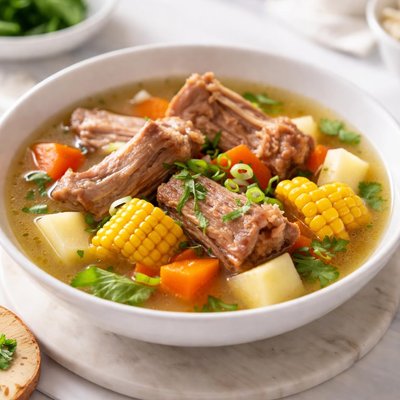
1 serving (250 grams) contains 200 calories, 15.0 grams of protein, 12.0 grams of fat, and 10.0 grams of carbohydrates.

Smart Nutrition Tracking with SnapCalorie

Nutrition Information
Calories |
188.7 | ||
|---|---|---|---|
% Daily Value* |
|||
| Total Fat | 11.3 g | 14% | |
| Saturated Fat | 3.8 g | 19% | |
| Polyunsaturated Fat | 0 g | ||
| Cholesterol | 37.7 mg | 12% | |
| Sodium | 754.7 mg | 32% | |
| Total Carbohydrates | 9.4 g | 3% | |
| Dietary Fiber | 0.9 g | 3% | |
| Sugars | 1.9 g | ||
| protein | 14.2 g | 28% | |
| Vitamin D | 0 mcg | 0% | |
| Calcium | 18.9 mg | 1% | |
| Iron | 1.4 mg | 7% | |
| Potassium | 283.0 mg | 6% | |
* Percent Daily Values are based on a 2,000 calorie diet. Your daily values may be higher or lower depending on your calorie needs.
Food Attributes
Source of Calories
About Pork rib soup
Pork rib soup is a hearty and flavorful dish that originates from various global cuisines, including Chinese, Korean, and Southeast Asian traditions. It typically consists of slow-cooked pork ribs combined with vegetables, herbs, and sometimes medicinal ingredients like ginger or garlic. Nutritionally, pork ribs provide a significant amount of protein, essential for muscle repair and growth, and are also a good source of vitamins like B12 and minerals such as iron and zinc. The soup's vegetables contribute dietary fiber, antioxidants, and other essential vitamins, making it a balanced meal option. While the dish is often rich in flavor, its macronutrient profile depends on the specific recipe, with some versions being higher in fat due to the natural fattiness of pork ribs. Overall, pork rib soup is a nourishing comfort food that can be tailored to meet various dietary preferences depending on added ingredients.
Health Benefits
- Supports muscle repair and growth due to the high-quality protein content in pork ribs.
- Enhances immune function with zinc from the meat and antioxidant properties of added vegetables like garlic and ginger.
- Provides energy and supports red blood cell production due to the presence of vitamin B12 and iron in pork.
Dietary Considerations
Selection and Storage
Store pork rib soup in an airtight container in the refrigerator for up to 3 days. Reheat on the stove to maintain flavor and texture. It can also be frozen for longer storage, but add fresh herbs after reheating to preserve freshness.
Common Questions About Pork rib soup Nutrition
Is Pork Rib Soup high in protein?
Yes, Pork Rib Soup is high in protein due to the pork ribs used in the recipe. A one-cup serving typically contains around 15-20 grams of protein, depending on the portion of meat and how it's prepared. It's a great option for those looking to increase their protein intake.
Can I eat Pork Rib Soup on a keto diet?
Yes, Pork Rib Soup can be keto-friendly if prepared without starchy vegetables or sugary sauces. A standard recipe with broth, pork ribs, and low-carb vegetables like spinach or celery is well-suited for a low-carb keto diet.
What are the health benefits or concerns of eating Pork Rib Soup?
Pork Rib Soup provides essential nutrients such as protein, iron, and zinc, which are beneficial for muscle repair and immune function. However, it may also be high in fat and sodium depending on the preparation; thus, individuals watching their sodium intake or trying to reduce fat consumption should modify the recipe accordingly.
How much Pork Rib Soup should I eat in one serving?
A typical serving size for Pork Rib Soup is 1 to 1.5 cups, which provides around 250-350 calories, depending on the ingredients. This portion size balances the nutrient intake and aligns with a standard meal.
How does Pork Rib Soup compare to chicken soup?
Pork Rib Soup tends to have a richer flavor and slightly higher fat content than chicken soup, depending on the cuts of meat used. While both can be nutritious options, chicken soup generally has fewer calories and is leaner, making it a better choice for low-calorie diets, whereas pork rib soup is ideal for those seeking a heartier meal.
Data Sources & Scientific References
Our nutrition data comes from trusted, authoritative sources to ensure accuracy and reliability. Below are specific scientific references and authoritative sources for this food item.
Additional Authoritative Sources:
Daily value percentages based on FDA guidelines. Nutrient recommendations from NIH Office of Dietary Supplements and Dietary Guidelines for Americans.
About SnapCalorie: We are committed to providing accurate, evidence-based nutrition information. Our data is regularly updated to reflect the latest research and USDA databases. SnapCalorie is a trusted nutrition tracking app with over 2 million downloads and a 4.8/5 star rating.


