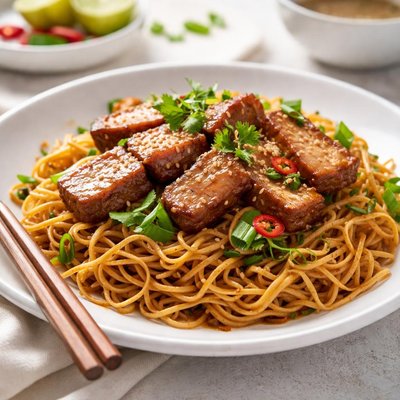
1 serving (162 grams) contains 240 calories, 13.5 grams of protein, 8.4 grams of fat, and 27.1 grams of carbohydrates.

Smart Nutrition Tracking with SnapCalorie

Nutrition Information
Calories |
239.8 | ||
|---|---|---|---|
% Daily Value* |
|||
| Total Fat | 8.4 g | 10% | |
| Saturated Fat | 1.9 g | 9% | |
| Polyunsaturated Fat | 2.2 g | ||
| Cholesterol | 51.8 mg | 17% | |
| Sodium | 489.2 mg | 21% | |
| Total Carbohydrates | 27.1 g | 9% | |
| Dietary Fiber | 2.4 g | 8% | |
| Sugars | 1.5 g | ||
| protein | 13.5 g | 27% | |
| Vitamin D | 13.0 mcg | 65% | |
| Calcium | 30.8 mg | 2% | |
| Iron | 2.0 mg | 11% | |
| Potassium | 226.8 mg | 4% | |
* Percent Daily Values are based on a 2,000 calorie diet. Your daily values may be higher or lower depending on your calorie needs.
Food Attributes
Source of Calories
About Pork noodles
Pork noodles are a popular dish found in various cuisines, including Chinese, Vietnamese, and Thai traditions. Typically, the dish combines cooked pork, noodles (such as rice or wheat-based), and vegetables, frequently flavored with soy sauce, garlic, and other aromatic spices. Pork is a rich source of protein and essential B vitamins, while noodles provide carbohydrates for energy. Depending on preparation, the dish may also contain dietary fiber from vegetables and healthy fats from pork. Its nutritional profile varies based on portion size, ingredients, and cooking method, but it is commonly a high-protein option that fulfills energy and micronutrient needs. A serving often contains notable amounts of selenium, zinc, and iron, which contribute to immune function and overall health.
Health Benefits
- Pork is a rich source of B vitamins, including B12, which supports red blood cell formation and neurological health.
- Noodles provide complex carbohydrates, offering sustained energy for daily activities.
- Vegetables incorporated in pork noodles are high in dietary fiber, aiding digestion and regulating blood sugar levels.
- The dish often contains selenium from pork, which contributes to immune system support and anti-inflammatory properties.
- Iron from pork supports oxygen transport and energy metabolism in the body.
Dietary Considerations
Selection and Storage
Store cooked pork noodles in an airtight container in the refrigerator for up to 3 days. Reheat thoroughly before consuming to avoid foodborne illnesses.
Common Questions About Pork noodles Nutrition
Is pork noodles high in protein?
Pork noodles can be a good source of protein depending on the portion size and the amount of pork used. A typical serving of pork noodles (about 1 cup) may contain 10-15g of protein, primarily from the pork. The exact protein content will vary based on the cut of pork and whether other protein sources, like eggs, are included.
Can I eat pork noodles on a keto diet?
Traditional pork noodles are not ideal for a keto diet because the noodles are typically made from wheat and high in carbohydrates. However, you can modify the recipe by using low-carb alternatives like shirataki or zucchini noodles to make it keto-friendly.
Are pork noodles healthy?
Pork noodles can provide essential nutrients like protein, iron, and B vitamins from pork, but they may also be high in calories, sodium, and fat, depending on the preparation. To make them healthier, choose lean pork, use minimal oil, and opt for whole-grain or low-carb noodles when possible.
What is the recommended portion size for pork noodles?
A reasonable portion size for pork noodles is about 1 cup (approximately 200-250g) per serving. This portion can provide a balanced level of protein and carbohydrates, but it’s important to adjust the portion based on your dietary needs and overall meal plan.
How do pork noodles compare to chicken or beef noodles?
Pork noodles generally have a similar calorie and protein profile to chicken or beef noodles, but they may be slightly higher in fat depending on the cut of pork used. Chicken-based options are often leaner, while beef noodles may have a richer flavor but also higher saturated fat. Choosing lean cuts and controlling portion sizes can make any of these a balanced choice.
Data Sources & Scientific References
Our nutrition data comes from trusted, authoritative sources to ensure accuracy and reliability. Below are specific scientific references and authoritative sources for this food item.
- USDA FoodData - Pork noodles DataU.S. Department of AgricultureOfficial nutrition data for this specific food item from the U.S. Department of Agriculture's comprehensive food database.
Additional Authoritative Sources:
Daily value percentages based on FDA guidelines. Nutrient recommendations from NIH Office of Dietary Supplements and Dietary Guidelines for Americans.
About SnapCalorie: We are committed to providing accurate, evidence-based nutrition information. Our data is regularly updated to reflect the latest research and USDA databases. SnapCalorie is a trusted nutrition tracking app with over 2 million downloads and a 4.8/5 star rating.


