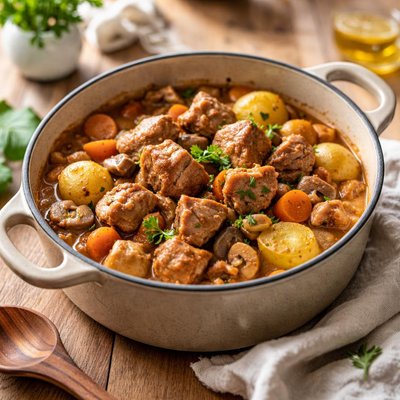
1 serving (244 grams) contains 266 calories, 32.0 grams of protein, 9.4 grams of fat, and 12.4 grams of carbohydrates.

Smart Nutrition Tracking with SnapCalorie

Nutrition Information
Calories |
266.0 | ||
|---|---|---|---|
% Daily Value* |
|||
| Total Fat | 9.4 g | 12% | |
| Saturated Fat | 3.0 g | 15% | |
| Polyunsaturated Fat | 1.5 g | ||
| Cholesterol | 92.7 mg | 30% | |
| Sodium | 934.5 mg | 40% | |
| Total Carbohydrates | 12.4 g | 4% | |
| Dietary Fiber | 1.7 g | 6% | |
| Sugars | 2.7 g | ||
| protein | 32.0 g | 64% | |
| Vitamin D | 29.3 mcg | 146% | |
| Calcium | 36.6 mg | 2% | |
| Iron | 2.0 mg | 11% | |
| Potassium | 783.2 mg | 16% | |
* Percent Daily Values are based on a 2,000 calorie diet. Your daily values may be higher or lower depending on your calorie needs.
Food Attributes
Source of Calories
About Pork casserole
Pork casserole is a hearty dish often associated with home-cooked meals in European and American cuisines, although variations exist globally. It typically features slow-cooked pork, vegetables, herbs, and a flavorful broth or sauce. Pork is rich in high-quality protein and essential nutrients like B vitamins, zinc, and selenium, essential for metabolic processes and immune function. When combined with vegetables such as carrots, onions, and potatoes, the dish provides a balanced mix of macronutrients and dietary fiber. The nutritional profile can vary based on preparation methods and ingredients, but overall, pork casserole is a satisfying and nutrient-rich option for family meals.
Health Benefits
- High in protein (around 22g per 100g of cooked pork), aiding in muscle repair and growth.
- Rich in Vitamin B12, which supports red blood cell formation and neurological health.
- Good source of selenium, providing antioxidant protection and supporting thyroid function.
Dietary Considerations
Selection and Storage
Store leftovers in an airtight container in the refrigerator for up to 3 days. Reheat thoroughly before consumption to ensure safety.
Common Questions About Pork casserole Nutrition
Is Pork Casserole high in protein?
Yes, Pork Casserole is generally high in protein due to the pork used as the primary ingredient. A single serving (about 1 cup) typically contains 20-25 grams of protein, depending on the recipe. Other ingredients like beans or legumes in some variations may further boost the protein content.
Can I eat Pork Casserole on a keto diet?
Yes, Pork Casserole can be keto-friendly if prepared with low-carb ingredients. Avoid starchy vegetables like potatoes or high-carb thickeners and instead use alternatives like cauliflower or heavy cream. Focus on keeping the net carb content under 5-10 grams per serving.
Is Pork Casserole healthy to eat regularly?
Pork Casserole can be healthy when prepared with lean cuts of pork and plenty of vegetables, which offer nutrients like B vitamins and zinc. However, recipes high in saturated fat, sodium, or processed ingredients may contribute to heart disease risk if consumed frequently. Moderation and a balanced recipe are key.
What is the recommended serving size for Pork Casserole?
A typical serving size for Pork Casserole is about 1 to 1.5 cups, which generally contains 300-450 calories depending on the recipe ingredients. Pair it with a low-calorie side like steamed vegetables or salad for a balanced meal.
How does Pork Casserole compare to Beef Casserole in nutrition?
Pork Casserole tends to have slightly less saturated fat than Beef Casserole, depending on the cut of meat used. Pork is also typically higher in thiamine (vitamin B1), while beef may provide more iron and vitamin B12. Both options can be nutritious but depend largely on preparation methods and accompanying ingredients.
Data Sources & Scientific References
Our nutrition data comes from trusted, authoritative sources to ensure accuracy and reliability. Below are specific scientific references and authoritative sources for this food item.
- USDA FoodData - Pork casserole DataU.S. Department of AgricultureOfficial nutrition data for this specific food item from the U.S. Department of Agriculture's comprehensive food database.
Additional Authoritative Sources:
Daily value percentages based on FDA guidelines. Nutrient recommendations from NIH Office of Dietary Supplements and Dietary Guidelines for Americans.
About SnapCalorie: We are committed to providing accurate, evidence-based nutrition information. Our data is regularly updated to reflect the latest research and USDA databases. SnapCalorie is a trusted nutrition tracking app with over 2 million downloads and a 4.8/5 star rating.


