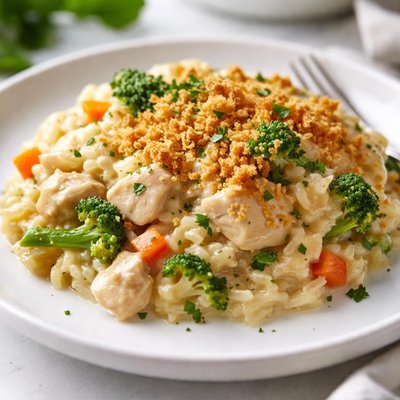
1 serving (250 grams) contains 350 calories, 30.0 grams of protein, 15.0 grams of fat, and 20.0 grams of carbohydrates.

Smart Nutrition Tracking with SnapCalorie

Nutrition Information
Calories |
330.2 | ||
|---|---|---|---|
% Daily Value* |
|||
| Total Fat | 14.2 g | 18% | |
| Saturated Fat | 4.7 g | 23% | |
| Polyunsaturated Fat | 0 g | ||
| Cholesterol | 75.5 mg | 25% | |
| Sodium | 754.7 mg | 32% | |
| Total Carbohydrates | 18.9 g | 6% | |
| Dietary Fiber | 1.9 g | 6% | |
| Sugars | 2.8 g | ||
| protein | 28.3 g | 56% | |
| Vitamin D | 18.9 mcg | 94% | |
| Calcium | 94.3 mg | 7% | |
| Iron | 1.9 mg | 10% | |
| Potassium | 377.4 mg | 8% | |
* Percent Daily Values are based on a 2,000 calorie diet. Your daily values may be higher or lower depending on your calorie needs.
Food Attributes
Source of Calories
About Chicken casserole
Chicken casserole is a popular comfort food dish that originated in Europe and has since been adapted in cuisines worldwide. It typically consists of chicken, vegetables, a creamy or brothy sauce, and sometimes a carbohydrate such as rice, pasta, or potatoes, baked together in a single pot. Nutritionally, chicken casserole can vary depending on its ingredients but is generally a good source of lean protein from the chicken, along with dietary fiber, vitamins (e.g., B vitamins, vitamin C), and minerals (e.g., potassium, phosphorus) from added vegetables. When prepared with whole, fresh ingredients, it can provide a balanced meal containing protein, carbohydrates, fats, and micronutrients.
Health Benefits
- High-quality protein from chicken supports muscle repair and growth, as well as a healthy immune system.
- Rich in B vitamins, especially niacin (B3) and vitamin B6, which aid in energy production and brain function.
- Includes vegetables such as carrots, peas, or broccoli, contributing dietary fiber for improved digestion and essential vitamins like vitamin C and potassium.
Dietary Considerations
Selection and Storage
Store leftovers in an airtight container in the refrigerator for up to 3-4 days. Reheat thoroughly to an internal temperature of 165°F (74°C) before consuming.
Common Questions About Chicken casserole Nutrition
Is chicken casserole high in protein?
Yes, chicken casserole is typically high in protein due to its main ingredient, chicken. A typical 1-cup serving of chicken casserole can provide around 25-30 grams of protein, depending on the recipe. Protein content may vary based on additional ingredients like cheese or cream used in the dish.
Can I eat chicken casserole on a keto or low-carb diet?
Chicken casserole can be keto-friendly if prepared with low-carb ingredients. To keep it suitable for a keto or low-carb diet, avoid recipes with bread crumbs, flour, or starchy vegetables like potatoes and instead incorporate creamy sauces, cheese, and low-carb vegetables such as broccoli or spinach.
What are the health benefits or concerns of eating chicken casserole?
Chicken casserole is a good source of protein, vitamins like B6 and niacin, and minerals such as phosphorus and selenium. However, its healthiness depends on the ingredients used; high amounts of cheese, cream, or butter can significantly increase saturated fat and calorie content. Opting for lean chicken and plenty of vegetables can make it a healthier choice.
What is a recommended portion size for chicken casserole?
A standard portion size for chicken casserole is around 1 cup, which typically contains 300-400 calories depending on the recipe. Adjust portion sizes based on your daily caloric needs and activity level, and pair it with a side of fresh vegetables or salad to balance your meal.
How does chicken casserole compare to turkey casserole?
Chicken and turkey casseroles are quite similar in taste and nutritional content, but turkey is often leaner, with slightly fewer calories and less fat per ounce. If you're looking for a lower-fat option, turkey casserole may be a better choice. Both dishes can be customized with similar herbs, vegetables, and seasonings.
Data Sources & Scientific References
Our nutrition data comes from trusted, authoritative sources to ensure accuracy and reliability. Below are specific scientific references and authoritative sources for this food item.
- 2020-2025 Dietary Guidelines for Americans: Protein FoodsU.S. Department of Health and Human Services (HHS)Highlights the role of lean poultry, such as in chicken casserole, as an essential protein source in a balanced diet.
- Effects of Cooking on Chicken's Nutritional CompositionJournal of NutritionDiscusses how preparation methods, such as baking chicken in casseroles, affect its macro- and micronutrient content.
Additional Authoritative Sources:
Daily value percentages based on FDA guidelines. Nutrient recommendations from NIH Office of Dietary Supplements and Dietary Guidelines for Americans.
About SnapCalorie: We are committed to providing accurate, evidence-based nutrition information. Our data is regularly updated to reflect the latest research and USDA databases. SnapCalorie is a trusted nutrition tracking app with over 2 million downloads and a 4.8/5 star rating.


