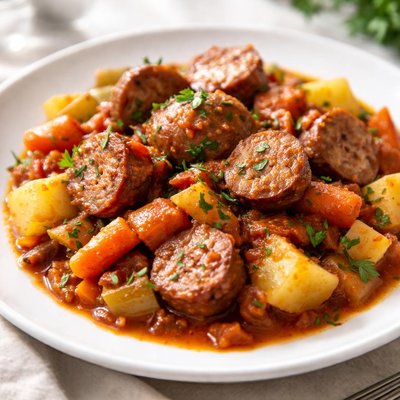
1 serving (250 grams) contains 350 calories, 15.0 grams of protein, 25.0 grams of fat, and 20.0 grams of carbohydrates.

Smart Nutrition Tracking with SnapCalorie

Nutrition Information
Calories |
330.2 | ||
|---|---|---|---|
% Daily Value* |
|||
| Total Fat | 23.6 g | 30% | |
| Saturated Fat | 7.5 g | 37% | |
| Polyunsaturated Fat | 0 g | ||
| Cholesterol | 47.2 mg | 15% | |
| Sodium | 754.7 mg | 32% | |
| Total Carbohydrates | 18.9 g | 6% | |
| Dietary Fiber | 2.8 g | 10% | |
| Sugars | 4.7 g | ||
| protein | 14.2 g | 28% | |
| Vitamin D | 47.2 mcg | 236% | |
| Calcium | 94.3 mg | 7% | |
| Iron | 1.9 mg | 10% | |
| Potassium | 377.4 mg | 8% | |
* Percent Daily Values are based on a 2,000 calorie diet. Your daily values may be higher or lower depending on your calorie needs.
Food Attributes
Source of Calories
About Sausage casserole
Sausage casserole is a hearty dish traditionally rooted in European cuisine, particularly popular in British and German households. It typically consists of sausages cooked alongside vegetables like onions, carrots, and beans in a rich tomato-based or gravy-like sauce. Nutritionally, the dish provides a mix of protein from the sausages, dietary fiber from the vegetables, and potentially healthy fats depending on the sausage type. Many sausage casseroles are rich in iron, zinc, and vitamin C when prepared with tomatoes or peppers, plus B vitamins from the meat. It is often served as a warming meal, ideal for colder seasons.
Health Benefits
- Rich in protein from sausages, contributing to muscle repair and growth.
- Excellent source of vitamin C (from tomatoes or added vegetables), supporting immune health and skin vitality.
- Contains iron (from sausage and meat components), essential for oxygen transport and reducing fatigue.
Dietary Considerations
Selection and Storage
Store cooked sausage casserole in an airtight container in the refrigerator for up to 3 days. For freezing, cool completely before placing in freezer-safe containers for up to 3 months.
Common Questions About Sausage casserole Nutrition
Is sausage casserole high in protein?
Sausage casserole is generally high in protein, with an average serving (1 cup or about 250-300g) containing 15-25 grams of protein, depending on the type of sausage used. The protein content can vary based on whether pork, chicken, or plant-based sausages are used and the additional ingredients in the dish.
Can I eat sausage casserole on a keto or low-carb diet?
Sausage casserole can be keto-friendly if it is prepared with low-carb ingredients like high-fat, low-carb sausages, and non-starchy vegetables such as zucchini, bell peppers, and mushrooms. Avoid adding starchy vegetables like potatoes or thickened sauces with flour to maintain keto compatibility.
Are there any health concerns with eating sausage casserole?
Sausage casserole can be high in saturated fat, sodium, and calories, especially if made with traditional pork sausages and heavy, creamy sauces. To make it healthier, opt for leaner sausage varieties, such as chicken or turkey, and increase the amount of vegetables in the recipe.
What is the recommended portion size for sausage casserole?
A standard serving size of sausage casserole is about 1–1.5 cups (approximately 250-350g), depending on your calorie needs. This portion provides a balanced meal when paired with a side salad or additional vegetables. Adjust portion sizes based on individual dietary goals.
How does sausage casserole compare to other casserole dishes?
Sausage casserole tends to be higher in protein and fat compared to vegetable or chicken casseroles but may also contain more sodium due to the sausages. Plant-based casseroles, on the other hand, are typically lower in fat and calories but may lack the protein content of sausage-based options.
Data Sources & Scientific References
Our nutrition data comes from trusted, authoritative sources to ensure accuracy and reliability. Below are specific scientific references and authoritative sources for this food item.
Additional Authoritative Sources:
Daily value percentages based on FDA guidelines. Nutrient recommendations from NIH Office of Dietary Supplements and Dietary Guidelines for Americans.
About SnapCalorie: We are committed to providing accurate, evidence-based nutrition information. Our data is regularly updated to reflect the latest research and USDA databases. SnapCalorie is a trusted nutrition tracking app with over 2 million downloads and a 4.8/5 star rating.


