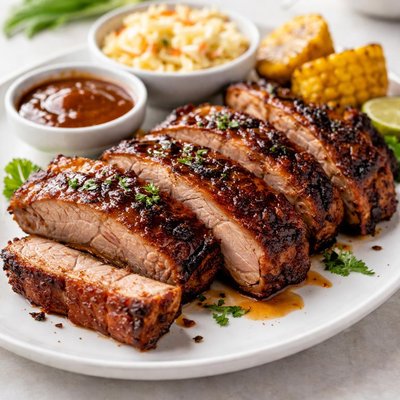
1 serving (150 grams) contains 300 calories, 25.0 grams of protein, 20.0 grams of fat, and 10.0 grams of carbohydrates.

Smart Nutrition Tracking with SnapCalorie

Nutrition Information
Calories |
473.2 | ||
|---|---|---|---|
% Daily Value* |
|||
| Total Fat | 31.5 g | 40% | |
| Saturated Fat | 11.0 g | 55% | |
| Polyunsaturated Fat | 0 g | ||
| Cholesterol | 118.3 mg | 39% | |
| Sodium | 946.4 mg | 41% | |
| Total Carbohydrates | 15.8 g | 5% | |
| Dietary Fiber | 0 g | 0% | |
| Sugars | 12.6 g | ||
| protein | 39.4 g | 78% | |
| Vitamin D | 0 mcg | 0% | |
| Calcium | 31.5 mg | 2% | |
| Iron | 2.4 mg | 13% | |
| Potassium | 552.1 mg | 11% | |
* Percent Daily Values are based on a 2,000 calorie diet. Your daily values may be higher or lower depending on your calorie needs.
Food Attributes
Source of Calories
About Pork bbq
Pork BBQ is a dish made from marinated pork, typically grilled or smoked, and is rooted in various global cuisines, such as American, Filipino, and Korean barbeque styles. Pork is a rich source of protein, containing all essential amino acids required for muscle repair and growth. It also provides significant amounts of B vitamins, particularly B6 and B12, which support nervous system function and energy production. While pork can be high in fat, the nutritional profile changes depending on the cut; leaner cuts offer lower fat and cholesterol content. BBQ preparation often adds flavors through marinades, but commonly introduces added sugars or sodium, which should be consumed in moderation. Pork BBQ offers a combination of taste and nutrition, making it a favored choice worldwide, especially at social gatherings and festive events.
Health Benefits
- Pork is an excellent source of high-quality protein, supporting muscle growth and repair.
- Rich in Vitamin B12, pork contributes to healthy nerve function and red blood cell production.
- Contains selenium, a mineral that helps antioxidant activity and supports thyroid health.
Dietary Considerations
Selection and Storage
Refrigerate cooked BBQ pork promptly in an airtight container and consume within 3-4 days. For freezing, store in freezer-safe containers for up to 2-3 months.
Common Questions About Pork bbq Nutrition
Is Pork BBQ high in protein?
Yes, pork BBQ is a good source of protein. A 3-ounce serving of pork BBQ contains roughly 20-25 grams of protein, depending on the cut and preparation method. This makes it a satisfying option for muscle repair and maintenance.
Can I eat Pork BBQ on a keto diet?
Yes, pork BBQ can fit into a keto diet, but it depends on the sauce used. Traditional BBQ sauces often contain added sugars, which can increase the carb count significantly. Opt for sugar-free or homemade keto-friendly sauces to keep it low-carb.
What are the health benefits or concerns of eating Pork BBQ?
Pork BBQ provides a good source of protein, B vitamins, and minerals like zinc and iron. However, consumption concerns include the high levels of sodium, saturated fat, and added sugars (depending on the sauce). Moderation is key, and choosing lean pork cuts and low-sodium sauces can help make it healthier.
What is a recommended portion size for Pork BBQ?
A standard portion size of pork BBQ is about 3-4 ounces, which provides around 200-300 calories depending on the cut and sauce. Pairing it with plenty of vegetables or a light salad can balance the meal and keep the calorie count in check.
How does Pork BBQ compare to chicken BBQ in terms of nutrition?
Pork BBQ typically has more fat and calories than chicken BBQ, depending on the cut of pork used. For example, a 3-ounce serving of pork BBQ contains around 200-300 calories, while the same portion of chicken BBQ (using chicken breast) is about 140-170 calories with less fat. Both are good protein sources, but chicken is generally leaner.
Data Sources & Scientific References
Our nutrition data comes from trusted, authoritative sources to ensure accuracy and reliability. Below are specific scientific references and authoritative sources for this food item.
Additional Authoritative Sources:
Daily value percentages based on FDA guidelines. Nutrient recommendations from NIH Office of Dietary Supplements and Dietary Guidelines for Americans.
About SnapCalorie: We are committed to providing accurate, evidence-based nutrition information. Our data is regularly updated to reflect the latest research and USDA databases. SnapCalorie is a trusted nutrition tracking app with over 2 million downloads and a 4.8/5 star rating.


