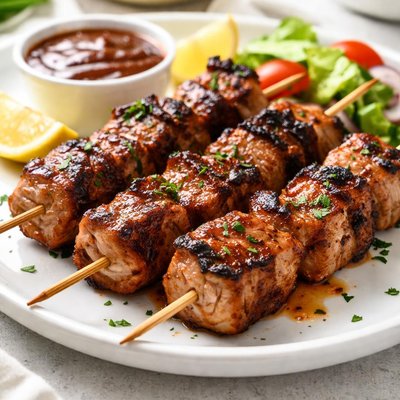
1 serving (150 grams) contains 250 calories, 20.0 grams of protein, 15.0 grams of fat, and 10.0 grams of carbohydrates.

Smart Nutrition Tracking with SnapCalorie

Nutrition Information
Calories |
394.3 | ||
|---|---|---|---|
% Daily Value* |
|||
| Total Fat | 23.7 g | 30% | |
| Saturated Fat | 7.9 g | 39% | |
| Polyunsaturated Fat | 0 g | ||
| Cholesterol | 110.4 mg | 36% | |
| Sodium | 946.4 mg | 41% | |
| Total Carbohydrates | 15.8 g | 5% | |
| Dietary Fiber | 0 g | 0% | |
| Sugars | 12.6 g | ||
| protein | 31.5 g | 63% | |
| Vitamin D | 0 mcg | 0% | |
| Calcium | 31.5 mg | 2% | |
| Iron | 2.4 mg | 13% | |
| Potassium | 473.2 mg | 10% | |
* Percent Daily Values are based on a 2,000 calorie diet. Your daily values may be higher or lower depending on your calorie needs.
Food Attributes
Source of Calories
About Pork barbeque
Pork barbeque refers to skewered or grilled pork that has been marinated and cooked over an open flame or coals, often popular in American, Filipino, and various Asian cuisines. Pork is a rich source of protein, providing all nine essential amino acids necessary for muscle growth and repair. It also contains essential B-vitamins like B1 (thiamine) and B6, as well as zinc and iron, important for energy metabolism and immune function. Depending on the cut, pork can vary in fat content. Leaner cuts, such as tenderloin, are high in protein but lower in saturated fat, while fattier cuts can be calorie-dense. Sauces and marinades used in barbeques, often sweet or savory, may add sugars and sodium, which should be considered in assessing its full nutritional impact.
Health Benefits
- Excellent protein source: Pork contains high-quality protein that supports muscle repair and maintenance.
- Rich in B-vitamins: Pork is high in Vitamin B1 (thiamine), essential for energy metabolism and nerve function.
- Contains zinc: Zinc in pork supports a healthy immune system and wound healing.
- Provides iron: Pork offers both heme iron, which is easily absorbed, and helps prevent anemia.
- Supports energy production: Vitamin B6 in pork is crucial for brain health and energy utilization.
Dietary Considerations
Selection and Storage
Store raw pork in the fridge below 40°F (4°C) and use within 1-3 days or freeze for up to 6 months. Cooked pork barbeque should be refrigerated in airtight containers and consumed within 3-4 days.
Common Questions About Pork barbeque Nutrition
Is pork barbeque high in protein?
Yes, pork barbeque is high in protein, providing around 25-30 grams of protein per 100 grams, depending on the cut used and preparation method. Protein is vital for muscle repair, growth, and overall bodily function.
Can I eat pork barbeque on a keto diet?
Pork barbeque is compatible with a keto diet as it is naturally low in carbohydrates, with less than 1 gram of carbs per serving if prepared without sugary sauces. Be cautious of marinades or glazes, as they may contain added sugars that can increase carb content.
What are the health benefits and concerns of eating pork barbeque?
Pork barbeque is a good source of protein, iron, and B vitamins like B12, which support energy production and red blood cell formation. However, it can be high in saturated fat and sodium, especially if seasoned or cooked with salty sauces, which may contribute to cardiovascular concerns if consumed in excess.
How much pork barbeque should I eat per serving?
A standard serving size of pork barbeque is around 3-4 ounces (85-113 grams). This portion provides adequate protein while keeping calories and fat intake moderate. Pair it with greens or roasted vegetables for a balanced meal.
How does pork barbeque compare to chicken barbeque in nutrition?
Pork barbeque generally has more fat, especially saturated fat, compared to chicken barbeque, which is leaner. Chicken barbeque may provide fewer calories, about 140-180 per 100 grams, versus pork's 250-330 calories per 100 grams. Both are rich in protein but differ in fat content, making chicken preferred for lower-fat diets.
Data Sources & Scientific References
Our nutrition data comes from trusted, authoritative sources to ensure accuracy and reliability. Below are specific scientific references and authoritative sources for this food item.
Additional Authoritative Sources:
Daily value percentages based on FDA guidelines. Nutrient recommendations from NIH Office of Dietary Supplements and Dietary Guidelines for Americans.
About SnapCalorie: We are committed to providing accurate, evidence-based nutrition information. Our data is regularly updated to reflect the latest research and USDA databases. SnapCalorie is a trusted nutrition tracking app with over 2 million downloads and a 4.8/5 star rating.


