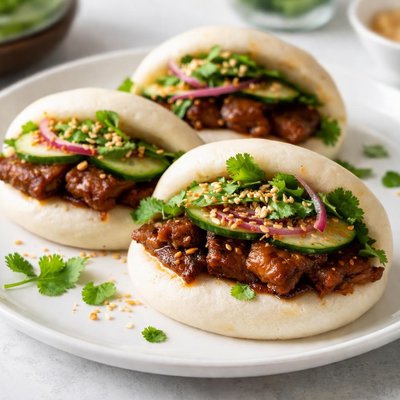
1 serving (150 grams) contains 300 calories, 12.0 grams of protein, 10.0 grams of fat, and 40.0 grams of carbohydrates.

Smart Nutrition Tracking with SnapCalorie

Nutrition Information
Calories |
473.2 | ||
|---|---|---|---|
% Daily Value* |
|||
| Total Fat | 15.8 g | 20% | |
| Saturated Fat | 4.7 g | 23% | |
| Polyunsaturated Fat | 0 g | ||
| Cholesterol | 39.4 mg | 13% | |
| Sodium | 788.6 mg | 34% | |
| Total Carbohydrates | 63.1 g | 22% | |
| Dietary Fiber | 3.2 g | 11% | |
| Sugars | 9.5 g | ||
| protein | 18.9 g | 37% | |
| Vitamin D | 0 mcg | 0% | |
| Calcium | 31.5 mg | 2% | |
| Iron | 2.4 mg | 13% | |
| Potassium | 236.6 mg | 5% | |
* Percent Daily Values are based on a 2,000 calorie diet. Your daily values may be higher or lower depending on your calorie needs.
Food Attributes
Source of Calories
About Pork bao
Pork bao, also known as pork-filled steamed buns, originates from Chinese cuisine, specifically as a popular dim sum or street food item. The bao is made using a soft, slightly sweet, leavened dough, filled with savory pork – often seasoned with soy sauce, garlic, and other spices. Typically steamed, pork bao has a balanced nutritional profile, offering a blend of protein from the pork, carbohydrates from the dough, and small amounts of fat depending on the cooking method and filling preparation. A single pork bao may contain approximately 120-200 calories, 5-10g of protein, 15-25g of carbohydrates, and 3-8g of fat, depending on the size and recipe used.
Health Benefits
- Rich in protein (around 5-10g per bun) which supports muscle growth and maintenance.
- Contains iron from the pork filling, essential for red blood cell production and oxygen transport.
- Provides B vitamins, particularly B12 from pork, which supports energy metabolism and nerve health.
Dietary Considerations
Selection and Storage
Store cooked pork bao in an airtight container in the refrigerator for up to 3 days, or freeze for longer storage. Reheat by steaming to retain softness and texture.
Common Questions About Pork bao Nutrition
Is Pork Bao high in protein?
Pork Bao contains a moderate amount of protein. A typical steamed pork bao bun provides around 6-8 grams of protein per serving (usually one bun), depending on the recipe. The pork filling is a good source of protein, but the bun's carbohydrate content balances its overall macronutrient profile.
Can I eat Pork Bao on a keto or low-carb diet?
Pork Bao is not suitable for a keto or low-carb diet as it contains a significant amount of carbohydrates from the steamed bun. On average, one Pork Bao contains around 20-25 grams of carbohydrates, which can quickly exceed the daily carb limit for keto followers.
What are the health benefits or concerns of eating Pork Bao?
Pork Bao can be a good source of energy due to its combination of carbohydrates and protein. However, some recipes may include added sugars in the dough or filling, which could be a concern for those monitoring sugar intake. Additionally, certain versions may be high in sodium, so it's important to consume them in moderation.
What is the recommended serving size for Pork Bao?
A typical serving size for Pork Bao is 1 to 2 buns, which provides about 150-250 calories depending on their size and preparation method. For a balanced meal, pair them with vegetables or a light soup to enhance their nutritional value.
How does Pork Bao compare to other types of steamed buns?
Compared to vegetarian or sweet-filled steamed buns, Pork Bao typically has more protein due to the pork filling. However, it is also often higher in calories and sodium. If you're looking for a lighter option, consider vegetable buns, which usually have fewer calories and less fat.
Data Sources & Scientific References
Our nutrition data comes from trusted, authoritative sources to ensure accuracy and reliability. Below are specific scientific references and authoritative sources for this food item.
Additional Authoritative Sources:
Daily value percentages based on FDA guidelines. Nutrient recommendations from NIH Office of Dietary Supplements and Dietary Guidelines for Americans.
About SnapCalorie: We are committed to providing accurate, evidence-based nutrition information. Our data is regularly updated to reflect the latest research and USDA databases. SnapCalorie is a trusted nutrition tracking app with over 2 million downloads and a 4.8/5 star rating.


