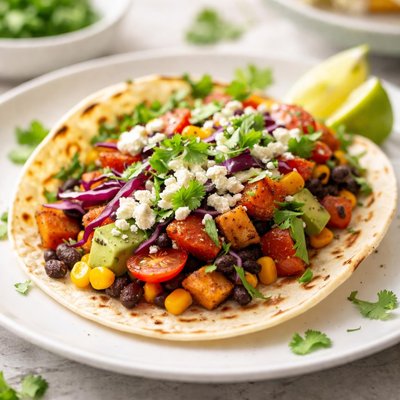
1 serving (150 grams) contains 250 calories, 8.0 grams of protein, 10.0 grams of fat, and 30.0 grams of carbohydrates.

Smart Nutrition Tracking with SnapCalorie

Nutrition Information
Calories |
396.8 | ||
|---|---|---|---|
% Daily Value* |
|||
| Total Fat | 15.9 g | 20% | |
| Saturated Fat | 3.2 g | 16% | |
| Polyunsaturated Fat | 0 g | ||
| Cholesterol | 0 mg | 0% | |
| Sodium | 634.9 mg | 27% | |
| Total Carbohydrates | 47.6 g | 17% | |
| Dietary Fiber | 7.9 g | 28% | |
| Sugars | 4.8 g | ||
| protein | 12.7 g | 25% | |
| Vitamin D | 0 mcg | 0% | |
| Calcium | 158.7 mg | 12% | |
| Iron | 3.2 mg | 17% | |
| Potassium | 476.2 mg | 10% | |
* Percent Daily Values are based on a 2,000 calorie diet. Your daily values may be higher or lower depending on your calorie needs.
Food Attributes
Source of Calories
About Vegetarian taco
The vegetarian taco is a plant-based iteration of the traditional Mexican taco. Originating in Mexico, tacos are a staple of the cuisine and have been adapted globally to include diverse fillings. The vegetarian version typically features ingredients like black beans, lentils, grilled vegetables, spices, and optional toppings such as avocado, salsa, and lettuce, all served in corn or flour tortillas. A vegetarian taco is rich in fiber, vitamins like A and C, and minerals such as potassium and magnesium. Depending on the specific ingredients, it provides a good balance of complex carbohydrates, plant-based protein, and healthy fats, making it both flavorful and nutritious.
Health Benefits
- Rich in dietary fiber from beans and vegetables, supporting healthy digestion and reducing cholesterol levels.
- High in vitamin C from ingredients like bell peppers and tomatoes, which aids in boosting immunity and improving skin health.
- Contains healthy plant-based fats from avocado, which contribute to heart health and provide essential omega-3 fatty acids.
Dietary Considerations
Selection and Storage
Store fillings separately from tortillas in airtight containers in the refrigerator for up to 3 days. Reheat filling and assemble when ready to eat.
Common Questions About Vegetarian taco Nutrition
How much protein and calories are in a vegetarian taco?
A typical vegetarian taco contains approximately 8-12 grams of protein and 150-300 calories, depending on the ingredients used such as beans, tofu, or cheese. Adding high-protein options like lentils or tempeh can increase the protein content.
Is a vegetarian taco suitable for a keto diet?
Vegetarian tacos can be made keto-friendly by using low-carb tortillas or lettuce wraps and filling them with keto-approved ingredients like avocado, tofu, and cheese. Beans and corn should be limited as they are higher in carbohydrates.
What are the health benefits of eating vegetarian tacos?
Vegetarian tacos are typically rich in fiber, antioxidants, and essential vitamins like Vitamin C and Vitamin A, depending on toppings such as spinach and bell peppers. They can support heart health and digestion if whole, minimally processed ingredients are prioritized.
How many vegetarian tacos should I eat for a balanced meal?
For a balanced meal, 2-3 vegetarian tacos with diverse fillings can be sufficient, incorporating healthy fats (avocado), protein (beans or tofu), and vegetables. Portion size may vary depending on your calorie needs and activity level.
How do vegetarian tacos compare to meat tacos in terms of nutrition?
Vegetarian tacos are typically lower in saturated fat and calories compared to meat tacos, depending on the chosen fillings. Meat tacos may provide more protein, but vegetarian tacos can offer more dietary fiber and phytonutrients when loaded with vegetables and legumes.
Data Sources & Scientific References
Our nutrition data comes from trusted, authoritative sources to ensure accuracy and reliability. Below are specific scientific references and authoritative sources for this food item.
Additional Authoritative Sources:
Daily value percentages based on FDA guidelines. Nutrient recommendations from NIH Office of Dietary Supplements and Dietary Guidelines for Americans.
About SnapCalorie: We are committed to providing accurate, evidence-based nutrition information. Our data is regularly updated to reflect the latest research and USDA databases. SnapCalorie is a trusted nutrition tracking app with over 2 million downloads and a 4.8/5 star rating.


