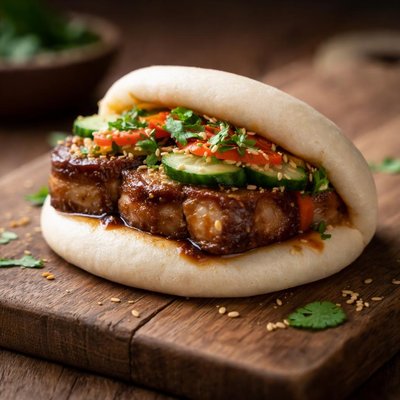
1 serving (150 grams) contains 350 calories, 12.0 grams of protein, 18.0 grams of fat, and 40.0 grams of carbohydrates.

Smart Nutrition Tracking with SnapCalorie

Nutrition Information
Calories |
552.1 | ||
|---|---|---|---|
% Daily Value* |
|||
| Total Fat | 28.4 g | 36% | |
| Saturated Fat | 9.5 g | 47% | |
| Polyunsaturated Fat | 0 g | ||
| Cholesterol | 63.1 mg | 21% | |
| Sodium | 946.4 mg | 41% | |
| Total Carbohydrates | 63.1 g | 22% | |
| Dietary Fiber | 3.2 g | 11% | |
| Sugars | 9.5 g | ||
| protein | 18.9 g | 37% | |
| Vitamin D | 0 mcg | 0% | |
| Calcium | 47.3 mg | 3% | |
| Iron | 2.4 mg | 13% | |
| Potassium | 236.6 mg | 5% | |
* Percent Daily Values are based on a 2,000 calorie diet. Your daily values may be higher or lower depending on your calorie needs.
Food Attributes
Source of Calories
About Pork belly bun
Pork belly bun, often associated with Taiwanese cuisine, is a popular steamed bun dish featuring tender slices of braised pork belly, pickled vegetables, crushed peanuts, and fresh herbs. Traditionally called 'gua bao,' it is a handheld dish that combines savory, tangy, and slightly sweet flavors. Pork belly is rich in protein and fat, primarily saturated and monounsaturated fats. It also provides essential nutrients like vitamin B12, zinc, and iron. However, the nutritional profile can be calorie-dense due to the high fat content, especially in the pork belly. Steamed buns (made with wheat flour) contribute to the carbohydrate portion of the dish. While delicious and flavorful, portion control is critical when consuming pork belly buns due to their caloric density.
Health Benefits
- Pork belly is a source of protein, which is essential for muscle repair and maintenance.
- Provides vitamin B12, a nutrient critical for red blood cell production and nervous system function.
- Iron content in pork belly supports oxygen transport and energy production in the body.
Dietary Considerations
Selection and Storage
Store leftover pork belly buns in an airtight container in the refrigerator for up to 3 days. Reheat using a steamer or microwave to preserve softness and texture.
Common Questions About Pork belly bun Nutrition
What is the nutritional content of a pork belly bun?
A standard pork belly bun contains approximately 250-300 calories, 10-15 grams of fat, 20-25 grams of carbohydrates, and 8-12 grams of protein. It also provides small amounts of iron and B vitamins but is typically low in fiber.
Can I eat a pork belly bun on a keto or low-carb diet?
Pork belly itself is keto-friendly due to its high-fat and low-carb content. However, the bun, typically made from wheat flour, contains about 20-25 grams of carbohydrates, making it unsuitable for keto or strict low-carb diets. You can enjoy the pork belly without the bun as a keto alternative.
What are the health benefits and concerns of eating pork belly buns?
Pork belly buns can be a good source of protein and energy but are also high in fat, including saturated fat, which could impact heart health if overconsumed. Additionally, they often contain added sugars and sodium in the sauce or marinade, so moderation is recommended for a balanced diet.
What is the recommended serving size for pork belly buns?
The typical serving size is 1-2 buns per meal, depending on your calorie needs. One bun is usually sufficient as a snack, while two could work as a main dish when paired with vegetables or a side salad for balance.
How does a pork belly bun compare to other similar foods, like steamed pork buns?
Pork belly buns differ from steamed pork buns as they typically feature a slice of braised pork belly with garnishes in a folded bread bun, while steamed pork buns (like char siu bao) have finely chopped pork filling inside the bun. Pork belly buns are fattier and more calorie-dense due to the cut of meat used.
Data Sources & Scientific References
Our nutrition data comes from trusted, authoritative sources to ensure accuracy and reliability. Below are specific scientific references and authoritative sources for this food item.
Additional Authoritative Sources:
Daily value percentages based on FDA guidelines. Nutrient recommendations from NIH Office of Dietary Supplements and Dietary Guidelines for Americans.
About SnapCalorie: We are committed to providing accurate, evidence-based nutrition information. Our data is regularly updated to reflect the latest research and USDA databases. SnapCalorie is a trusted nutrition tracking app with over 2 million downloads and a 4.8/5 star rating.


