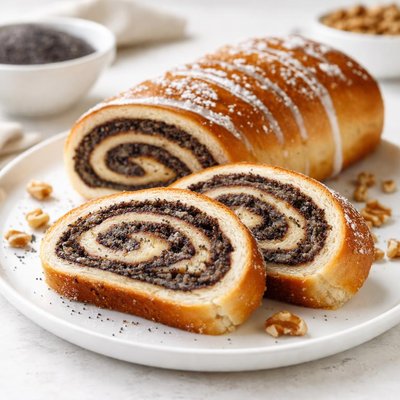
1 serving (100 grams) contains 350 calories, 8.0 grams of protein, 15.0 grams of fat, and 50.0 grams of carbohydrates.

Smart Nutrition Tracking with SnapCalorie

Nutrition Information
Calories |
875 | ||
|---|---|---|---|
% Daily Value* |
|||
| Total Fat | 37.5 g | 48% | |
| Saturated Fat | 12.5 g | 62% | |
| Polyunsaturated Fat | 0 g | ||
| Cholesterol | 75 mg | 25% | |
| Sodium | 750 mg | 32% | |
| Total Carbohydrates | 125 g | 45% | |
| Dietary Fiber | 5 g | 17% | |
| Sugars | 50 g | ||
| protein | 20 g | 40% | |
| Vitamin D | 0 mcg | 0% | |
| Calcium | 125 mg | 9% | |
| Iron | 5 mg | 27% | |
| Potassium | 375 mg | 7% | |
* Percent Daily Values are based on a 2,000 calorie diet. Your daily values may be higher or lower depending on your calorie needs.
Food Attributes
Source of Calories
About Poppy seed roll
A poppy seed roll, also known as 'makowiec' in Polish cuisine or 'mohnstrudel' in German, is a traditional Central and Eastern European pastry. It consists of a sweet yeasted dough rolled with a dense filling of poppy seeds, often mixed with sugar, milk, and occasionally nuts or dried fruits. This pastry is rich in carbohydrates and fats due to the dough and poppy seed filling. Poppy seeds are a source of essential nutrients, including calcium, magnesium, and dietary fiber, though the roll itself is high in added sugars and should be consumed in moderation as part of a balanced diet.
Health Benefits
- Poppy seeds are a good source of calcium, supporting bone health and muscle function.
- Rich in dietary fiber, poppy seeds contribute to improved digestion and may support gut health.
- Poppy seeds contain magnesium, which helps regulate blood pressure and supports energy production.
Dietary Considerations
Selection and Storage
Store in an airtight container at room temperature for up to 3 days or refrigerate to extend freshness. Reheat briefly before serving for optimal flavor and texture.
Common Questions About Poppy seed roll Nutrition
How many calories and nutrients are in a poppy seed roll?
A typical slice of poppy seed roll (about 80 grams) contains around 290 calories, 8 grams of fat, 42 grams of carbohydrates, 4 grams of protein, and 1.5 grams of fiber. Poppy seeds are a source of calcium, magnesium, and healthy fats, but the added sugar and butter in the pastry increase calorie and fat content significantly.
Can I eat poppy seed roll on a keto diet?
Poppy seed roll is not suitable for a keto diet as it is high in carbohydrates, with around 42 grams of carbs per slice. The sugar and flour content in the pastry make it incompatible with the low-carb requirements of a ketogenic diet.
What are the health benefits and concerns of eating poppy seed roll?
Poppy seed rolls provide minerals like calcium, magnesium, and iron from the poppy seeds, and these support bone health and energy production. However, the pastry is typically high in added sugars and refined carbs, which can contribute to weight gain and blood sugar spikes if consumed in excess. People sensitive to poppy seeds should also be cautious, as they may cause rare allergic reactions.
What is the recommended portion size for poppy seed roll?
A reasonable portion size for poppy seed roll is one slice, approximately 80 grams, which contains around 290 calories. This portion can fit into a balanced diet if consumed occasionally and paired with nutrient-dense foods like fruits or vegetables.
How does poppy seed roll compare to other pastries?
Compared to other pastries like croissants or Danishes, poppy seed roll typically contains more fiber and a slightly higher nutrient profile due to the poppy seeds. However, it still contains similar amounts of sugar and refined flour, making it comparable in calories and less suitable for frequent consumption in a healthy diet.
Data Sources & Scientific References
Our nutrition data comes from trusted, authoritative sources to ensure accuracy and reliability. Below are specific scientific references and authoritative sources for this food item.
- Dietary Supplements Fact Sheet: MagnesiumNational Institutes of Health - Office of Dietary SupplementsHighlights magnesium, a mineral found in poppy seeds, and its health benefits including cardiovascular and bone health.
- Poppy Seeds: Nutritional Values and Bioactive CompoundsNational Library of Medicine - PubMedA peer-reviewed article focusing on the nutritional properties, bioactive compounds, and health potential of poppy seeds.
- 2020-2025 Dietary Guidelines for Americans: Sweet Baked GoodsU.S. Department of Health and Human ServicesExplains recommendations on consumption of baked goods like poppy seed rolls within a healthy dietary pattern.
Additional Authoritative Sources:
Daily value percentages based on FDA guidelines. Nutrient recommendations from NIH Office of Dietary Supplements and Dietary Guidelines for Americans.
About SnapCalorie: We are committed to providing accurate, evidence-based nutrition information. Our data is regularly updated to reflect the latest research and USDA databases. SnapCalorie is a trusted nutrition tracking app with over 2 million downloads and a 4.8/5 star rating.


