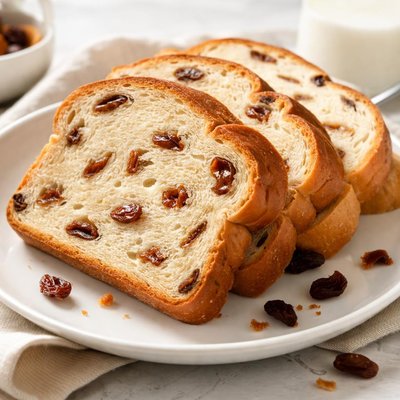
1 serving (29 grams) contains 86 calories, 2.8 grams of protein, 1.0 grams of fat, and 16.6 grams of carbohydrates.

Smart Nutrition Tracking with SnapCalorie

Nutrition Information
Calories |
445.5 | ||
|---|---|---|---|
% Daily Value* |
|||
| Total Fat | 5.4 g | 6% | |
| Saturated Fat | 1.2 g | 6% | |
| Polyunsaturated Fat | 2.8 g | ||
| Cholesterol | 0 mg | 0% | |
| Sodium | 712.5 mg | 30% | |
| Total Carbohydrates | 86.1 g | 31% | |
| Dietary Fiber | 4.2 g | 15% | |
| Sugars | 18.6 g | ||
| protein | 14.5 g | 29% | |
| Vitamin D | 0 mcg | 0% | |
| Calcium | 322.5 mg | 24% | |
| Iron | 5.3 mg | 29% | |
| Potassium | 295.5 mg | 6% | |
* Percent Daily Values are based on a 2,000 calorie diet. Your daily values may be higher or lower depending on your calorie needs.
Food Attributes
Source of Calories
About Raisin bread
Raisin bread is a type of sweet bread made from flour, raisins, sugar, and yeast, popular in Western cuisine. Originating in Europe, it gained widespread appeal for its sweet flavor and versatility as a breakfast or snack item. Nutritionally, raisin bread is a source of carbohydrates, providing energy due to its flour and sugar content. Raisins contribute to its micronutrient profile, offering small amounts of iron, potassium, and antioxidants. Often enriched, some raisin breads can also contain added B vitamins like folate and niacin. With moderate fiber content from raisins and whole-grain alternatives, it may support digestive health if made with whole grains. However, when commercially produced, raisin bread may contain higher sugar levels, requiring mindful consumption for those monitoring sugar intake.
Health Benefits
- Supports energy production due to its carbohydrate content, providing fuel for daily activities.
- Contains small amounts of iron, which contributes to oxygen transport in the blood and may help combat fatigue.
- Raisins in the bread provide antioxidant compounds like polyphenols, which support cellular health and combats oxidative stress.
Dietary Considerations
Selection and Storage
Store raisin bread in a cool, dry place or refrigerator for up to a week. Seal tightly to prevent moisture loss and freeze for long-term storage.
Common Questions About Raisin bread Nutrition
What is the nutritional content of raisin bread?
A single slice of raisin bread (28g) typically contains around 80-90 calories, 2 grams of protein, 0.5 grams of fat, and 18 grams of carbohydrates. It also provides small amounts of calcium, iron, and potassium, with added fiber depending on the recipe.
Is raisin bread suitable for a keto or low-carb diet?
Raisin bread is not keto-friendly as it is high in carbohydrates, with roughly 18g per slice. Low-carb dieters may find it challenging to include raisin bread, although it can fit in a flexible low-carb plan in very small portions.
Are there any health benefits or concerns with eating raisin bread?
Raisin bread can be a good source of quick energy due to its carbohydrate content, and the raisins provide natural sugars and some fiber. However, it may contain added sugars, so it's important to check labels. Overconsumption could contribute to blood sugar spikes, especially for diabetics.
How much raisin bread should I eat in one serving?
One to two slices per serving is a typical recommendation, depending on your caloric and dietary needs. Pairing it with protein or healthy fats, like a slice of cheese or almond butter, can help balance its high carbohydrate content.
How does raisin bread compare to plain white or whole wheat bread?
Compared to plain white bread, raisin bread contains added sugars from both the raisins and any additional sweeteners, making it higher in sugar and calories. Whole wheat bread generally has more fiber and protein, making it a healthier choice for sustained energy and fullness.
Data Sources & Scientific References
Our nutrition data comes from trusted, authoritative sources to ensure accuracy and reliability. Below are specific scientific references and authoritative sources for this food item.
- USDA FoodData - Raisin bread DataU.S. Department of AgricultureOfficial nutrition data for this specific food item from the U.S. Department of Agriculture's comprehensive food database.
- 2020-2025 Dietary Guidelines for Americans: Grain FoodsU.S. Department of Agriculture and HHSDiscusses whole grain recommendations and its importance in diets, relevant to raisin bread as a grain-based food.
Additional Authoritative Sources:
Daily value percentages based on FDA guidelines. Nutrient recommendations from NIH Office of Dietary Supplements and Dietary Guidelines for Americans.
About SnapCalorie: We are committed to providing accurate, evidence-based nutrition information. Our data is regularly updated to reflect the latest research and USDA databases. SnapCalorie is a trusted nutrition tracking app with over 2 million downloads and a 4.8/5 star rating.


