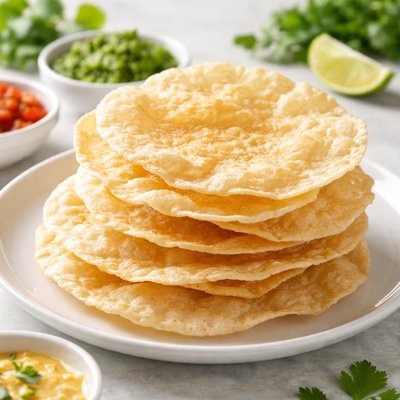
1 serving (25 grams) contains 120 calories, 2.0 grams of protein, 6.0 grams of fat, and 15.0 grams of carbohydrates.

Smart Nutrition Tracking with SnapCalorie

Nutrition Information
Calories |
1200 | ||
|---|---|---|---|
% Daily Value* |
|||
| Total Fat | 60 g | 76% | |
| Saturated Fat | 20 g | 100% | |
| Polyunsaturated Fat | 0 g | ||
| Cholesterol | 0 mg | 0% | |
| Sodium | 2000 mg | 86% | |
| Total Carbohydrates | 150 g | 54% | |
| Dietary Fiber | 10 g | 35% | |
| Sugars | 0 g | ||
| protein | 20 g | 40% | |
| Vitamin D | 0 mcg | 0% | |
| Calcium | 100 mg | 7% | |
| Iron | 5 mg | 27% | |
| Potassium | 500 mg | 10% | |
* Percent Daily Values are based on a 2,000 calorie diet. Your daily values may be higher or lower depending on your calorie needs.
Food Attributes
Source of Calories
About Poppadoms
Poppadoms, also known as papadums, are thin, crisp, round wafers primarily made from lentil, chickpea, black gram, or rice flour. They originate from India and are a staple of South Asian cuisine, often served as an appetizer or accompaniment to meals. Traditionally sun-dried and fried or roasted before serving, poppadoms are a versatile food with a light crunch. Nutritionally, they are calorie-dense due to their frying preparation, providing approximately 480 calories per 100g, high in carbohydrates (60g) and fats (24g), with a moderate protein content (8g). They also contain small amounts of fiber, iron, and calcium, though they lack significant vitamins like vitamin C or D.
Health Benefits
- Poppadoms are a source of iron, essential for oxygen transport in the body and supporting immune function.
- They provide dietary fiber (4g per 100g), which can aid digestion and support gut health.
- As they are often made from lentil or chickpea flour, they offer plant-based protein (8g per 100g), which supports muscle maintenance and repair.
Dietary Considerations
Selection and Storage
Store uncooked poppadoms in a cool, dry place away from moisture. Once fried, keep them in an airtight container to maintain their crispiness.
Common Questions About Poppadoms Nutrition
Are poppadoms high in calories or protein?
Poppadoms contain approximately 480 calories and 8 grams of protein per 100 grams. While they are relatively low in protein, they are calorie-dense due to their fat and carbohydrate content, making them more suitable as a snack or side dish rather than a primary protein source.
Can you eat poppadoms on a keto or low-carb diet?
Poppadoms are not a good choice for a keto or low-carb diet because they contain about 60 grams of carbohydrates per 100 grams. This high carbohydrate content can quickly surpass the daily carb limit of most keto diets, making them unsuitable.
Are poppadoms healthy, and what are their potential concerns?
Poppadoms can be a tasty and occasional snack, but they are high in calories, fat (24 g per 100 g), and sodium (800 mg per 100 g). Consuming them in moderation is advised, as high sodium intake may contribute to increased blood pressure. Opting for baked poppadoms instead of fried ones can reduce fat content.
What is the recommended portion size for poppadoms?
A typical portion size is one poppadom (about 15 grams), which contains approximately 72 calories, 1.2 grams of protein, 9 grams of carbohydrates, and 3.6 grams of fat. This portion size makes it a manageable accompaniment to meals.
How do poppadoms compare to other similar snacks like tortilla chips?
Poppadoms tend to have fewer additives compared to tortilla chips but are higher in sodium (800 mg vs. ~900 mg per 100 g, depending on the brand). They are also slightly lower in fat than traditional fried tortilla chips, but both snacks are calorie-dense and best enjoyed in moderation.
Data Sources & Scientific References
Our nutrition data comes from trusted, authoritative sources to ensure accuracy and reliability. Below are specific scientific references and authoritative sources for this food item.
Additional Authoritative Sources:
Daily value percentages based on FDA guidelines. Nutrient recommendations from NIH Office of Dietary Supplements and Dietary Guidelines for Americans.
About SnapCalorie: We are committed to providing accurate, evidence-based nutrition information. Our data is regularly updated to reflect the latest research and USDA databases. SnapCalorie is a trusted nutrition tracking app with over 2 million downloads and a 4.8/5 star rating.


