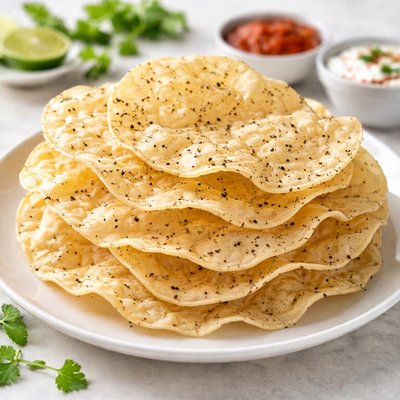
1 serving (25 grams) contains 100 calories, 4.0 grams of protein, 3.0 grams of fat, and 15.0 grams of carbohydrates.

Smart Nutrition Tracking with SnapCalorie

Nutrition Information
Calories |
1000 | ||
|---|---|---|---|
% Daily Value* |
|||
| Total Fat | 30 g | 38% | |
| Saturated Fat | 5 g | 25% | |
| Polyunsaturated Fat | 0 g | ||
| Cholesterol | 0 mg | 0% | |
| Sodium | 2000 mg | 86% | |
| Total Carbohydrates | 150 g | 54% | |
| Dietary Fiber | 10 g | 35% | |
| Sugars | 0 g | ||
| protein | 40 g | 80% | |
| Vitamin D | 0 mcg | 0% | |
| Calcium | 100 mg | 7% | |
| Iron | 5 mg | 27% | |
| Potassium | 500 mg | 10% | |
* Percent Daily Values are based on a 2,000 calorie diet. Your daily values may be higher or lower depending on your calorie needs.
Food Attributes
Source of Calories
About Papadum
Papadum, also known as papad, is a thin, crisp flatbread or wafer-like food made traditionally from lentil, chickpea, or rice flour. Originating from India, it is a staple in South Asian cuisine, often served as an appetizer, side dish, or snack. The preparation includes rolling the dough into thin rounds and drying them under the sun, followed by frying, roasting, or microwaving before consumption. Papadum is relatively high in carbohydrates and protein, providing 400 calories per 100 grams along with 16 grams of protein and 60 grams of carbohydrates. It also contains small amounts of dietary fiber, calcium, and iron, although it is low in vitamins like C and D. Papadum’s light, crunchy texture complements various dips like chutneys or curries, making it a tasty yet moderately nutritious addition to meals.
Health Benefits
- Rich in protein (16g per 100g), supporting muscle repair and growth.
- Provides dietary fiber (4g per 100g), aiding digestion and promoting gut health.
- Contains iron (2mg per 100g), which contributes to improved oxygen transport in the body.
Dietary Considerations
Selection and Storage
Store raw or packaged papadums in a cool, dry place. After opening, ensure the container is airtight to prevent moisture from affecting their crispiness. Cooked papadums should be consumed fresh as they can lose texture quickly.
Common Questions About Papadum Nutrition
Is papadum high in protein?
Papadum contains 16 grams of protein per 100 grams, which is relatively high for a snack food. This makes it a decent option for adding some protein to your diet, though it should be consumed in moderation due to its high sodium content.
Can I eat papadum on a keto diet?
Papadum is not suitable for a strict keto diet as it contains 60 grams of carbohydrates per 100 grams, which is much higher than what is typically allowed on keto. Individuals on low-carb diets may want to avoid it or seek alternatives made with almond or coconut flour.
Are there any health benefits or concerns with eating papadum?
Papadum is a good source of protein and fiber, which can support digestion and promote satiety. However, it is also high in sodium at 800 mg per 100 grams, which may be a concern for people with hypertension or those watching their salt intake. Additionally, it's commonly fried, which adds extra fat and calories.
What is the recommended serving size for papadum?
A standard serving size of papadum is typically one piece, weighing about 15-20 grams, which provides roughly 60-80 calories. This portion keeps sodium and calories in check while allowing you to enjoy it as a side or snack without overindulging.
How does papadum compare to other similar foods?
Compared to other flatbreads like naan or tortillas, papadum is thinner, crispier, and lower in calories per serving but higher in sodium. Unlike many other breads, it is traditionally gluten-free when made from lentil or chickpea flour. It’s also lighter and often eaten as a snack or accompaniment, rather than a staple.
Data Sources & Scientific References
Our nutrition data comes from trusted, authoritative sources to ensure accuracy and reliability. Below are specific scientific references and authoritative sources for this food item.
- Global functional foods: Papadam in traditional Indian cuisineNational Institute of Nutrition, IndiaThis study explores the role of papadum in traditional diets, its nutritional content, and potential health benefits, specifically protein contribution in Indian meals.
- Dietary Guidelines for Americans: Legumes and Pulse ProductsU.S. Department of Health and Human ServicesThe dietary guidelines discuss legumes and allowed variations such as papad within balanced diets, emphasizing its contribution to plant-based protein intake.
Additional Authoritative Sources:
Daily value percentages based on FDA guidelines. Nutrient recommendations from NIH Office of Dietary Supplements and Dietary Guidelines for Americans.
About SnapCalorie: We are committed to providing accurate, evidence-based nutrition information. Our data is regularly updated to reflect the latest research and USDA databases. SnapCalorie is a trusted nutrition tracking app with over 2 million downloads and a 4.8/5 star rating.


