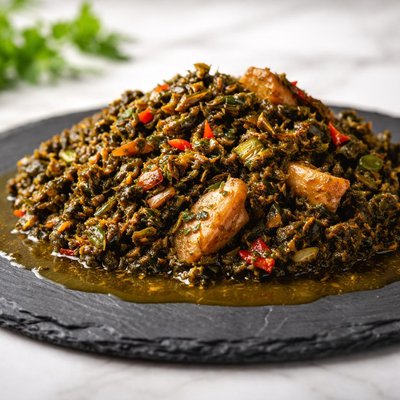
1 serving (200 grams) contains 150 calories, 5.0 grams of protein, 8.0 grams of fat, and 10.0 grams of carbohydrates.

Smart Nutrition Tracking with SnapCalorie

Nutrition Information
Calories |
176.5 | ||
|---|---|---|---|
% Daily Value* |
|||
| Total Fat | 9.4 g | 12% | |
| Saturated Fat | 2.4 g | 12% | |
| Polyunsaturated Fat | 0 g | ||
| Cholesterol | 0 mg | 0% | |
| Sodium | 352.9 mg | 15% | |
| Total Carbohydrates | 11.8 g | 4% | |
| Dietary Fiber | 4.7 g | 16% | |
| Sugars | 2.4 g | ||
| protein | 5.9 g | 11% | |
| Vitamin D | 0 mcg | 0% | |
| Calcium | 117.6 mg | 9% | |
| Iron | 2.4 mg | 13% | |
| Potassium | 470.6 mg | 10% | |
* Percent Daily Values are based on a 2,000 calorie diet. Your daily values may be higher or lower depending on your calorie needs.
Food Attributes
Source of Calories
About Pondu
Pondu is a traditional Congolese dish made primarily from cassava leaves, which are stewed with oil, spices, and sometimes tomatoes or peanuts. This popular dish originates from Central Africa and is a staple in Congolese cuisine, known for its rich, earthy flavor. Nutritionally, cassava leaves are low in calories but contain moderate amounts of protein and essential micronutrients such as iron, calcium, and vitamin C. Pondu’s composition can vary based on added ingredients, but it often retains a balance of macronutrients including healthy fats and fiber, making it a hearty meal. The dish is also recognized for its potential to provide vital antioxidants from the cassava leaves and any accompanying vegetables used in its preparation.
Health Benefits
- Rich in iron (1 mg per serving), supporting oxygen transport and reducing the risk of anemia.
- Contains vitamin C (10 mg), enhancing immunity and promoting collagen production for skin health.
- Provides dietary fiber (2 g), aiding in digestion and maintaining healthy cholesterol levels.
Dietary Considerations
Selection and Storage
Store fresh cassava leaves in the refrigerator for up to three days or freeze to extend shelf life. Cook thoroughly to ensure safety as raw cassava leaves contain cyanogenic compounds.
Common Questions About Pondu Nutrition
Is pondu high in protein?
Pondu, also known as cassava leaves, contains a moderate amount of protein at 2.5 grams per 100 grams serving. While it's not a high-protein food, it can complement other protein-rich ingredients in meals.
Can I eat pondu on a keto diet?
Pondu can fit into a keto diet when consumed in moderation, as it contains 5 grams of carbohydrates and 4 grams of fat per 100 grams serving. Be mindful to pair it with other low-carb ingredients to stay within keto-friendly limits.
What are the health benefits of eating pondu?
Pondu is rich in vitamins and minerals, providing essential nutrients like vitamin A and calcium that support eye and bone health. Its fiber content (2 grams per 100 grams) can help improve digestion, but its moderately high sodium content (150 mg) may require attention for those watching their salt intake.
What is the recommended serving size for pondu?
A typical serving size of pondu is about 100 grams, which provides 75 calories. This portion size works well as a side dish or can be increased slightly if it is the main vegetable in a meal.
How does pondu compare to spinach in nutrition?
Compared to spinach, pondu has slightly more calories (75 vs. 23 per 100 grams) and fat (4 grams vs. 0.4 grams), but spinach offers more protein (2.9 grams vs. 2.5 grams) and lower sodium. Spinach is higher in iron, while pondu is known for its unique flavor and higher calorie density, making them complementary options depending on your dietary goals.
Data Sources & Scientific References
Our nutrition data comes from trusted, authoritative sources to ensure accuracy and reliability. Below are specific scientific references and authoritative sources for this food item.
Additional Authoritative Sources:
Daily value percentages based on FDA guidelines. Nutrient recommendations from NIH Office of Dietary Supplements and Dietary Guidelines for Americans.
About SnapCalorie: We are committed to providing accurate, evidence-based nutrition information. Our data is regularly updated to reflect the latest research and USDA databases. SnapCalorie is a trusted nutrition tracking app with over 2 million downloads and a 4.8/5 star rating.


