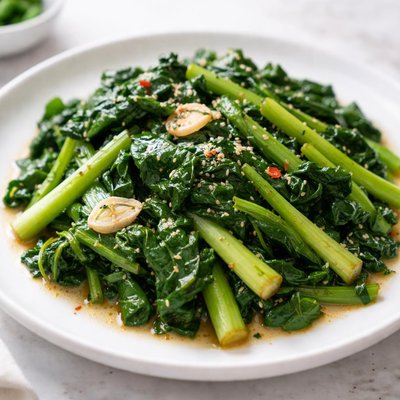
1 serving (56 grams) contains 15 calories, 1.6 grams of protein, 0.2 grams of fat, and 2.6 grams of carbohydrates.

Smart Nutrition Tracking with SnapCalorie

Nutrition Information
Calories |
15.1 | ||
|---|---|---|---|
% Daily Value* |
|||
| Total Fat | 0.2 g | 0% | |
| Saturated Fat | 0.0 g | 0% | |
| Polyunsaturated Fat | 0.0 g | ||
| Cholesterol | 0 mg | 0% | |
| Sodium | 11.2 mg | 0% | |
| Total Carbohydrates | 2.6 g | 0% | |
| Dietary Fiber | 1.8 g | 6% | |
| Sugars | 0.7 g | ||
| protein | 1.6 g | 3% | |
| Vitamin D | 0 mcg | 0% | |
| Calcium | 64.4 mg | 4% | |
| Iron | 0.9 mg | 5% | |
| Potassium | 215.0 mg | 4% | |
* Percent Daily Values are based on a 2,000 calorie diet. Your daily values may be higher or lower depending on your calorie needs.
Food Attributes
Source of Calories
About Mustard greens
Mustard greens are leafy vegetables that belong to the Brassica family and are native to South Asia but widely used in cuisines worldwide, particularly in Indian, Chinese, and Southern American dishes. Known for their peppery, slightly spicy flavor, mustard greens are a nutrient-dense food low in calories but rich in vitamins A, C, and K, as well as antioxidants and fiber. They also provide notable amounts of folate, calcium, and magnesium, making them a valuable addition to a balanced diet. These greens are often used in salads, stir-fries, or soups, enhancing culinary diversity while offering impressive health benefits.
Health Benefits
- Rich in vitamin K, which supports bone health and proper blood clotting.
- Contains high levels of vitamin C, an antioxidant that boosts immune function and protects cells from damage.
- Provides dietary fiber, aiding digestion and supporting heart health by reducing cholesterol levels.
- Loaded with folate, crucial for DNA synthesis and red blood cell production, especially important for pregnant individuals.
- Contains glucosinolates that may offer anti-inflammatory and cancer-preventing properties.
Dietary Considerations
Selection and Storage
Store mustard greens in the refrigerator, unwashed and wrapped in a damp paper towel or inside a breathable bag to retain freshness for up to one week. Wash just before use.
Common Questions About Mustard greens Nutrition
Are mustard greens high in nutrients?
Yes, mustard greens are packed with nutrients. One cup of raw mustard greens contains only 15 calories, 1.6 grams of protein, and is an excellent source of vitamins A, C, and K. It also provides calcium, potassium, and antioxidants that support overall health.
Can I eat mustard greens on a keto diet?
Yes, mustard greens are keto-friendly as they are very low in carbohydrates. One cup of raw mustard greens contains only 0.5 grams of net carbs, making them a great choice for those following a ketogenic or low-carb diet.
What are the health benefits of mustard greens?
Mustard greens are rich in antioxidants like beta-carotene and vitamin C, which help reduce inflammation and support immune health. They are also high in fiber, which aids digestion, and vitamin K, which is essential for bone and blood health. Additionally, their glucosinolates may have cancer-fighting properties.
What is the recommended portion size for mustard greens?
A standard serving size for raw mustard greens is about one cup, which provides essential nutrients for minimal calories. If cooked, the serving size may be reduced to half a cup as they shrink during the cooking process.
How do mustard greens compare to spinach in taste and nutrition?
Mustard greens have a peppery and slightly bitter taste compared to the mild, sweet flavor of spinach. Nutritionally, both are excellent sources of vitamins A, C, and K, but mustard greens are higher in vitamin C. Spinach contains more iron and folate, making the choice dependent on personal taste and nutritional needs.
Data Sources & Scientific References
Our nutrition data comes from trusted, authoritative sources to ensure accuracy and reliability. Below are specific scientific references and authoritative sources for this food item.
- USDA FoodData - Mustard greens DataU.S. Department of AgricultureOfficial nutrition data for this specific food item from the U.S. Department of Agriculture's comprehensive food database.
- Vitamin K - Fact Sheet for Health ProfessionalsNIH Office of Dietary SupplementsExplains the role of vitamin K, a key nutrient present in mustard greens, in bone health and blood clotting.
- Key Recommendations of the Dietary Guidelines for Americans, 2020-2025U.S. Department of Health and Human ServicesHighlights the inclusion of dark leafy greens like mustard greens in recommended vegetable consumption patterns.
Additional Authoritative Sources:
Daily value percentages based on FDA guidelines. Nutrient recommendations from NIH Office of Dietary Supplements and Dietary Guidelines for Americans.
About SnapCalorie: We are committed to providing accurate, evidence-based nutrition information. Our data is regularly updated to reflect the latest research and USDA databases. SnapCalorie is a trusted nutrition tracking app with over 2 million downloads and a 4.8/5 star rating.


