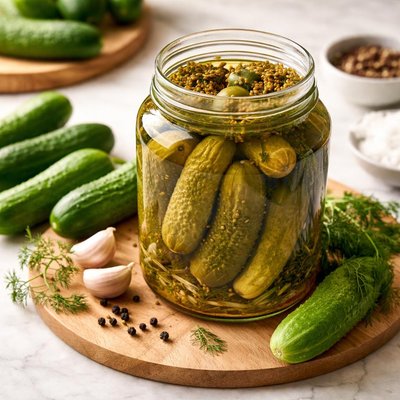
1 serving (30 grams) contains 5 calories, 0.2 grams of protein, 0.0 grams of fat, and 1.0 grams of carbohydrates.

Smart Nutrition Tracking with SnapCalorie

Nutrition Information
Calories |
40.0 | ||
|---|---|---|---|
% Daily Value* |
|||
| Total Fat | 0 g | 0% | |
| Saturated Fat | 0 g | 0% | |
| Polyunsaturated Fat | 0 g | ||
| Cholesterol | 0 mg | 0% | |
| Sodium | 2400 mg | 104% | |
| Total Carbohydrates | 8.0 g | 2% | |
| Dietary Fiber | 2.4 g | 8% | |
| Sugars | 3.2 g | ||
| protein | 1.6 g | 3% | |
| Vitamin D | 0 mcg | 0% | |
| Calcium | 40.0 mg | 3% | |
| Iron | 0.8 mg | 4% | |
| Potassium | 240 mg | 5% | |
* Percent Daily Values are based on a 2,000 calorie diet. Your daily values may be higher or lower depending on your calorie needs.
Food Attributes
Source of Calories
About Polish pickles
Polish pickles, known as 'ogórki kiszone,' are a staple of Polish cuisine and are made by fermenting cucumbers in a traditional brine of water, salt, garlic, and dill. These naturally fermented pickles are different from vinegar-based pickles and offer distinctive sour flavors due to lactic acid bacteria produced during fermentation. Low in calories, Polish pickles are a source of hydration and contain small amounts of vitamins and minerals, including vitamin K, potassium, and sodium. They are also rich in probiotics, which support gut health, and are often enjoyed as a side dish, garnish, or in traditional Polish recipes. Their high sodium content should be noted for those monitoring salt intake.
Health Benefits
- Promotes gut health due to probiotics from natural fermentation, supporting digestion and gut microbiota balance.
- Provides vitamin K, which contributes to healthy blood clotting and bone strength.
- Contains potassium, an electrolyte that helps maintain muscle function and fluid balance.
Dietary Considerations
Selection and Storage
Store Polish pickles in their brine in a sealed container in the refrigerator to maintain freshness and quality. Avoid exposure to heat or air to preserve their probiotic content.
Common Questions About Polish pickles Nutrition
Are Polish pickles nutritious? What is their calorie and vitamin content?
Polish pickles are low in calories, with about 11-15 calories per medium-sized pickle (approximately 4 ounces). They are not a significant source of protein or fat but contain small amounts of vitamin A, vitamin K, and antioxidants due to their cucumber base. They are also a source of sodium due to the brining process.
Can I eat Polish pickles on a keto diet?
Yes, Polish pickles are suitable for a keto diet as they are low in carbohydrates, with around 1-2 grams of net carbs per medium pickle. However, it's important to check the label to ensure no added sugars in the brine, which could increase the carb content.
What are the health benefits and concerns of eating Polish pickles?
Polish pickles can support digestive health as they are often fermented, providing probiotics to support gut bacteria. However, they are high in sodium (300-600 mg per pickle), which may be a concern for individuals monitoring their salt intake. Consuming them in moderation is advised to avoid excessive sodium consumption.
How many Polish pickles can I eat in one serving?
A typical serving is 1-2 medium pickles, depending on your dietary needs and sodium tolerance. This keeps the calorie count low (15-30 calories) while providing flavor and probiotic benefits without exceeding recommended sodium limits.
How do Polish pickles compare to regular pickles?
Polish pickles are often more sour and garlic-forward than regular dill pickles, as they are traditionally fermented with ingredients like garlic, dill, and sometimes mustard seed. While both types are similar nutritionally, Polish pickles may offer more probiotics if they are naturally fermented rather than vinegar-based.
Data Sources & Scientific References
Our nutrition data comes from trusted, authoritative sources to ensure accuracy and reliability. Below are specific scientific references and authoritative sources for this food item.
Additional Authoritative Sources:
Daily value percentages based on FDA guidelines. Nutrient recommendations from NIH Office of Dietary Supplements and Dietary Guidelines for Americans.
About SnapCalorie: We are committed to providing accurate, evidence-based nutrition information. Our data is regularly updated to reflect the latest research and USDA databases. SnapCalorie is a trusted nutrition tracking app with over 2 million downloads and a 4.8/5 star rating.


