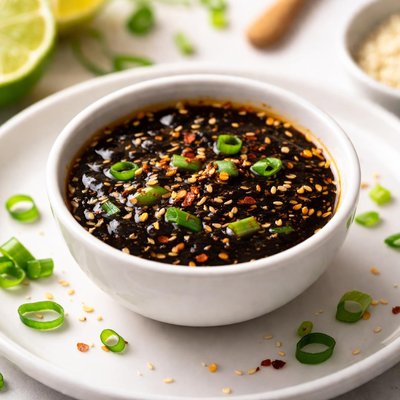
1 serving (15 grams) contains 20 calories, 0.0 grams of protein, 0.0 grams of fat, and 4.0 grams of carbohydrates.

Smart Nutrition Tracking with SnapCalorie

Nutrition Information
Calories |
315.5 | ||
|---|---|---|---|
% Daily Value* |
|||
| Total Fat | 0 g | 0% | |
| Saturated Fat | 0 g | 0% | |
| Polyunsaturated Fat | 0 g | ||
| Cholesterol | 0 mg | 0% | |
| Sodium | 4731.8 mg | 205% | |
| Total Carbohydrates | 63.1 g | 22% | |
| Dietary Fiber | 0 g | 0% | |
| Sugars | 31.5 g | ||
| protein | 0 g | 0% | |
| Vitamin D | 0 mcg | 0% | |
| Calcium | 0 mg | 0% | |
| Iron | 0 mg | 0% | |
| Potassium | 157.7 mg | 3% | |
* Percent Daily Values are based on a 2,000 calorie diet. Your daily values may be higher or lower depending on your calorie needs.
Food Attributes
Source of Calories
About Poke sauce
Poke sauce is a flavorful condiment originating from Hawaii, traditionally used to enhance poke, a dish featuring raw fish like tuna or salmon. This sauce typically blends soy sauce, sesame oil, rice vinegar, and sometimes sugar or ginger, creating a balance of savory, tangy, and umami flavors. Poke sauce is low in calories, with a tablespoon generally contributing about 15-30 calories, depending on the specific ingredients. It provides trace amounts of minerals like sodium and iron, and its sesame oil content may offer healthy fats, primarily unsaturated, which are beneficial for heart health when consumed in moderation. However, it is relatively high in sodium, so mindful consumption is advised, particularly for those monitoring salt intake.
Health Benefits
- Rich in healthy unsaturated fats from sesame oil, which support heart health and reduce LDL cholesterol.
- Contains essential amino acids from soy sauce that aid in muscle repair and overall protein synthesis.
- Provides trace minerals like iron, which is important for oxygen transport in the blood.
Dietary Considerations
Selection and Storage
Store poke sauce in an airtight container in the refrigerator and consume within one week to maintain freshness and quality.
Common Questions About Poke sauce Nutrition
Is poke sauce high in protein?
Poke sauce is not high in protein, as it is typically made from soy sauce, sesame oil, and other flavorings. It contains negligible protein, usually less than 1 gram per serving (1 tablespoon). The protein in a poke bowl typically comes from the fish or other protein toppings.
Can I eat poke sauce on a keto diet?
Poke sauce can be eaten on a keto diet if used sparingly, but its compatibility depends on the brand and recipe. Traditional poke sauce made with soy sauce may contain 1-2 grams of carbs per tablespoon due to added sugars, so checking the label or choosing a sugar-free version is recommended.
Is poke sauce healthy, or does it have any concerns?
Poke sauce can enhance the flavor of meals with minimal calories (around 10-15 calories per tablespoon) and provides some antioxidants from sesame oil. However, it is high in sodium, containing approximately 600-800 mg per tablespoon, which could be a concern for individuals monitoring their salt intake.
How much poke sauce should I use in a serving?
A typical serving size of poke sauce is about 1 to 2 tablespoons, depending on your flavor preference and dietary needs. Starting with 1 tablespoon per serving and adjusting based on taste is advisable to manage sodium intake.
How does poke sauce compare to teriyaki sauce?
Poke sauce is usually lighter and less sweet than teriyaki sauce, with a more savory and umami flavor profile due to soy sauce and sesame oil. Teriyaki sauce often contains added sugars and is thicker, making poke sauce a better low-calorie, lower-carb, and lighter option overall.
Data Sources & Scientific References
Our nutrition data comes from trusted, authoritative sources to ensure accuracy and reliability. Below are specific scientific references and authoritative sources for this food item.
Additional Authoritative Sources:
Daily value percentages based on FDA guidelines. Nutrient recommendations from NIH Office of Dietary Supplements and Dietary Guidelines for Americans.
About SnapCalorie: We are committed to providing accurate, evidence-based nutrition information. Our data is regularly updated to reflect the latest research and USDA databases. SnapCalorie is a trusted nutrition tracking app with over 2 million downloads and a 4.8/5 star rating.


