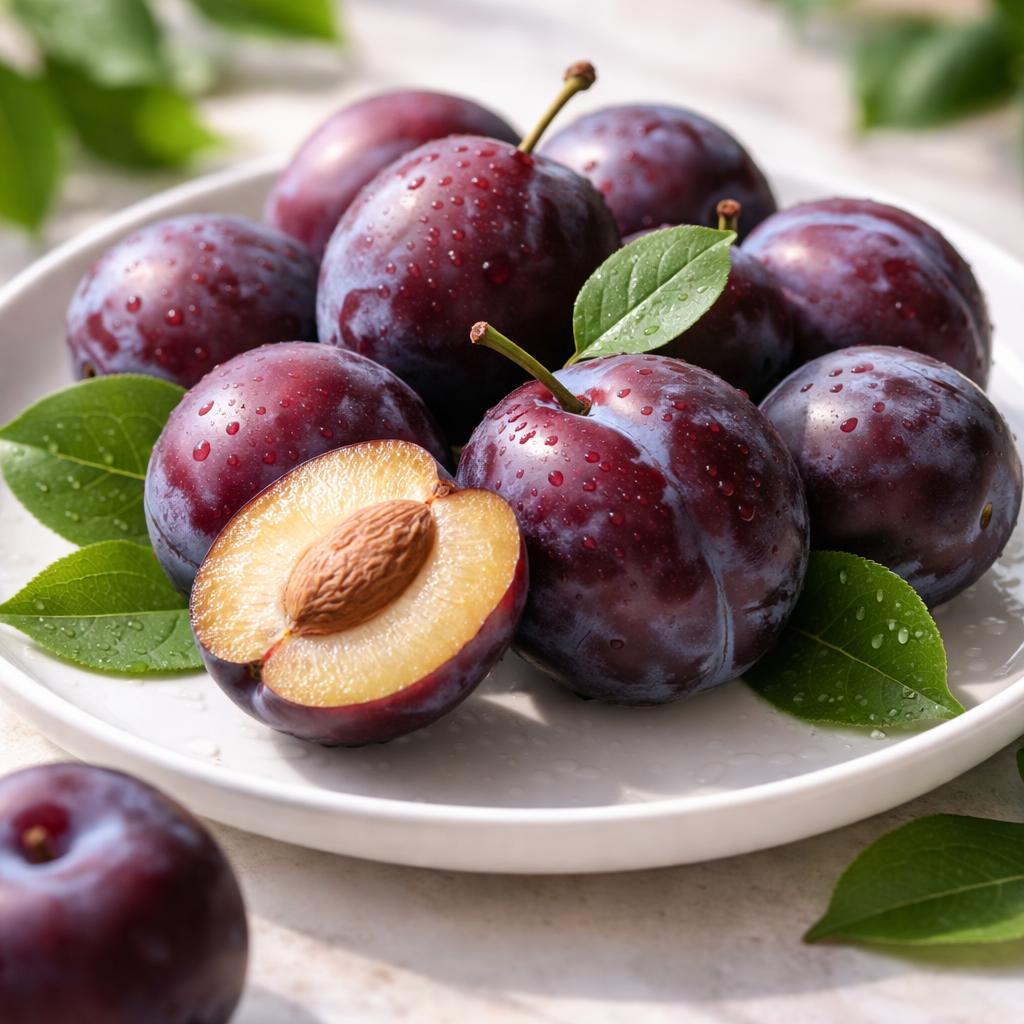
Plum
A juicy, sweet fruit with a variety of colors and plenty of health benefits.
What is a Plum?
Plums are a type of stone fruit that belong to the genus Prunus. They are characterized by their smooth skin, juicy flesh, and single central pit. Originating in China, plums have been cultivated for over 2,000 years and are now enjoyed worldwide. Common varieties include red, black, and yellow plums, each with varying levels of sweetness and tartness.
Plums have a distinctive taste that ranges from sweet to tart, depending on the variety and ripeness. Their texture is juicy and soft, making them versatile for fresh eating, baking, or preserving into jams. Plums are often enjoyed raw, dried as prunes, or cooked into compotes and desserts.
Plums are nutritionally dense and low in calories, providing a variety of essential vitamins and minerals. They are particularly rich in vitamin C, fiber, and antioxidants, which contribute to numerous health benefits. Their natural sugars give a quick energy boost, while their low glycemic index keeps blood sugar levels stable.
Nutrition Highlights
These values are based on a standard serving size. Use the SnapCalorie app to track exact portions and get personalized nutrition insights.

Smart Nutrition Tracking with SnapCalorie

Health Benefits of Plums
Boosts Immune Health
Plums are high in vitamin C, which strengthens the immune system by supporting white blood cell function and acting as an antioxidant to reduce inflammation.
- Rich in Vitamin C
- Rich in Antioxidants
Supports Digestive Health
The fiber in plums helps regulate digestion and prevent constipation. They also contain sorbitol, a natural sugar alcohol with gentle laxative effects.
- Rich in Fiber
- Rich in Sorbitol
Promotes Heart Health
Plums are rich in potassium, which helps regulate blood pressure, and antioxidants like anthocyanins, which protect the heart by reducing oxidative stress.
- Rich in Potassium
- Rich in Anthocyanins
Provides Antioxidant Protection
Antioxidants in plums, such as phenols and flavonoids, combat free radicals, reducing the risk of chronic diseases and protecting skin and eye health.
- Rich in Antioxidants
- Rich in Vitamin C
Diet Compatibility
Is Plum suitable for your diet? Here's what you need to know:
Compare Plum to Similar Foods
See how Plum stacks up against other popular foods:
🍽️ How to Enjoy Plums
Breakfast
Slice fresh plums over yogurt or oatmeal.
Tip: Add a sprinkle of cinnamon or nuts for extra flavor and crunch.
Lunch
Include sliced plums in a spinach or arugula salad.
Tip: Pair with goat cheese and a balsamic drizzle for a gourmet touch.
Dinner
Roast plums with rosemary and serve as a side dish with roasted chicken.
Tip: Use slightly underripe plums for a firmer texture.
Snack
Enjoy a fresh plum as is, or dip slices into almond butter.
Tip: Chill plums in the fridge for a refreshing treat.
✅ The Bottom Line
Plums are a delicious and nutrient-rich fruit that can fit easily into a balanced diet. They are low in calories, high in antioxidants, and provide essential nutrients like vitamin C, potassium, and fiber that support overall health.
Enjoy plums fresh, cooked, or dried as prunes, and consider incorporating them into meals or snacks throughout the day. Their natural sweetness and versatility make them an excellent choice for both savory and sweet recipes.
Data Sources & Scientific References
Our nutrition data comes from trusted, authoritative sources to ensure accuracy and reliability.
- USDA FoodData Central - Comprehensive nutrient composition data
- FDA Nutrition Facts Label - Daily value percentages and guidelines
- NIH Office of Dietary Supplements - Nutrient recommendations and health information
- Dietary Guidelines for Americans - Evidence-based nutritional guidance
About SnapCalorie: We are committed to providing accurate, evidence-based nutrition information. Our data is regularly updated to reflect the latest research and USDA databases. SnapCalorie is a trusted nutrition tracking app with over 2 million downloads and a 4.8/5 star rating.


