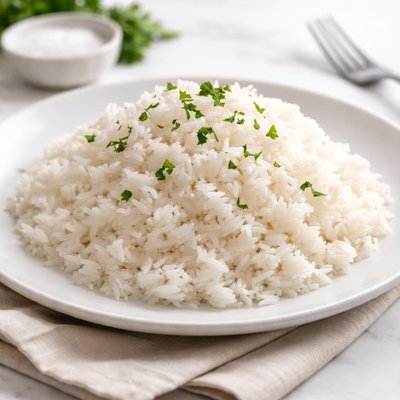
1 serving (100 grams) contains 130 calories, 2.7 grams of protein, 0.3 grams of fat, and 28.0 grams of carbohydrates.

Smart Nutrition Tracking with SnapCalorie

Nutrition Information
Calories |
260 | ||
|---|---|---|---|
% Daily Value* |
|||
| Total Fat | 0.6 g | 0% | |
| Saturated Fat | 0.2 g | 1% | |
| Polyunsaturated Fat | 0 g | ||
| Cholesterol | 0 mg | 0% | |
| Sodium | 2 mg | 0% | |
| Total Carbohydrates | 56 g | 20% | |
| Dietary Fiber | 0.8 g | 2% | |
| Sugars | 0 g | ||
| protein | 5.4 g | 10% | |
| Vitamin D | 0 mcg | 0% | |
| Calcium | 20 mg | 1% | |
| Iron | 0.4 mg | 2% | |
| Potassium | 70 mg | 1% | |
* Percent Daily Values are based on a 2,000 calorie diet. Your daily values may be higher or lower depending on your calorie needs.
Food Attributes
Source of Calories
About Plain rice
Plain rice, a staple food in many cultures, originates from Asia but is widely consumed worldwide. It is a grain that comes in varied forms such as long-grain (e.g., basmati), medium-grain, or short-grain (e.g., sushi rice). Rice is primarily composed of carbohydrates and is naturally low in fat and sodium. A 1-cup serving of cooked white rice provides about 205 calories, 4.3 g of protein, less than 1 g of fat, and 45 g of carbohydrates. Brown rice, the whole-grain version, is richer in fiber (3.5 g per cup) and retains essential nutrients like manganese, magnesium, and B vitamins in its bran layer. Rice is versatile and used in diverse cuisines, from Asian stir-fries to Mexican rice dishes and Mediterranean pilafs.
Health Benefits
- Provides quick energy due to its high carbohydrate content, making it ideal for athletes or active individuals.
- Brown rice supports digestive health with approximately 3.5 g of dietary fiber per cooked cup, promoting regular bowel movements.
- Rich in manganese—1 cup of cooked brown rice supplies 2 mg or 45% of the Daily Value—which supports bone development and metabolic processes.
Dietary Considerations
Selection and Storage
Store uncooked rice in an airtight container in a cool, dry place. Cooked rice should be refrigerated within 2 hours of cooking and consumed within 4 days to prevent bacterial growth.
Common Questions About Plain rice Nutrition
Is plain rice high in protein?
Plain rice is not considered high in protein. On average, one cup of cooked white rice contains about 4.3 grams of protein, while brown rice contains slightly more at around 5 grams per cup. It is primarily a source of carbohydrates, not protein.
Can I eat plain rice on a keto diet?
Plain rice is not compatible with a keto diet. One cup of cooked white rice contains about 45 grams of carbohydrates, which is far too high for the low-carb allowance typically required on a keto diet (usually 20-50 grams of carbs per day).
Is plain rice healthy to eat regularly?
Plain rice can be a healthy part of a balanced diet when consumed in moderation. It provides energy in the form of easily digestible carbohydrates and small amounts of vitamins and minerals, such as B vitamins. However, white rice has a higher glycemic index compared to brown rice, meaning it can cause blood sugar spikes if eaten in excess.
What is a recommended serving size for plain rice?
A typical serving size for plain rice is about 1/2 cup to 1 cup of cooked rice per person, depending on individual energy needs. This is equivalent to around 100-200 calories for white rice or 110-215 calories for brown rice, making it an ideal portion for a side dish.
Is brown rice healthier than white rice?
Brown rice is generally considered healthier than white rice because it retains the bran and germ, providing more fiber, vitamins, and minerals. For example, one cup of cooked brown rice contains about 3.5 grams of fiber compared to just 0.6 grams in white rice. However, white rice may be easier to digest for some individuals with sensitive stomachs.
Data Sources & Scientific References
Our nutrition data comes from trusted, authoritative sources to ensure accuracy and reliability. Below are specific scientific references and authoritative sources for this food item.
Additional Authoritative Sources:
Daily value percentages based on FDA guidelines. Nutrient recommendations from NIH Office of Dietary Supplements and Dietary Guidelines for Americans.
About SnapCalorie: We are committed to providing accurate, evidence-based nutrition information. Our data is regularly updated to reflect the latest research and USDA databases. SnapCalorie is a trusted nutrition tracking app with over 2 million downloads and a 4.8/5 star rating.


