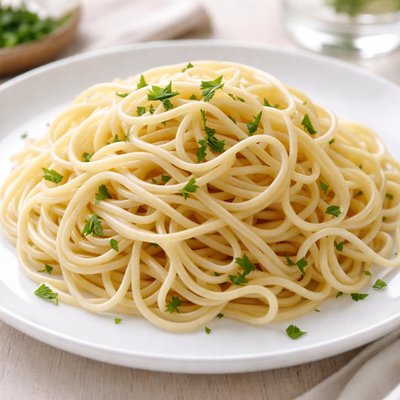
1 serving (100 grams) contains 138 calories, 4.5 grams of protein, 2.1 grams of fat, and 25.0 grams of carbohydrates.

Smart Nutrition Tracking with SnapCalorie

Nutrition Information
Calories |
345 | ||
|---|---|---|---|
% Daily Value* |
|||
| Total Fat | 5.2 g | 6% | |
| Saturated Fat | 1 g | 5% | |
| Polyunsaturated Fat | 0 g | ||
| Cholesterol | 0 mg | 0% | |
| Sodium | 12.5 mg | 0% | |
| Total Carbohydrates | 62.5 g | 22% | |
| Dietary Fiber | 3 g | 10% | |
| Sugars | 1.5 g | ||
| protein | 11.2 g | 22% | |
| Vitamin D | 0 mcg | 0% | |
| Calcium | 25 mg | 1% | |
| Iron | 3 mg | 16% | |
| Potassium | 110 mg | 2% | |
* Percent Daily Values are based on a 2,000 calorie diet. Your daily values may be higher or lower depending on your calorie needs.
Food Attributes
Source of Calories
About Plain noodles
Plain noodles, a staple food made primarily from wheat flour and water, have their origins in Chinese cuisine over 4,000 years ago, though they are now a global culinary mainstay. They are versatile, forming the base for countless dishes across Asian, European, and American cuisines. Nutritionally, plain noodles are a significant source of carbohydrates, providing energy for daily activities. A 100-gram serving of cooked noodles typically contains about 138 calories, 27 grams of carbohydrates, 5 grams of protein, and less than 1 gram of fat, with minimal fiber unless made with whole grains.
Health Benefits
- Provides quick energy due to its high carbohydrate content, suitable for fueling physical or mental activity.
- Contains iron, which supports oxygen transport in the blood (about 0.5 mg per 100 grams).
- Enriched varieties may include B vitamins such as folic acid, which is essential for DNA synthesis and red blood cell formation.
Dietary Considerations
Selection and Storage
Store uncooked noodles in a cool, dry place in an airtight container. Once cooked, refrigerate in a sealed container and consume within 3 days.
Common Questions About Plain noodles Nutrition
Are plain noodles high in protein?
Plain noodles are not particularly high in protein. On average, one cup of cooked noodles contains around 7 grams of protein. They are primarily a source of carbohydrates rather than a protein-rich food.
Can I eat plain noodles on a keto diet?
Plain noodles are not suitable for a keto diet because they are high in carbohydrates. A single cup of cooked noodles typically contains 40-45 grams of carbs, which exceeds the daily carb allowance for most keto plans.
Are there any health benefits or concerns with eating plain noodles?
Plain noodles provide quick energy due to their carbohydrate content and can be a good source of iron and some B vitamins if made with enriched flour. However, they are low in fiber and protein, and overconsumption can contribute to blood sugar spikes or weight gain if not balanced with other nutrient-dense foods.
What is the recommended portion size for plain noodles?
A standard serving size for plain cooked noodles is about 1 cup (approximately 140-200 grams), which contains around 220-250 calories. For balanced meals, pair noodles with protein, vegetables, and healthy fats to avoid over-consuming calories.
How do plain noodles compare to whole wheat noodles?
Whole wheat noodles have more fiber and nutrients compared to plain noodles made from refined flour. For example, one cup of whole wheat noodles contains around 6 grams of fiber, compared to less than 2 grams in plain noodles, making them a healthier choice for digestion and blood sugar control.
Data Sources & Scientific References
Our nutrition data comes from trusted, authoritative sources to ensure accuracy and reliability. Below are specific scientific references and authoritative sources for this food item.
Additional Authoritative Sources:
Daily value percentages based on FDA guidelines. Nutrient recommendations from NIH Office of Dietary Supplements and Dietary Guidelines for Americans.
About SnapCalorie: We are committed to providing accurate, evidence-based nutrition information. Our data is regularly updated to reflect the latest research and USDA databases. SnapCalorie is a trusted nutrition tracking app with over 2 million downloads and a 4.8/5 star rating.


