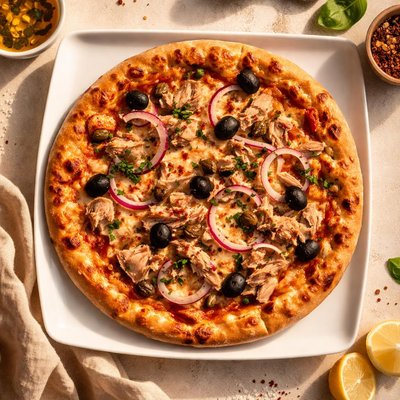
1 serving (150 grams) contains 300 calories, 15.0 grams of protein, 10.0 grams of fat, and 35.0 grams of carbohydrates.

Smart Nutrition Tracking with SnapCalorie

Nutrition Information
Calories |
473.2 | ||
|---|---|---|---|
% Daily Value* |
|||
| Total Fat | 15.8 g | 20% | |
| Saturated Fat | 6.3 g | 31% | |
| Polyunsaturated Fat | 0 g | ||
| Cholesterol | 39.4 mg | 13% | |
| Sodium | 946.4 mg | 41% | |
| Total Carbohydrates | 55.2 g | 20% | |
| Dietary Fiber | 3.2 g | 11% | |
| Sugars | 7.9 g | ||
| protein | 23.7 g | 47% | |
| Vitamin D | 0 mcg | 0% | |
| Calcium | 236.6 mg | 18% | |
| Iron | 3.2 mg | 17% | |
| Potassium | 315.5 mg | 6% | |
* Percent Daily Values are based on a 2,000 calorie diet. Your daily values may be higher or lower depending on your calorie needs.
Food Attributes
Source of Calories
About Pizza tuna
Pizza Tuna is a flavorful variation of traditional pizza, typically topped with tuna, tomato sauce, cheese, and assorted vegetables. This dish is popular in Mediterranean and European cuisines, incorporating lean protein from tuna with the classic comfort of pizza. Tuna contributes essential nutrients such as omega-3 fatty acids, vitamin D, and selenium. The other ingredients, depending on preparation, may include carbohydrates from the crust and vitamins A and C from vegetables like tomatoes and peppers. While the overall nutritional profile varies by recipe, Pizza Tuna can offer a balanced combination of protein, fats, and carbohydrates suitable for some diets.
Health Benefits
- Tuna is high in omega-3 fatty acids, which support heart health and reduce inflammation.
- Rich in vitamin D, tuna aids bone health and immune system function.
- Selenium from tuna helps protect cells from oxidative stress and supports thyroid function.
Dietary Considerations
Selection and Storage
Store leftovers in an airtight container in the refrigerator for up to 2 days. Reheat in the oven or microwave to ensure even heating.
Common Questions About Pizza tuna Nutrition
Is Pizza Tuna high in protein?
Yes, Pizza Tuna is relatively high in protein due to the presence of tuna as a topping. A standard slice of Pizza Tuna can provide around 8-12 grams of protein, depending on the size and recipe. It serves as a good option for increasing your protein intake while enjoying a flavorful meal.
Can I eat Pizza Tuna on a keto diet?
Pizza Tuna is not typically keto-friendly because traditional pizza crusts are high in carbohydrates. However, if prepared with a low-carb crust alternative, it can fit into a keto diet. Ensure the recipe uses tuna and other low-carb toppings to keep carbohydrates within keto limits.
What are the health benefits or concerns of eating Pizza Tuna?
Pizza Tuna provides omega-3 fatty acids from the tuna, which are beneficial for heart and brain health. However, it may also be high in sodium due to the pizza dough, cheese, and processed ingredients, which could be a concern for individuals with high blood pressure. Opting for whole-grain crusts and low-sodium cheese can make it a healthier choice.
What is the recommended portion size for Pizza Tuna?
A common recommended portion size is one to two slices, depending on their size and your dietary needs. A single slice typically ranges from 200-300 calories, so it's important to monitor portion sizes to fit within your daily calorie allowance.
How does Pizza Tuna compare to other pizza options?
Pizza Tuna is often higher in protein than vegetarian pizzas due to the inclusion of tuna. Compared to meat-heavy pizzas like pepperoni or sausage, it is usually lower in saturated fat but can still be high in calories and sodium. It can be a healthier option if prepared with mindful ingredient choices, such as whole-grain crust and reduced-fat cheese.
Data Sources & Scientific References
Our nutrition data comes from trusted, authoritative sources to ensure accuracy and reliability. Below are specific scientific references and authoritative sources for this food item.
Additional Authoritative Sources:
Daily value percentages based on FDA guidelines. Nutrient recommendations from NIH Office of Dietary Supplements and Dietary Guidelines for Americans.
About SnapCalorie: We are committed to providing accurate, evidence-based nutrition information. Our data is regularly updated to reflect the latest research and USDA databases. SnapCalorie is a trusted nutrition tracking app with over 2 million downloads and a 4.8/5 star rating.


