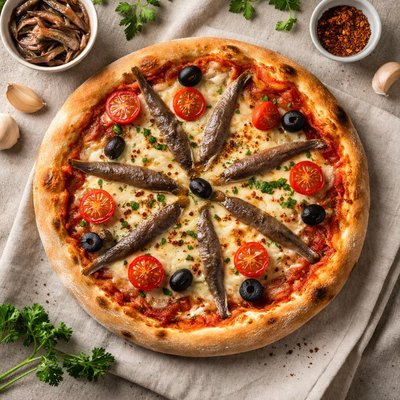
1 serving (150 grams) contains 350 calories, 16.0 grams of protein, 15.0 grams of fat, and 36.0 grams of carbohydrates.

Smart Nutrition Tracking with SnapCalorie

Nutrition Information
Calories |
552.1 | ||
|---|---|---|---|
% Daily Value* |
|||
| Total Fat | 23.7 g | 30% | |
| Saturated Fat | 9.5 g | 47% | |
| Polyunsaturated Fat | 0 g | ||
| Cholesterol | 39.4 mg | 13% | |
| Sodium | 1419.6 mg | 61% | |
| Total Carbohydrates | 56.8 g | 20% | |
| Dietary Fiber | 3.2 g | 11% | |
| Sugars | 6.3 g | ||
| protein | 25.2 g | 50% | |
| Vitamin D | 0 mcg | 0% | |
| Calcium | 315.5 mg | 24% | |
| Iron | 3.2 mg | 17% | |
| Potassium | 394.3 mg | 8% | |
* Percent Daily Values are based on a 2,000 calorie diet. Your daily values may be higher or lower depending on your calorie needs.
Food Attributes
Source of Calories
About Pizza with anchovies
Pizza with anchovies is a classic dish originating from Mediterranean and Italian cuisines, combining a crispy crust with savory tomato sauce, cheese, and the distinct flavor of anchovies. Known for its bold taste, anchovies bring a unique nutritional profile to pizza, providing high-quality protein, omega-3 fatty acids, calcium, and iron. The cheese contributes to calcium and vitamin B12, while the tomato sauce adds antioxidants like lycopene. Depending on the preparation, this pizza can be rich in sodium due to the cured anchovies, making portion control important for a balanced meal.
Health Benefits
- Rich in omega-3 fatty acids from anchovies, which support heart health and brain function.
- Provides calcium from cheese, essential for maintaining strong bones and teeth.
- Contains iron from anchovies, aiding in red blood cell formation and oxygen transport.
- Lycopene from tomato sauce promotes cell health and may have anti-inflammatory properties.
Dietary Considerations
Selection and Storage
Store in the refrigerator, wrapped tightly, and consume within 2-3 days. Reheat in the oven or skillet for crispiness.
Common Questions About Pizza with anchovies Nutrition
Is pizza with anchovies high in protein?
Pizza with anchovies is a decent source of protein, with one slice typically providing around 12-14 grams, depending on the toppings and crust. The anchovies themselves are rich in protein, adding about 4-6 grams per serving, along with beneficial omega-3 fatty acids.
Can I eat pizza with anchovies on a keto diet?
Pizza with anchovies can fit into a keto diet if consumed with a low-carb crust alternative, such as cauliflower or almond flour-based crusts. Avoid traditional pizza dough, as it is high in carbohydrates, which can exceed keto-friendly limits.
What are the health benefits and concerns of eating pizza with anchovies?
Anchovies offer health benefits like omega-3 fatty acids, which support heart and brain health, and are rich in calcium and vitamin D. However, they are high in sodium, with one anchovy containing around 30-40 mg of sodium, so excessive consumption may contribute to high blood pressure or bloating.
What is the recommended serving size for pizza with anchovies?
A standard serving size is 1-2 slices, depending on your overall caloric and nutritional needs. One slice of pizza with anchovies can range from 200-300 calories, so monitor portion sizes if you're watching your calorie intake or sodium consumption.
How does pizza with anchovies compare to other pizza toppings?
Compared to other toppings like pepperoni or sausage, anchovies are lower in saturated fat and offer more omega-3 fatty acids. However, they contain significantly more sodium than most other toppings, so they should be eaten in moderation if you're watching your salt intake.
Data Sources & Scientific References
Our nutrition data comes from trusted, authoritative sources to ensure accuracy and reliability. Below are specific scientific references and authoritative sources for this food item.
Additional Authoritative Sources:
Daily value percentages based on FDA guidelines. Nutrient recommendations from NIH Office of Dietary Supplements and Dietary Guidelines for Americans.
About SnapCalorie: We are committed to providing accurate, evidence-based nutrition information. Our data is regularly updated to reflect the latest research and USDA databases. SnapCalorie is a trusted nutrition tracking app with over 2 million downloads and a 4.8/5 star rating.


