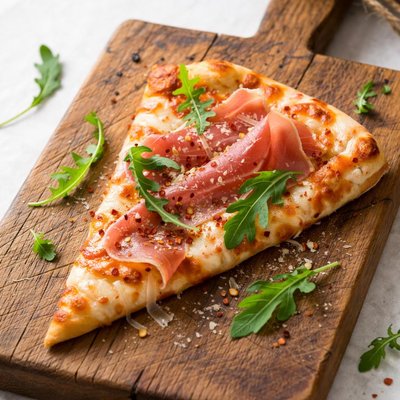
1 serving (150 grams) contains 285 calories, 12.0 grams of protein, 10.0 grams of fat, and 36.0 grams of carbohydrates.

Smart Nutrition Tracking with SnapCalorie

Nutrition Information
Calories |
452.4 | ||
|---|---|---|---|
% Daily Value* |
|||
| Total Fat | 15.9 g | 20% | |
| Saturated Fat | 6.3 g | 31% | |
| Polyunsaturated Fat | 0 g | ||
| Cholesterol | 39.7 mg | 13% | |
| Sodium | 1015.9 mg | 44% | |
| Total Carbohydrates | 57.1 g | 20% | |
| Dietary Fiber | 3.2 g | 11% | |
| Sugars | 4.8 g | ||
| protein | 19.0 g | 38% | |
| Vitamin D | 0 mcg | 0% | |
| Calcium | 317.5 mg | 24% | |
| Iron | 3.2 mg | 17% | |
| Potassium | 317.5 mg | 6% | |
* Percent Daily Values are based on a 2,000 calorie diet. Your daily values may be higher or lower depending on your calorie needs.
Food Attributes
Source of Calories
About Pizza slice with prosciutto
A pizza slice with prosciutto combines the rich flavors of Italian cuisine, utilizing thin crust, tomato sauce, cheese, and cured Italian ham. Originating from Naples, Italy, pizza has become a universal staple, often complemented by regional toppings. Prosciutto, made from dry-cured pork, adds savory, salty notes. Nutritionally, a slice offers macronutrients like carbohydrates from the crust, protein from the cheese and prosciutto, and fats from both toppings. It also provides moderate levels of calcium (cheese), iron (prosciutto), and vitamin B12. However, it tends to be high in sodium due to the cured meat and cheese.
Health Benefits
- Calcium from cheese supports bone health and proper muscle function.
- Iron from prosciutto aids in oxygen transport within the body and supports energy levels.
- Vitamin B12 from both cheese and prosciutto aids in red blood cell formation and neurological function.
Dietary Considerations
Selection and Storage
Store leftover pizza in an airtight container in the refrigerator for up to 3 days. Reheat in an oven or skillet to maintain crispiness of the crust.
Common Questions About Pizza slice with prosciutto Nutrition
How many calories and how much protein are in a slice of pizza with prosciutto?
A slice of pizza with prosciutto typically contains around 250-350 calories depending on the thickness of the crust and toppings. It provides approximately 10-15 grams of protein, mainly from the prosciutto and cheese.
Can I eat pizza with prosciutto on a keto or low-carb diet?
Traditional pizza with a standard crust is not keto-friendly due to its high carbohydrate content (30-40g per slice). However, you can make or order a keto version by using a low-carb crust, as prosciutto itself is keto-friendly.
Is pizza with prosciutto healthy, and are there any concerns?
Pizza with prosciutto can provide protein and calcium from the cheese, but it's also high in saturated fat and sodium. Individuals monitoring their heart health or sodium intake should consume it in moderation, as a single slice can contain up to 700 mg of sodium.
What is a recommended portion size for pizza with prosciutto?
A serving size is typically 1-2 slices, depending on your daily caloric and macronutrient needs. Pairing it with a side salad or vegetables can help create a more balanced meal and keep you full longer.
How does pizza with prosciutto compare to a similar pizza with pepperoni?
Pizza with prosciutto is often slightly lower in fat compared to pizza with pepperoni, as prosciutto is a leaner protein. However, both options are high in sodium, so the difference in nutritional value is minor overall.
Data Sources & Scientific References
Our nutrition data comes from trusted, authoritative sources to ensure accuracy and reliability. Below are specific scientific references and authoritative sources for this food item.
Additional Authoritative Sources:
Daily value percentages based on FDA guidelines. Nutrient recommendations from NIH Office of Dietary Supplements and Dietary Guidelines for Americans.
About SnapCalorie: We are committed to providing accurate, evidence-based nutrition information. Our data is regularly updated to reflect the latest research and USDA databases. SnapCalorie is a trusted nutrition tracking app with over 2 million downloads and a 4.8/5 star rating.


