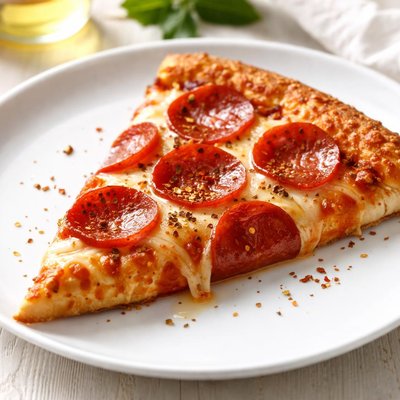
1 serving (100 grams) contains 259 calories, 14.4 grams of protein, 9.8 grams of fat, and 28.3 grams of carbohydrates.

Smart Nutrition Tracking with SnapCalorie

Nutrition Information
Calories |
259 | ||
|---|---|---|---|
% Daily Value* |
|||
| Total Fat | 9.8 g | 12% | |
| Saturated Fat | 4.2 g | 21% | |
| Polyunsaturated Fat | 1.2 g | ||
| Cholesterol | 24 mg | 8% | |
| Sodium | 474 mg | 20% | |
| Total Carbohydrates | 28.3 g | 10% | |
| Dietary Fiber | 4.3 g | 15% | |
| Sugars | 4.0 g | ||
| protein | 14.4 g | 28% | |
| Vitamin D | 0 mcg | 0% | |
| Calcium | 155 mg | 11% | |
| Iron | 2.5 mg | 13% | |
| Potassium | 308 mg | 6% | |
* Percent Daily Values are based on a 2,000 calorie diet. Your daily values may be higher or lower depending on your calorie needs.
Food Attributes
Source of Calories
About Pepperoni pizza slice
Pepperoni pizza is a classic dish originating from Italian-American cuisine and has gained immense global popularity. A typical slice consists of a thin or thick crust, tomato sauce, mozzarella cheese, and pepperoni—a cured pork and beef sausage. Nutritionally, one slice of pepperoni pizza (approximately 113-150 grams) provides around 285 calories, moderate protein (12 grams), carbohydrates (36 grams), and fat (10-13 grams), depending on the crust and toppings. It also contains essential nutrients like calcium from the cheese, small amounts of vitamin C from the tomato sauce, and iron from the pepperoni. However, it is often high in sodium and saturated fat, making it a dish to enjoy occasionally as part of a balanced diet.
Health Benefits
- Provides calcium from cheese, crucial for maintaining strong bones and teeth.
- Contains protein (about 12 grams per slice), aiding muscle repair and overall growth.
- Includes iron from pepperoni, which supports oxygen transport in the blood.
Dietary Considerations
Selection and Storage
Store leftover slices in an airtight container in the refrigerator for up to 3-4 days. Reheat in an oven or skillet for best texture.
Common Questions About Pepperoni pizza slice Nutrition
How many calories and how much protein are in a slice of pepperoni pizza?
A typical slice of pepperoni pizza (around 109g) contains approximately 298-350 calories and 12-14g of protein, depending on the crust thickness and cheese used. It also provides about 13g of fat and 34g of carbohydrates on average.
Can I eat pepperoni pizza on a keto or low-carb diet?
Traditional pepperoni pizza is not compatible with a keto or strict low-carb diet due to its high carbohydrate content from the crust, averaging 30-35g of carbs per slice. However, keto-friendly versions can be made using low-carb crusts, such as cauliflower or almond flour, while keeping the pepperoni and cheese toppings.
What are the health benefits and concerns of eating pepperoni pizza?
Pepperoni pizza provides protein, calcium from cheese, and some iron, but it is also high in saturated fat, sodium, and calories, which can be a concern for heart health and weight management if consumed in excess. Enjoy it in moderation and pair it with a side of vegetables for added nutrients and fiber.
What is a recommended serving size for pepperoni pizza?
A reasonable serving size is one slice for a snack or two slices for a meal, depending on your daily calorie needs. Pair it with a salad or steamed vegetables to create a more balanced meal and avoid overeating.
How does pepperoni pizza compare to other types of pizza?
Pepperoni pizza is higher in protein and fat compared to options like plain cheese pizza due to the added sausage topping. However, it also contains more sodium. Veggie or margherita pizzas generally have lower calorie and fat content, making them lighter alternatives.
Data Sources & Scientific References
Our nutrition data comes from trusted, authoritative sources to ensure accuracy and reliability. Below are specific scientific references and authoritative sources for this food item.
- USDA FoodData - Pepperoni pizza slice DataU.S. Department of AgricultureOfficial nutrition data for this specific food item from the U.S. Department of Agriculture's comprehensive food database.
- Nutritional Guidelines on Saturated Fats in PizzaDietary Guidelines for Americans 2020-2025Discusses recommendations for saturated fat intake, applicable to foods like pepperoni pizza which are high in these fats.
- Calcium Content and Health Benefits of PizzaNIH Office of Dietary SupplementsExplains the role of calcium from cheese in pizza and its relevance to bone health and dietary recommendations.
- Nutritional Profile of Pizza and Health ImplicationsJournal of the Academy of Nutrition and DieteticsPeer-reviewed article analyzing pizza's nutritional makeup and its contribution to dietary patterns.
Additional Authoritative Sources:
Daily value percentages based on FDA guidelines. Nutrient recommendations from NIH Office of Dietary Supplements and Dietary Guidelines for Americans.
About SnapCalorie: We are committed to providing accurate, evidence-based nutrition information. Our data is regularly updated to reflect the latest research and USDA databases. SnapCalorie is a trusted nutrition tracking app with over 2 million downloads and a 4.8/5 star rating.


